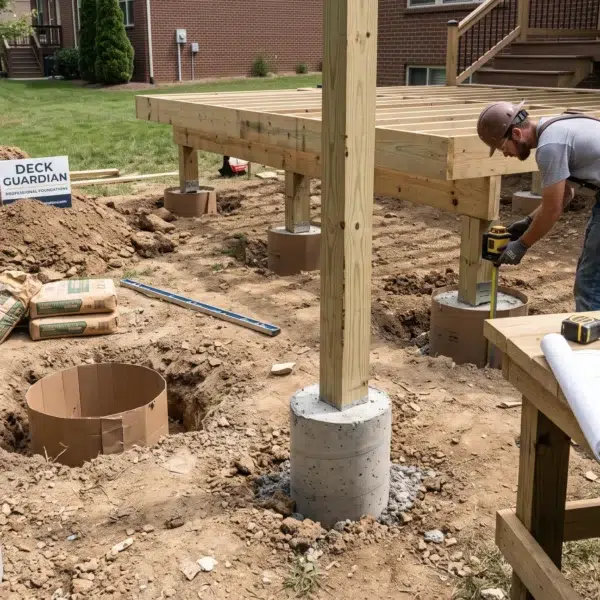
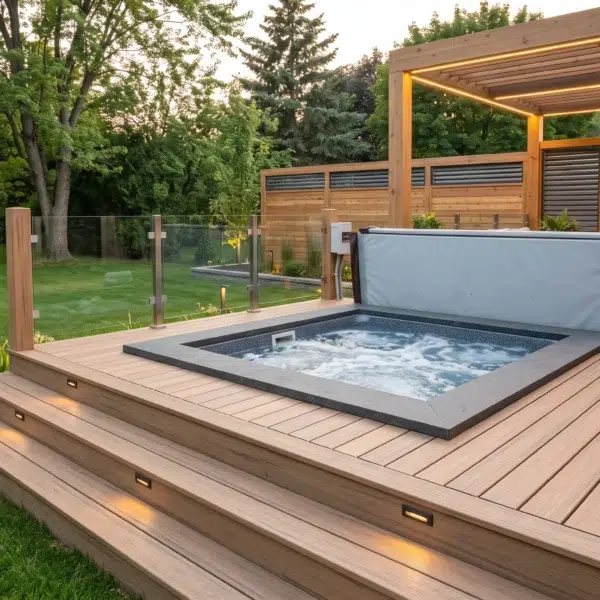
Spring deck pricing in New Jersey follows a pattern most homeowners never see coming. The weather warms up, you walk outside, look at your yard, and decide this is finally the year. You call three contractors. The numbers come back higher than expected. You assume that is just what decks cost. Getting multiple quotes from local builders helps ensure accurate pricing and quality work.
It is not. That is what decks cost in spring. In that window, the deck cost you are shown is not the average cost of the project—it is the seasonal premium stacked onto each square foot.
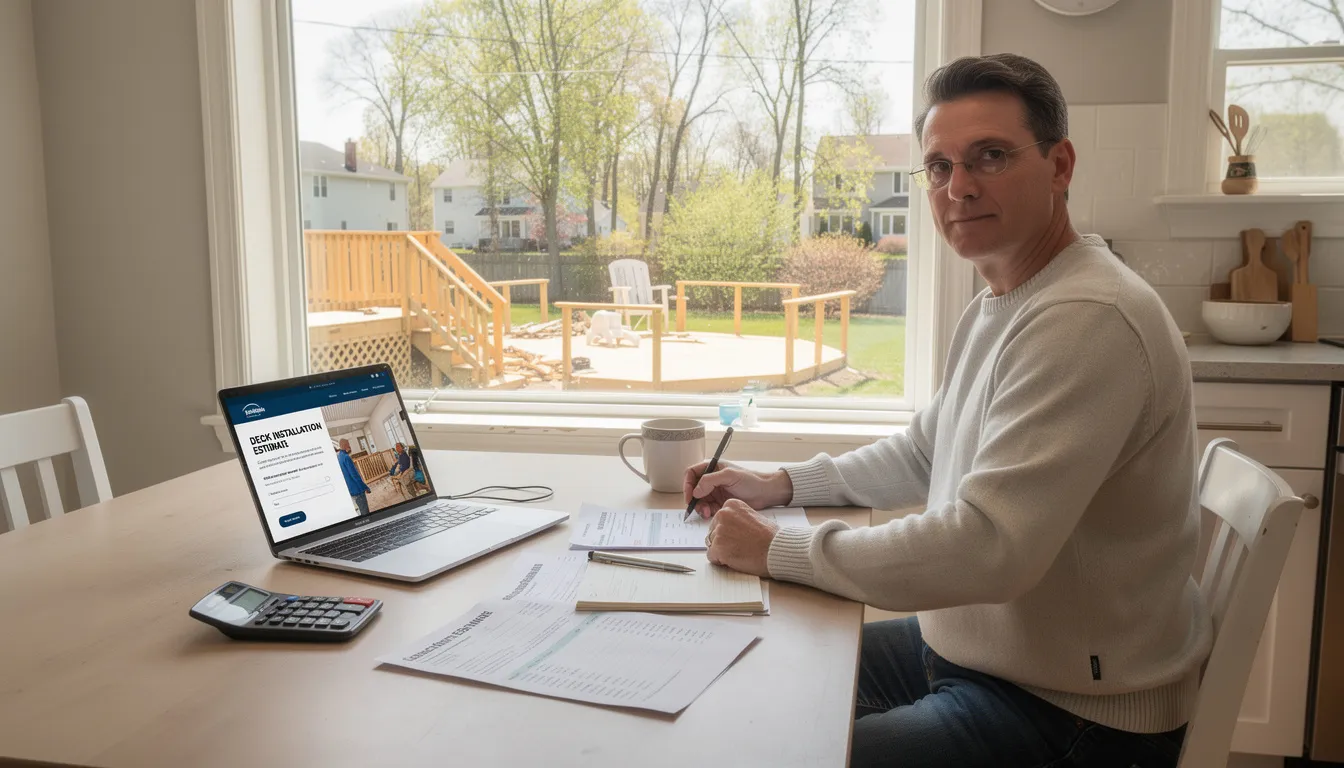
The team at Deck Guardian, which builds across New Jersey and Pennsylvania, watches this cycle repeat every year. And every year, homeowners leave money on the table because nobody explains how seasonal pricing actually works. This article covers the real mechanics behind spring markup, the hidden costs that never appear on estimates, and timing strategies that can save you thousands on your new deck.
Here is the direct answer: that spring quote you received is likely 15 to 25 percent higher than off-season rates for the identical project. Understanding why puts you in control. Spring deck installations in New Jersey typically cost between $30 and $80 per square foot for labor and materials.
How Factors Influence Spring Deck Pricing in New Jersey
Deck cost is not fixed. It shifts based on season, and spring represents the most expensive window for deck building in the state. Three forces drive prices upward during peak months. Spring is also when deck building calendars get overbooked, which is why the average cost per square foot climbs even when the design stays the same.
First, contractor demand peaks because every homeowner calls at once. Schedules fill quickly, and experienced contractors price accordingly. They can afford to quote higher when they are turning away work.
Second, material supply chains adjust. Lumber yards and composite decking distributors raise rates anticipating spring volume. Pressure treated wood and premium materials both see 10 to 15 percent markups as inventory turns over faster. Even when homeowners choose pressure treated wood to keep budgets down, early-season pricing on decking materials still jumps.
Third, subcontractor rates climb. Electricians, excavators, and concrete crews charge more when they are juggling ten deck projects simultaneously. Labor costs for these trades can spike 20 to 30 percent during this window.
Put real numbers on it. A 400 sq ft composite deck in Monmouth County might cost $22,000 in April. The same spec in November runs $18,000 to $19,000. If you are considering more complex layouts, understanding the average cost of multi-level decks in New Jersey will give you a clearer benchmark for seasonal pricing. That is a substantial portion of your budget disappearing into seasonal demand.
Bergen County runs even higher during peak months because of density and permit complexity. The cost per square foot there can exceed state averages by 15 to 20 percent, and second story decks face the highest inspection and engineering scrutiny.
Coastal counties see additional pressure. Ocean, Atlantic, and Cape May experience a second seasonal spike tied to shore house renovation demand. Salt air concerns push homeowners toward composite materials and PVC decking, inflating the average cost to $50 to $70 per square foot installed versus $40 to $55 off peak. Near the shore, wood decking demands regular maintenance, so many homeowners pay more upfront for low maintenance composites.
The Hidden Costs That Slow Deck Installation and Never Make It Onto the Estimate
Spring builds carry additional costs that do not appear on the initial estimate. These additional expenses add up faster than most homeowners realize. Those additional costs rarely show up as a labeled surcharge.
Permit delays stretch longer during peak season. What takes two to three weeks in November can require four to eight weeks in April. That extended timeline means longer dumpster rentals at $500 to $800 weekly, more porta-john fees at $150 to $250 per week, and extended insurance coverage adding $200 to $500. Projects that involve a multi level deck layout or second story decks typically trigger more reviews, so the spring queue hits harder.
Change orders happen more frequently when contractors squeeze your project between bigger jobs. Overbooked crews cut corners, then tack on 5 to 10 percent via rushed adaptations. If the scope includes tearing out an existing deck, crews often uncover framing issues and push a change order. The total cost creeps upward with each adjustment.
New Jersey specific requirements amplify these hidden costs. Soil erosion controls in Morris or Passaic townships require silt fences and stabilization plans at $1,000 to $2,500 extra. https://www.nj.gov/agriculture/divisions/anr/pdf/2014NJSoilErosionControlStandardsComplete.pdf Stormwater management filings in Middlesex or Somerset developments add $500 to $1,500 in engineering fees. Separate electrical permits for deck lighting, mandatory in many municipalities, cost $200 to $400 each with their own inspection fees.
Then there is the rush premium. Some contractors will bump you up the schedule for an extra fee, often $2,000 to $4,000 on mid-sized deck projects. Homeowners focused on building a deck on a budget usually avoid this by keeping designs simple and planning well ahead of peak season. That is legal and common, but most homeowners never realize they are paying it. It simply gets folded into labor expenses without disclosure.
The opportunity cost matters too. Your deck installation stretches into summer. You wanted the outdoor space for Memorial Day. Instead, you are stepping around construction materials through July. By the time it is finished, your outdoor space has been a jobsite for weeks.
What Smart NJ Homeowners Do Instead to Upgrade Outdoor Space for Less
The alternative approach is straightforward. Sign a contract in late fall or early winter. Lock in off-peak pricing. Get your permit processed during the slow municipal window. Have your deck finished before the first warm weekend.
Homeowners who explore custom deck building services during the off-season often secure better material options too. In fact, there are several reasons why building a deck in the fall is a good idea, from lower pricing to better contractor availability. Suppliers are not rationing popular colors and profiles. You get first pick of composite decking styles and decking materials that would be backordered in April.
The psychology barrier is real. Most of us resist planning outdoor living projects when it is cold outside. It feels wrong to think about your perfect outdoor living space while wearing a winter coat. But the homeowners who break that habit save money, typically $3,000 to $5,000 on the same exact project.
Regional patterns hold consistent across the state. North Jersey suburbs in Bergen, Passaic, and Morris see higher baseline labor at $35 to $45 per square foot due to union rates and traffic logistics. Central Jersey areas like Middlesex, Somerset, and Mercer align closer to state averages of $30 to $50 per square foot. Shore towns follow coastal spikes in spring but benefit most from off-season deals as tourism ebbs.
Off-season builds also reduce defect risks. Industry data shows 20 to 30 percent higher quality issues from rushed spring work. The same seasonal pricing logic applies to porches, where porch construction costs in New Jersey spike in spring and ease in fall and winter. Crews building your deck in November have time to do it right.
Reading Your Estimate Like a Contractor: Average Deck Cost and Cost per Square Foot
When a spring estimate lands in your hands, look for specific warning signs.
Line items that stay vague signal problems. “Site preparation” listed at $2,000 to $5,000 without a breakdown often bundles seasonal surcharges. Ask for itemization.
Labor rates that seem high compared to material costs indicate demand pricing. Composite materials run $10 to $27 per square foot. If you already have a structure in place, exploring professional deck resurfacing tips can sometimes be cheaper than a full rebuild. Labor should pair with that at $20 to $30 off-peak, not $40 or higher. When labor expenses exceed 50 percent of material costs, you are paying the seasonal premium.
Timelines stretching past four to six weeks suggest the crew is overbooked. That signals rush work, more change orders, and delayed completion.
Here is the one question that reveals everything: “What would this project cost if I signed today but scheduled the build for October?”
If the number drops 15 to 20 percent, you have just confirmed you are paying the spring tax. A meaningful price difference on the same deck size, same square footage, same decking materials proves the markup exists.
Before signing, verify the contractor’s NJ license through the Division of Consumer Affairs. Check their current backlog via references. It also helps to understand the reasons to hire a professional deck contractor instead of treating the project as a DIY experiment. Insist that the quote locks material pricing to prevent fluctuations during peak supply chain adjustments.
Conclusion
Spring deck pricing in New Jersey is not a mystery. It is simple economics dressed up as standard rates. Once you understand the cycle, you can step outside it.
The deck you want does not have to cost what the spring quote says. Whether you are planning natural wood decks or low maintenance composite options, timing determines more than design complexity or built in features ever will.
That estimated cost sitting on your kitchen counter reflects seasonal demand, not true project value. If you want to compare that number with a professional quote, reach out to Deck Guardian, your trusted New Jersey deck builder for an off-season estimate.
Frequently Asked Questions
Why is deck construction more expensive in spring in New Jersey?
Spring triggers peak seasonal demand across the NJ construction market. Contractors, material suppliers, and subcontractors all raise rates when every homeowner calls at once. The same project quoted in November can cost significantly more by April, typically 15 to 25 percent higher simply because of volume pressure on local professionals.
What is the average cost to build a deck in New Jersey?
Depending on material and deck size, NJ deck projects typically range from $15,000 to $40,000. Composite decking costs run higher than pressure treated lumber options. Location matters too. Bergen and Morris counties tend to price above the average price due to labor costs and permit complexity in those areas, while homeowners in Mercer County can work with a local best-in-class deck builder and those in Morris County can rely on a top-rated deck contractor who understands county-specific code and pricing.
When is the cheapest time to build a deck in NJ?
Late fall through early winter offers the lowest pricing for deck installation. October to January is the sweet spot. Contractor schedules open up, material suppliers offer better rates on affordable materials and premium materials alike, and you can often stack these savings with seasonal deck building offers and promos. Permits process faster through municipal offices with lighter workloads.
How long does it take to get a deck permit in New Jersey?
It depends on the season. During spring rush, NJ permits can take four to eight weeks for approval. In the off-season, the same application might clear in two to three weeks. Township specific requirements like stormwater plans or zoning variances add time regardless of when you apply. https://dep.nj.gov/wp-content/uploads/rules/rules/njac7_8.pdf
Are there hidden costs in deck construction estimates?
Yes. Common ones include permit and inspection fees, dumpster and waste removal, site grading, electrical permits for lighting, extended project insurance, and change order markups. Always ask for a fully itemized breakdown and come prepared with important questions to ask a deck contractor before signing any contract to understand the overall cost.
How much can I save by building my deck in winter instead of spring?
Most NJ homeowners save between $3,000 and $5,000 on a mid-range deck project by building during off-peak months. If you are planning an entire backyard makeover, you will want to budget for related projects like patios too, and understand patio installation costs in New Jersey. Savings come from lower labor costs, better material pricing on everything from pressure treated pine to composite materials, and avoiding rush premiums charged during busy season.
Do New Jersey building codes affect deck pricing?
Absolutely. NJ has specific building codes for frost line depth at 36 to 48 inches, railing height at 42 inches, and stair dimensions. https://up.codes/viewer/new_jersey/irc-2021/chapter/3/building-planning#3 Coastal zone properties face additional regulations including wind load reinforcements. These requirements are standard, but compliance adds labor and inspection fees that vary based on municipality.
What questions should I ask a deck contractor before signing a spring contract?
Ask: “What would this cost if I scheduled for fall?” Also request a fully itemized estimate covering all additional features and custom railings. Verify their NJ contractor license, ask about their current project backlog, and confirm whether the quote locks material pricing or allows for increases. If you are still unsure, you can review additional frequently asked questions about deck building to better frame the conversation.
Is composite decking cheaper off-season than other decking materials in New Jersey?
Composite material pricing fluctuates less than labor expenses, but off-season discounts do exist. Distributors often offer promotions on popular brands during fall and winter to move inventory before new product lines arrive in spring. Looking at a real-world example, such as a 700 sq ft composite deck project, can help you visualize how material choices and timing affect overall cost. Less upkeep long term makes the timing savings even more valuable.