A modern deck privacy wall can fix the privacy problem and create new ones if the planning stops at appearance. Blocking a neighbor’s window, reducing visibility from the street, or making a lounge area feel less exposed are all valid reasons to add one. The catch is that a privacy screen does not sit in isolation. It works with metal outdoor railings, deck posts, joists, stairs, and wind pressure, which makes it part of the larger deck system.
At Deck Guardian, we see this often. Homeowners save a sleek privacy screen idea, then realize the deck railing, frame, and post layout were never planned for it. The wall may look good in a photo, but style alone is not enough. On a real deck in New Jersey or Pennsylvania weather, it has to stay straight, drain well, handle wind, and make the outdoor space feel better rather than boxed in, especially under harsh weather conditions.
That is the difference between a privacy feature and a privacy problem.
Deck Privacy Starts With the Frame, Not the Panels
Most people start with deck privacy screen panels. Composite slats, aluminum frames, wood inserts, vertical panels, horizontal lines. That is understandable. Panels are what you see.
But the frame decides whether those panels make sense.
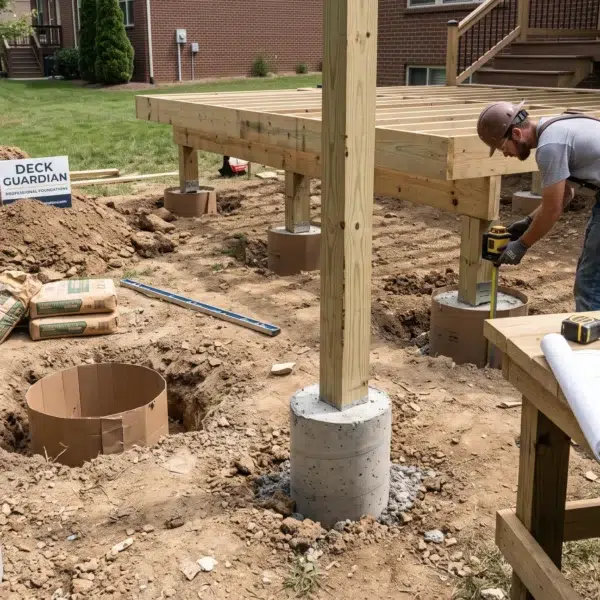
A privacy screen adds load to a deck, especially when wind pushes against it. The posts need support. The deck joists need to carry the right loads. The beam placement has to make sense, and every hanger has to be selected and installed for the actual framing conditions. If the wall sits near the edge, that edge needs enough strength to keep everything stable.
This is where a deck joist span chart belongs in the planning process.1 It gives builders a practical way to check how far deck joists can run between supports. The goal is to avoid sagging, excess bounce, or structural failure. In New Jersey, deck joists are generally regulated under the New Jersey Uniform Construction Code, which typically follows the IRC. Joist spans often range from 9 to 18 feet, depending on the framing details and load requirements.
Deck Joists and Joist Spacing Can Change the Whole Privacy Plan
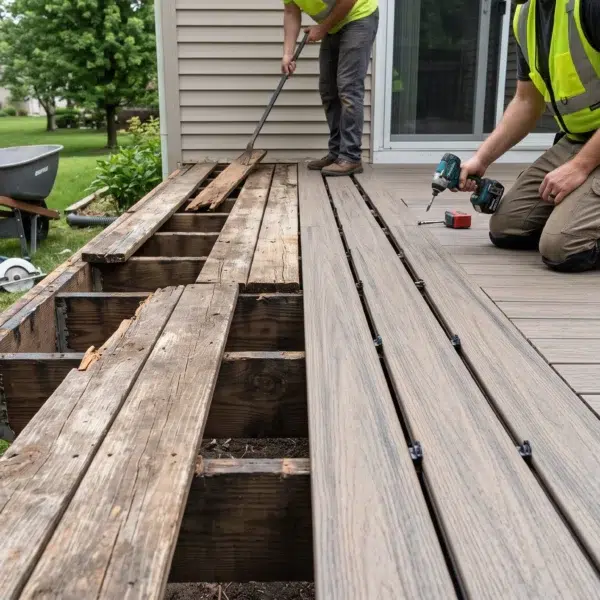
Deck joist spacing is typically 16 inches on center, but that number can change with the decking material, the board layout, and the manufacturer’s installation guidelines. Composite boards installed diagonally, especially at 45 degrees, may need 12-inch spacing to maintain proper support.
That detail matters when a deck privacy wall is part of the plan. The screen posts cannot just be attached wherever they look good. They need solid framing below. If the joists, beams, or posts are not coordinated, the screen may flex, lean, or feel separate from the deck structure.
Common joist sizes include 2 x 8, 2 x 10, and 2 x 12, with lumber species such as hem-fir appearing in some span tables depending on the region and supplier. The right size depends on span, deck size, live load, dead load, and code requirements. A local building official should verify the structural assumptions before installation, especially for decks with privacy walls, railings, stairs, or attached features.
Joists may also cantilever beyond a beam, often up to one-fourth of the actual span. That small detail can affect where panels, posts, and railing systems can safely sit.
Metal Railing and Railing Systems Need the Right Partner
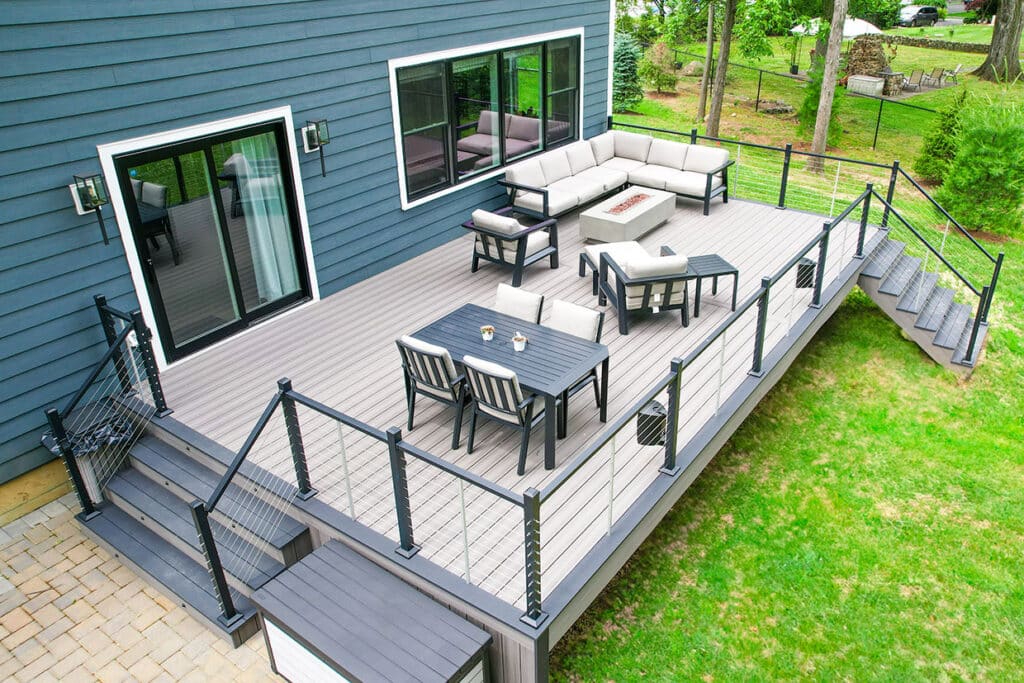
Metal deck railings are popular on both new and existing decks because they combine durability, a stylish appearance, and clean visual lines. Aluminum and steel are the most common options. Aluminum is lighter, more corrosion-resistant, and built for minimal maintenance, while steel can bring exceptional strength and a sturdier feel. The trade-off is added weight and a greater need for proper rust protection.
Powder-coated finishes are popular for a reason. They give metal railing a sleek look, come in various colors, and handle weather better than unfinished metal. For decks near salt water, all fasteners used in deck construction within 300 feet of the coast should be stainless steel because corrosion is a real issue.
The mistake is assuming metal outdoor railings can carry anything attached to them. Some railing systems are not designed to support privacy panels. Others can work only when posts, brackets, and frame connections are planned from the start, before product orders ship, and the installer is locked into parts that may not match the deck structure.
Metal is durable. That does not mean every metal railing is a structural privacy wall.
Deck Privacy Screen Panels Should Control Views Without Killing the Outdoor Space
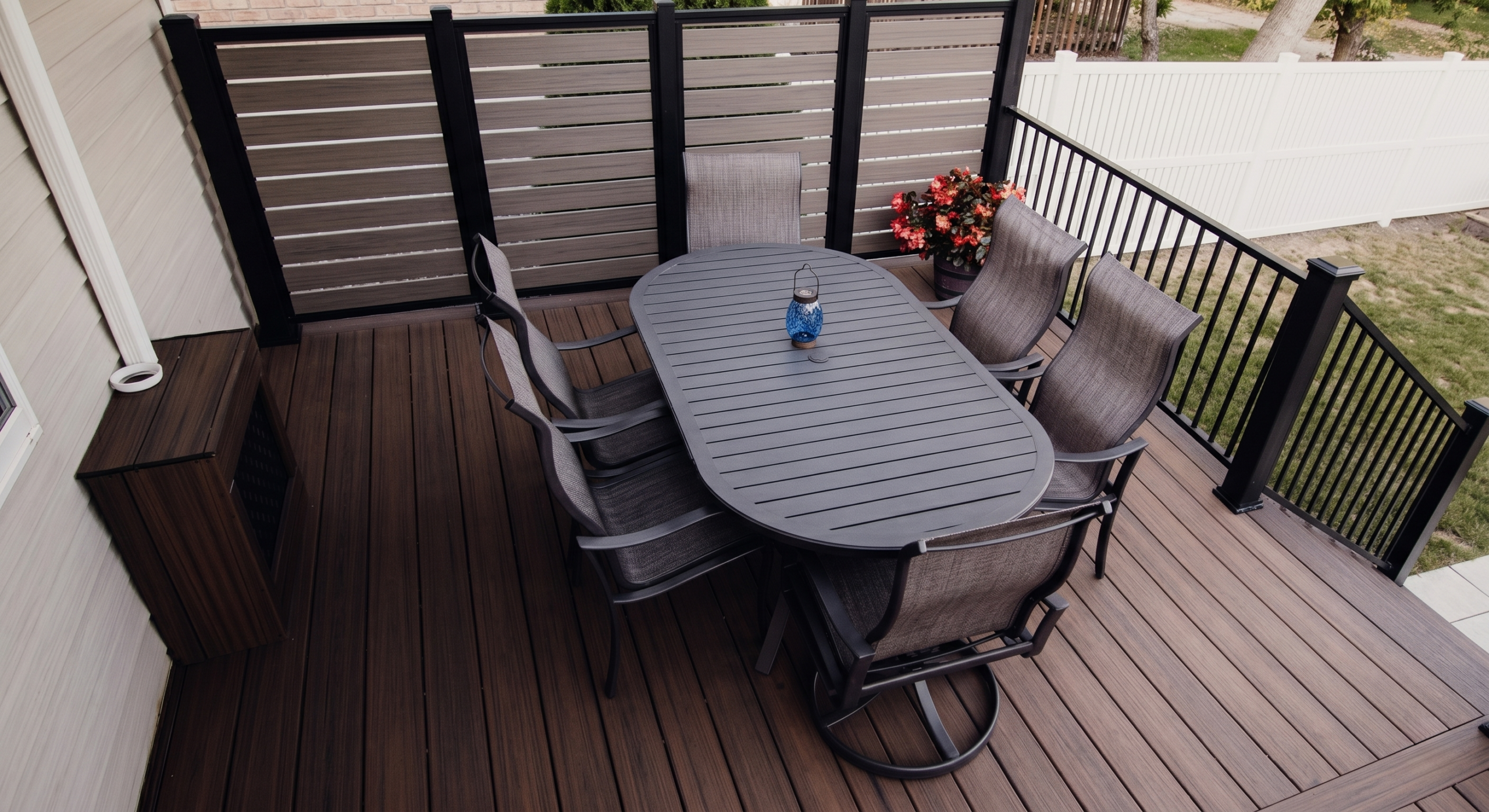
Deck privacy screen panels are useful when they solve a specific problem. A full wall around the entire deck rarely feels comfortable. It can block light, trap heat, and make the outdoor living space feel smaller.
The stronger approach is usually selective privacy.
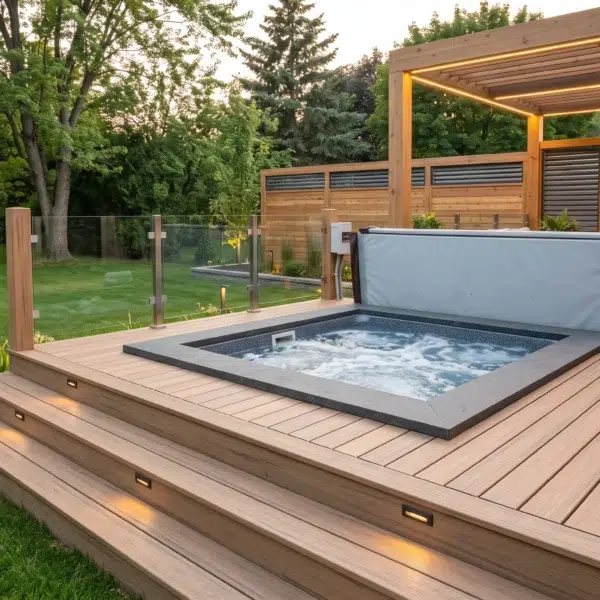
Use privacy panels in targeted spots rather than closing off the whole deck. They may belong beside a dining table, behind a lounge area, near a hot tub, along an exposed side, or around a corner facing neighbors. Keep the remaining sides open with deck railing so the space still feels part of the yard, garden, pool, patios, or view.
Vertical panels create stronger privacy. Horizontal panels look modern and can visually widen the deck, but spacing matters. Wider gaps bring in more light and air. Tighter gaps create more privacy but can feel heavy if overused, especially on a small square deck where every visible surface feels more dominant.
Good deck privacy design is not about hiding everything. It is about controlling the sightlines that actually need screening.
Composite Decking Helps Keep the Whole Design Consistent
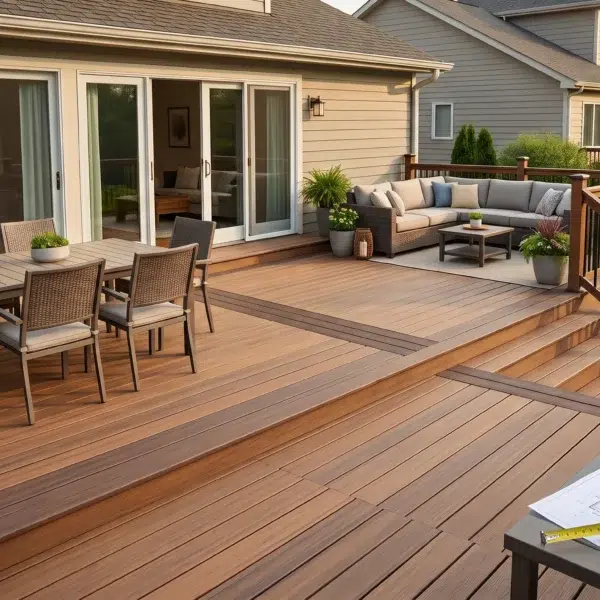
Composite decking pairs well with metal railing and modern privacy screen panels because it gives the deck a steady, finished look instead of one that changes unevenly over time.
Composite boards are made to resist rot, moisture, and warping. They are also low maintenance, with occasional cleaning usually enough to keep the surface looking clean. Compared with traditional wood decking, composite often holds up better in outdoor conditions and supports long-term durability with less routine upkeep.
That becomes important around privacy walls. Screens can make small differences in aging stand out. If the deck boards fade, the railing remains crisp, and the panels weather in another direction, the space starts to feel disconnected. Composite decking helps keep that visual gap smaller, preserving more of the deck’s beauty and overall durability as the materials age.
Wood can still be worth using when the homeowner wants a more natural finish, and redwood can be attractive when the design calls for a warmer color and visible grain. The trade-off is upkeep. Wood panels, posts, and railing details need more attention over the years. They can move, weather, and change color faster than aluminum or composite systems, which is why homeowners often need to understand when deck resurfacing makes sense before replacing every visible part of the structure.
How Deck Railing Shapes the Whole Deck Design
Railing is not just a safety feature. It affects how the deck feels.
Thin aluminum balusters can keep the view open. Wider posts can create a stronger architectural rhythm. Horizontal metal railing can make the deck feel longer. Vertical railing can make it feel taller and more formal.
That is why how railing design shapes the space should be considered before privacy panels are chosen. The railing and privacy screen need to follow the same design language, almost like an indoor room where proportions, sightlines, and material weight shape how comfortable the space feels. If one is sleek and minimal while the other looks bulky, the deck loses balance.
This also affects stairs. A privacy wall near stairs may create a closed-in entrance if the railing placement is not planned carefully. A partial panel near the top landing can work. A full-height wall in the wrong spot can feel awkward.
Louvered Features Can Add Privacy Without Closing Everything In
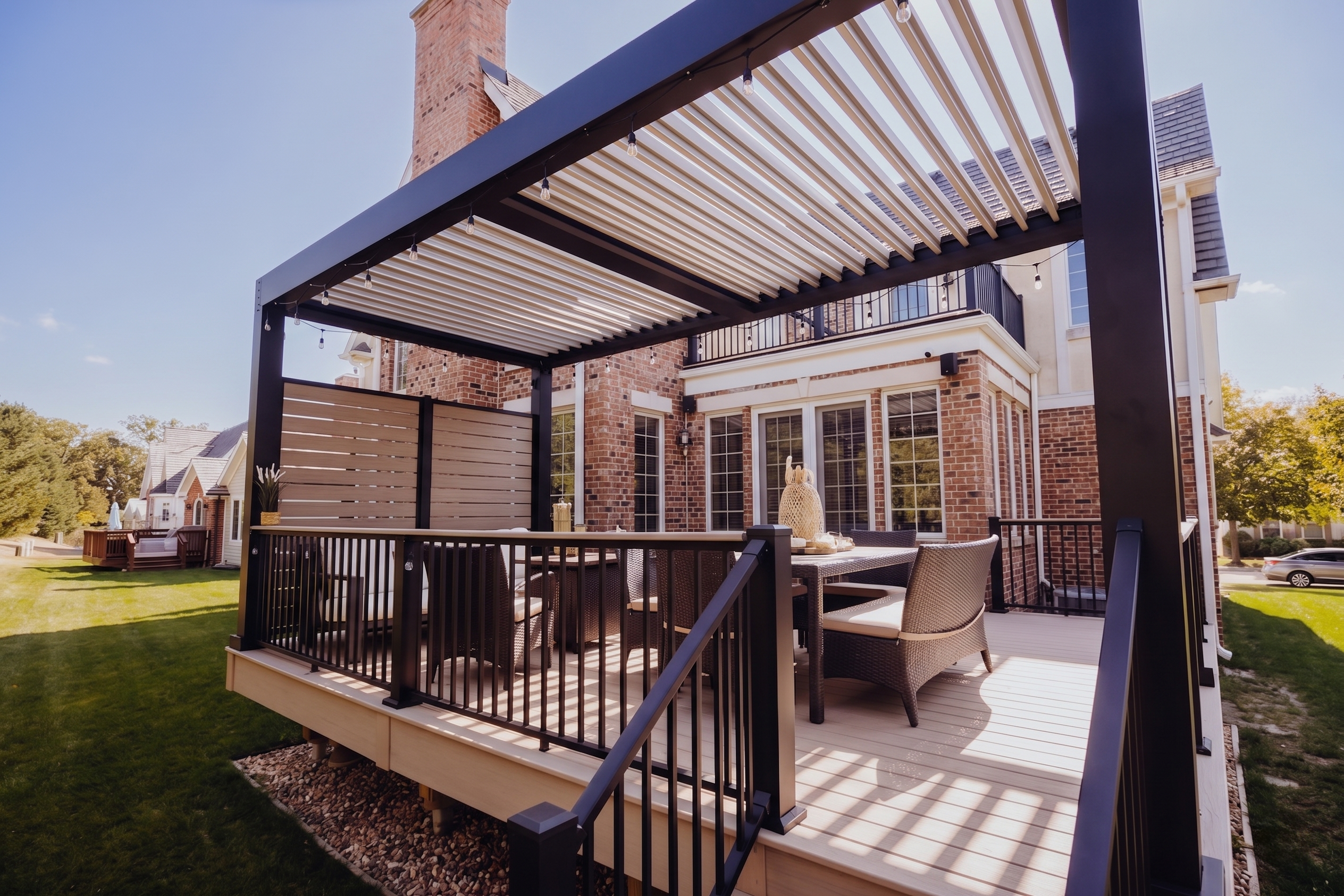
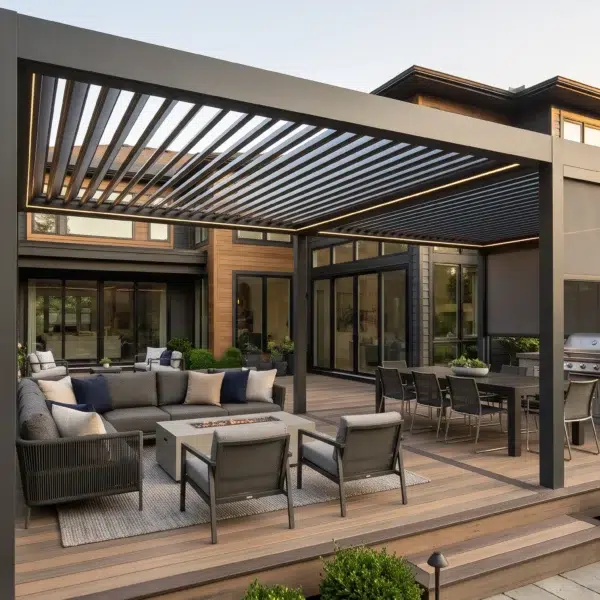
A louvered roof can help control sunlight, airflow, and coverage without turning the deck into a closed room. When paired with metal railing and privacy screen panels, it can create a more complete outdoor space for dining, lounging, or entertaining. Modular systems may also support easier installation when the framing and layout are planned correctly.
The key is proportion. A privacy wall, louvered feature, and railing system all add visual weight. If every element is full-height and dark, the deck can start to feel boxed in. If panels are placed selectively and the railing stays open, the space feels more natural.
What Codes and Numbers Homeowners Should Know
Privacy walls and metal railing are design choices, but they still sit inside a building system. Here are the numbers that matter before construction begins.
| Planning point | Typical number or rule | Why it matters |
| Common deck joist spacing | 16 inches on center | Standard spacing for many wood deck layouts |
| Angled decking support | 12 inches on center | Often needed when some decking boards run at 45 degrees |
| Typical New Jersey joist spans | 9 to 18 feet | Depends on joist size, species, spacing, and load |
| Required footing depth in NJ | at least 36 inches below grade | Helps protect against frost movement |
| Guardrail requirement | 30 inches or higher above grade | Decks at this height generally need guardrails |
| Minimum guardrail height | 36 inches | Common minimum height for residential guardrails |
| Salt water fastener rule | within 300 feet | Stainless steel fasteners are required due to corrosion concerns |
| Typical cantilever limit | up to 1/4 of actual span | Affects beam, joist, and edge planning |
These numbers are not a substitute for permit review. Permits are generally required for deck construction in most New Jersey municipalities, especially when decks are attached to a house or over 30 inches high.2
Modern Deck Privacy Wall Ideas That Usually Work
The strongest modern deck privacy wall ideas are not the loudest ones. They are the ones that solve a real layout problem.
A few practical options:
- Composite privacy panels beside a dining zone
- Powder-coated aluminum railing with matching privacy posts
- Vertical deck privacy screen panels on the neighbor-facing side
- A partial privacy screen near stairs, not across the whole deck
- Metal railing with wood panels for warmth
- Aluminum railings with composite decking for low maintenance
- Privacy panels under a louvered roof for shade and screening
The best version depends on the view, the house, the yard, the patio layout, the stairs, and how the deck is actually used.
The Real Test: Does the Deck Still Feel Open?
A privacy wall should make a deck feel more comfortable, not smaller.
Before choosing panels, stand where people will sit. Look toward the neighbors, the yard, the house, the stairs, and the main view. That shows where privacy is needed and where openness matters more.
A good privacy screen blocks the awkward sightline and leaves the rest of the deck breathing. Metal outdoor railings help with that because they can provide safety and structure without visually closing the space.
That balance is the point.
FAQ
What is a modern deck privacy wall?
A modern deck privacy wall is a partial screen or panel feature that adds privacy, blocks unwanted views, and gives the deck more definition without turning it into a closed room.
Can privacy panels be installed with metal outdoor railings?
Yes, but only when the railing and frame can support them properly. The posts, attachments, and underlying deck structure need to be planned before installation.
What does a deck joist span chart show?
A deck joist span chart shows the allowed distance between supports for deck joists. The span changes based on joist size, spacing, lumber species, and load.
What is standard joist spacing for deck boards?
Sixteen inches on center is common for many deck boards. Some materials and angled layouts, especially composite boards at 45 degrees, may need 12-inch spacing.
Are aluminum railings good for decks?
Yes. Aluminum railings are durable, corrosion-resistant, low-maintenance, and well-suited for modern deck projects.
Is steel railing better than aluminum railing?
Steel can offer more strength, but it is heavier and needs proper finishing to manage rust. Aluminum is lighter, corrosion-resistant, and usually easier to maintain.
Do deck privacy screen panels need permits?
They may. If the panels affect guardrail function, add structural load, or are tied into an attached deck, local permit rules may apply.
Is composite decking good with privacy walls?
Yes. Composite decking pairs well with privacy walls because it resists moisture, rot, and warping, and usually needs only occasional cleaning.