
Composite Deck Railing: Styles, Benefits, and How to Choose
Composite deck railing offers the familiar appearance of traditional wood without the same routine of sanding, staining, and repainting. Available in various styles and color options, it can complement everything from classic porches to contemporary homes. Choose a profile that coordinates with your home’s exterior and brings your personal style into the outdoor space.
The choice involves more than appearance. Railing affects sightlines, maintenance, and how open a deck feels. Substantial composite posts and rails can suit a spacious backyard deck, while a smaller elevated deck may benefit from slimmer components that preserve the view.
At Deck Guardian, we help homeowners across New Jersey and Pennsylvania compare railing options when planning custom composite decks. This guide covers composite railing components, benefits, maintenance, and installation, along with situations where wood, vinyl, aluminum, glass, or cable may be a better fit.
What are the Parts of Composite Deck Railing?
A composite deck railing is a system of rails, structural posts, infill, and connecting hardware. These components must work together to provide the required support and a consistent finished appearance.
- Rails: The top rail and bottom rail frame each railing section. The top rail profile affects both style and functionality, particularly when an approved drink rail is included. Reinforcement, permitted spans between posts, and attachment details depend on the product.
- Structural posts and sleeves: Structural posts support the railing. Composite post sleeves provide a finished exterior around compatible supports; the sleeve itself should not be assumed to provide structural strength.
- Infill: Balusters or panels fill the space within each section. Depending on the system, approved options may include composite or aluminum balusters, glass, cable, or mesh.
- Hardware and finishing components: Brackets, fasteners, post caps, and trim complete the assembly. Stair sections, gates, corners, and transitions may require specific components.
Choose infill and hardware approved for the selected railing system. Components from different product lines are not automatically interchangeable.
What Is Composite Railing Made Of?
Wood-plastic composite railing combines wood fibers with plastic, although formulations and surface finishes vary by product. These systems can provide a wood-inspired appearance without routine staining or sealing. Check the selected product’s specifications for its composition, weather resistance, and care requirements.
Some composite railing products use recycled materials, including reclaimed wood fibers or plastics. Check the manufacturer’s published information for the specific product, as recycled content varies. Consider expected service life and replacement options alongside material sourcing.

What are the Benefits of Composite Deck Railing?
Composite deck railing offers several practical benefits for both modern and traditional homes:
- Less routine upkeep: Composite railing can be a popular choice for projects where minimal maintenance is a priority. It typically requires no regular staining or sealing, although cleaning and inspection remain necessary to maintain its appearance and condition.
- Weather resistance: Products are designed for outdoor exposure, but resistance to fading, staining, and moisture varies by material and finish.
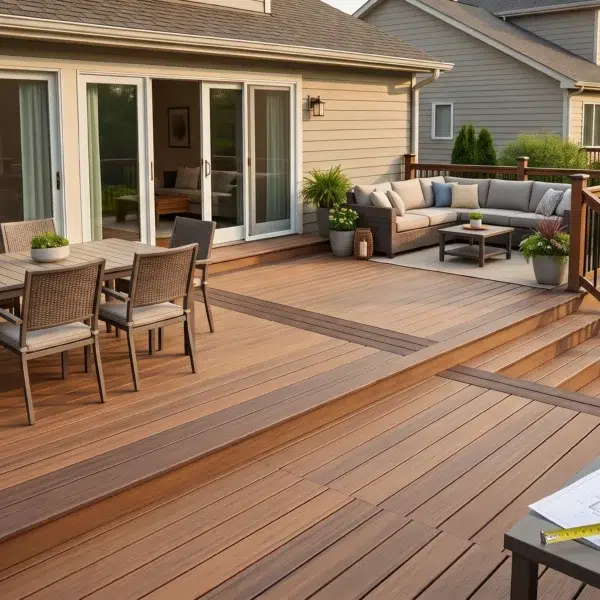
- Design flexibility: Different rail profiles, post sleeves, and compatible balusters create visual interest, allowing homeowners to coordinate the railing style with deck boards and exterior trim. Contrasting black balusters can add definition, while matching components create a more uniform appearance.
- A coordinated system: Matching rails, sleeves, trim, and approved hardware can create a consistent appearance across level sections and stairs.
These benefits depend on choosing a suitable product and installing the complete system correctly. Material choice alone does not determine railing safety or performance.
Composite Deck Railing vs. Wood: What’s Best for You?
When comparing composite and wood deck railings, consider the initial cost, ongoing maintenance, appearance, and product sourcing. Here’s a comparison to help you choose what’s best for your home:
- Cost: Wood railings might initially be less expensive than composite railings. However, over time, the low maintenance costs of composite materials can make them a more cost-effective choice.
- Upkeep: Wood railings require regular maintenance, including staining, sealing, and repair, to prevent decay, warping, and pest damage. Composite railings, on the other hand, require minimal upkeep, as they do not need staining or sealing and are more resistant to environmental damage.
- Aesthetics: Traditional wood offers classic beauty and can be customized with stains and painted finishes. Composite railing provides a wood-inspired style with less routine upkeep. Compare samples beside your siding to find a finish that suits your personal style and the character of the outdoor space.
- Environmental considerations: For wood, check sourcing and any treatment requirements. For composite, review the product’s documented recycled content and disposal options. Neither material should be considered environmentally preferable based on its label alone.
Composite railing is often the more practical choice when you want a coordinated, traditional appearance with less routine upkeep. Wood may be preferable when a railing needs to match historic trim, accommodate custom shapes, or reproduce details unavailable in manufactured systems. Compare the initial price with the maintenance you are prepared to handle over time.

What’s The Difference Between Composite And Vinyl Railing?
Understanding the differences between composite and vinyl railings can help you decide which material is best for your deck. Here’s a comparison:
- Materials: Wood-plastic composite combines wood fibers and plastic, while vinyl railing is typically PVC-based. Both may use internal reinforcement, depending on the system.
- Appearance: Color, texture, sheen, and profile vary by product. Compare physical samples rather than assuming every composite railing resembles natural wood or every vinyl railing has a glossy finish.
- Fit with the home: Either option can complement a traditional exterior. Consider how the railing looks beside the siding, trim, masonry, and deck boards.
- Maintenance: Both generally require less routine finishing than wood. Compare cleaning instructions, warranty terms, and available replacement components before choosing.
Composite vs. Aluminum Deck Railing: When Slimmer Profiles Matter
Composite railing often suits homeowners who prefer substantial posts and a traditional appearance. Aluminum is worth considering when slimmer profiles and clearer sightlines are priorities, particularly on elevated decks, smaller platforms, or properties overlooking trees or water.
Powder-coated aluminum offers clean lines and a sleek, modern style with a lighter visual profile. Black finishes can be less visually prominent against some backgrounds. Composite railing with approved black aluminum balusters combines substantial posts and rails with slimmer infill, balancing a traditional frame with a more open appearance.
For decks in New Jersey and Pennsylvania, consider exposure to moisture, sun, and coastal air alongside appearance. Check the selected product’s care instructions and warranty limitations for the installation environment. Both materials need correctly designed post connections and compatible hardware.
What Features Can You Include in Your Composite Deck Railing?
Depending on the product line, a composite railing system may accommodate features that change its appearance, everyday use, and maintenance needs. Confirm compatibility before choosing any accessory or alternative infill.
- Drink rails: An approved deck-board cap adds a broader surface above the top rail for a drink or small item. Match it to the decking or use a contrasting finish to emphasize the railing style. Confirm that the top rail, adapters, and posts support the specified configuration.
- Glass panels: Where approved for the selected system, full glass panels offer unobstructed views between posts and allow natural light through the infill. Tempered glass panels may be an option, but the required glazing specification depends on the system and applicable requirements. Glass can create an elegant enclosure around an outdoor space, although fingerprints, pollen, and water spots require more frequent cleaning.
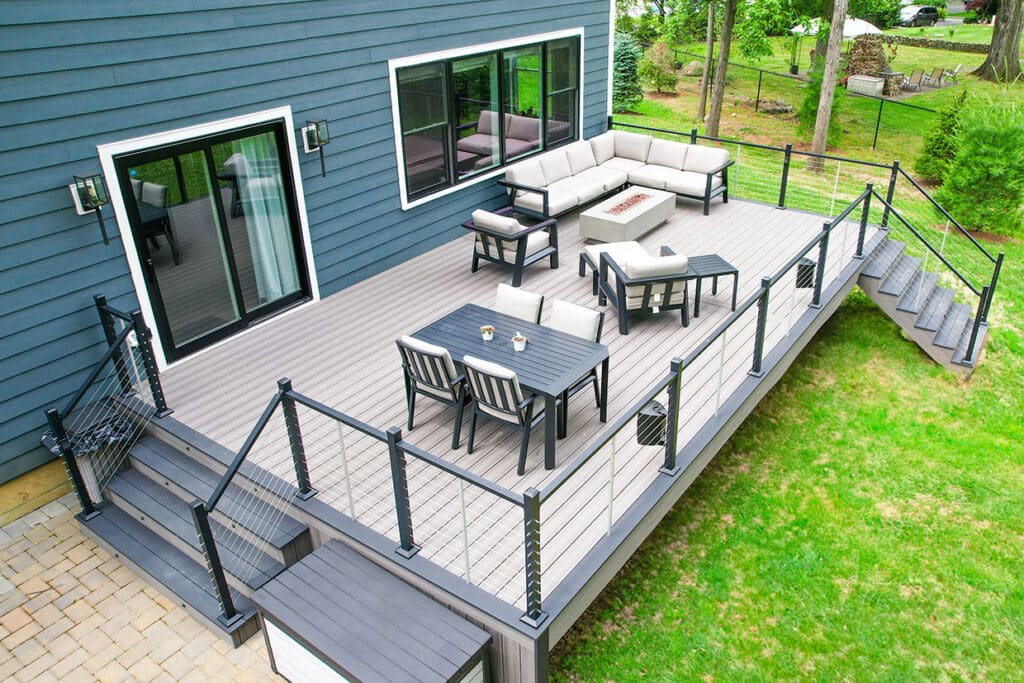
- Cable infill: Stainless steel cables offer a sleek, modern style and preserve sightlines between posts. They require suitable supports, specified spacing, and correct tension to maintain structural integrity and meet applicable safety requirements.
- Aluminum balusters: Approved black aluminum balusters can add a sleek contrast to lighter composite posts and rails. This combination offers a modern style without replacing the substantial frame, helping the deck feel connected to the surrounding space.
Consider the view from inside the house as well as from the deck. A combination that looks balanced in a product photo may feel too bulky once stairs, furniture, and the full railing layout are in place. Explore more deck railing ideas to compare materials and design combinations.

Maintenance Needs of Composite Deck Railings
Even durable railing materials need cleaning and periodic inspection. Composite deck railings generally require less routine maintenance than wood, but long-term durability depends on the product, exposure, and installation. Follow the manufacturer’s instructions to maintain the finish throughout its service life.
- Clean as directed: Remove pollen, dirt, and other buildup using the manufacturer’s recommended cleaning method. For Trex products, consult the Trex railing care and cleaning guide for product-specific instructions. Check before using abrasive tools, strong chemicals, or a pressure washer.
- Inspect connections: Look for loose brackets, fasteners, post connections, or damaged components. Low-maintenance materials do not eliminate the need to check the railing’s condition. The NADRA Deck Evaluation Checklist provides a broader reference for discussing an existing deck’s condition with a qualified professional.
- Care for each material separately: Glass, metal balusters, cable, and composite surfaces may have different cleaning and inspection requirements.
- Check finish restrictions: Composite railing typically does not need routine staining or painting. Follow the product instructions before applying any coating, as unsuitable treatments may affect the finish or warranty coverage.
Account for local exposure when planning upkeep. Shaded decks may collect different buildup than sunny decks, while coastal locations may require additional attention to hardware and finishes.
Installing Composite Deck Railings: DIY or Professional Help?
When it comes to installing composite deck railings, you can choose to do it yourself or hire professionals. Here are some tips to help you decide the best option for you:
DIY Installation
- Cost-Effective: Doing it yourself can save you money since you won’t be paying for professional labor.
- Satisfaction: There’s a sense of pride and accomplishment in completing a project on your own.
- Considerations: You need the skills to assess attachment points, follow the system’s installation instructions, and complete post connections and stair details correctly. Allow time to confirm the layout and any applicable permit or inspection requirements before starting.
Professional Installation
- Expertise: Professionals have the experience and skills to handle the installation quickly and efficiently.
- Quality and Safety: Experts ensure that the installation meets safety standards and is done correctly, which can help avoid future issues.
- Cost: Hiring professionals will cost more upfront than doing it yourself. Proper installation by professionals can save you money in the long run by avoiding mistakes and ensuring durability.
Before deciding on DIY installation, review the manufacturer’s instructions and confirm that you can complete the structural connections, required blocking, post layout, and stair details correctly. Rail kits simplify assembly, but they do not resolve an unsuitable attachment point or an incorrectly planned layout.
Guard height, openings, stair handrails, and attachment requirements must be checked against applicable local requirements and the selected system’s instructions. Plan corners, gates, transitions, and drink rails before ordering components.
Professional installation is worth considering when existing framing needs assessment, the layout includes complex stairs or transitions, or you are unsure how to make the required connections. Contact Deck Guardian to discuss the railing system, installation scope, and estimated cost for your deck.

Choose Composite Deck Railing That Fits Your Deck
When planning your dream deck, choose a railing style that balances appearance, durability, and everyday use. Composite can suit a traditional design, while sleek aluminum or compatible glass infill may better support a modern layout. If unobstructed views toward the yard or patio are a priority, compare the complete assembly, including posts and rails. The right deck railing should suit the space and provide features you will use.
Deck Guardian helps homeowners across New Jersey and Pennsylvania plan railing as part of a new deck, porch, or deck resurfacing project.
Request a free estimate to discuss compatible railing systems and a layout that suits your home, budget, and outdoor space.