Table of Contents
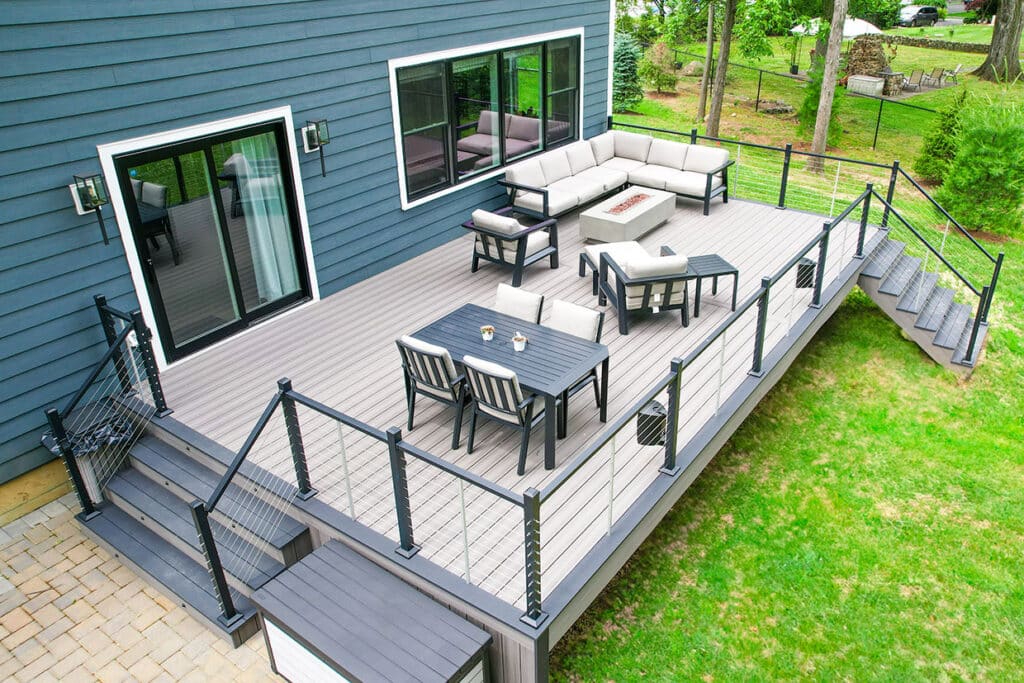
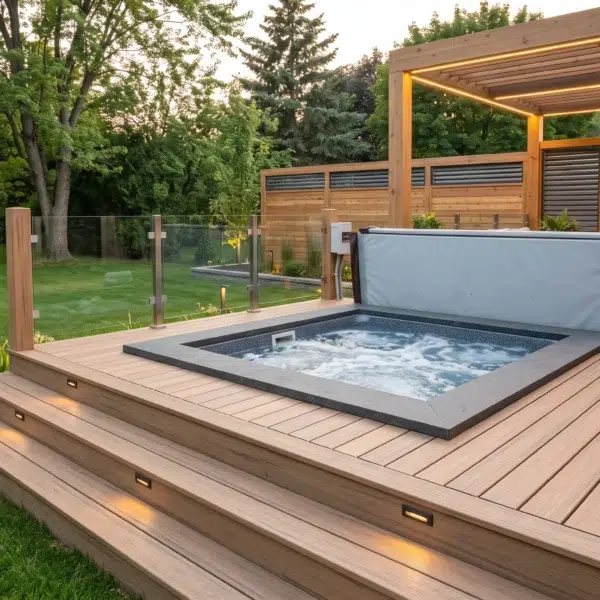
ToggleGround-level deck ideas look easy from a distance. No dramatic stairs, no second-story drop, no tall railing wrapping the whole space. Just a clean platform that extends the house into the yard and creates room for grilling, chairs, a pergola, or a quieter place to enjoy the view.
At Deck Guardian, this is where homeowners sometimes underestimate the project. A ground-level deck can feel like the easier option, but it still depends on proper framing. Beams, joists, posts, drainage, and the house connection all matter if the deck is supposed to feel solid years later. Lower does not mean lighter or simpler in every way. It means the structure sits closer to moisture, shifting soil, and tight spaces that can complicate repairs. That is worth keeping in mind before choosing a layout based only on how clean or simple it looks.
Ground-Level Deck Ideas Still Need Real Structure
A ground-level deck is usually more straightforward than a multi-level deck. It is often easier to plan, easier to build, and easier to update later. That simplicity is part of why homeowners like it. It can keep costs more manageable and fit into the backyard without making the space feel heavy or overbuilt.
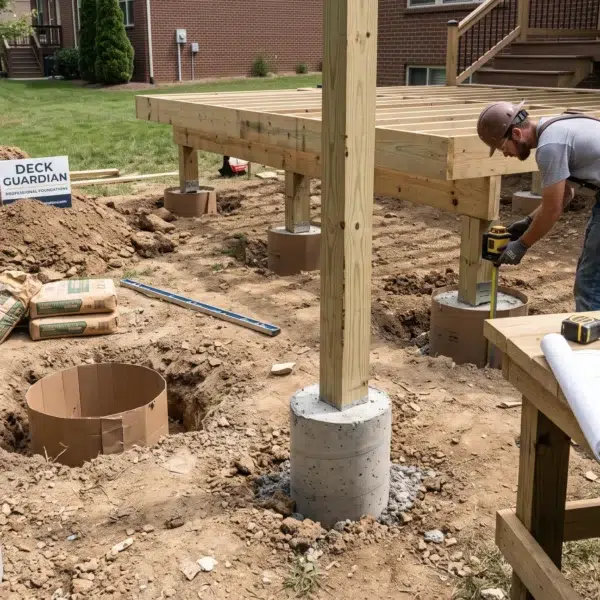
But simple does not mean structure can be guessed. Beams need to carry the load properly. Joists need the right spacing. Joist hangers have to be installed the right way. Posts need secure bearing points, and deck boards need more than a surface that looks flat. They need a frame with enough strength to support the way the deck will actually be used, whether that means dining furniture, planters, a grill, or the rest of the outdoor setup.
This is where many ground-level deck ideas go wrong. The design focuses on furniture placement, privacy, and style, while the beams are treated like a background detail. They are not. The right beam layout helps ensure the deck feels stable instead of flexible, especially after seasons of rain, freeze-thaw movement, and regular use.
Why Deck Beam Planning Matters on a Low Deck
A deck beam transfers weight from the joists down to the posts and ground support. On a ground-level deck, that beam may not be visually obvious, but it is still doing heavy work.
Poor beam planning can lead to:
- bouncing in the middle of the deck
- uneven deck boards
- sagging along the edge
- moisture problems where framing sits too close to the ground
- difficulty adding stairs, railing, or a pergola later
The lower the deck sits, the less room there is to correct mistakes. Access is tighter. A low deck has less room underneath for air movement. That makes beam layout more important than it may seem. Drainage and future maintenance access should be planned before the deck is built, not discovered as a problem later.
Ground Level Deck Design and the House Connection
Some ground-level decks are attached to the house. Others are freestanding. The best type depends on how the homeowner wants the deck to connect to daily life, how the yard drains, and what kind of outdoor experience the space should create.
An attached deck can feel like the easiest extension of the home. You step out from an interior room and move straight into the outdoor living area. But the attachment point has to be protected. Flashing, water management, and structural connection details are critical. If those details fail, moisture can reach the house.
A freestanding ground-level deck gives more freedom in placement. It can sit slightly away from the home, respond to yard shape or drainage, and reduce some direct attachment concerns. Homeowners may also find that this layout works better when they want a deck that feels like a planned destination in the yard rather than a direct extension of one room.
Deck Boards, Joists, and the Space Underneath
The deck surface gets the attention, but the space underneath decides how long the structure performs.
Ground-level decks sit close to soil, mulch, grass, and trapped moisture. That makes airflow important. Joists and beams need enough clearance to dry after rain. If the frame stays damp, wood components can deteriorate faster.
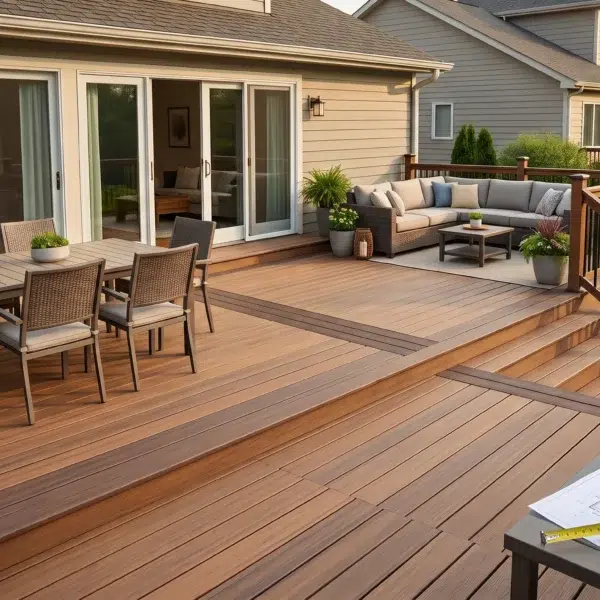
This is one reason many homeowners explore durable composite deck materials for the surface. Composite decking can handle wear better than standard wood boards, especially when the deck sees daily use, sun, rain, and foot traffic. Trex and other composite options can be a smart choice when homeowners want a lower-maintenance surface, but composite deck boards still need a properly planned frame.1 A better surface cannot make up for weak beams or poorly spaced joists.
Railing, Stairs, and Layout Decisions
If a minimalist deck is close to the ground, railing may not be required. In many cases, decks under 30 inches can avoid railing, depending on local rules. That gives the design more flexibility and keeps the deck from feeling cut off from the yard.
The decision still needs to happen early. Railing shapes how people enter, exit, sit, and move around the space. It also affects views, privacy, stairs, furniture, and the deck edge. A low deck can still benefit from a partial rail, planter border, bench, or screen where the layout needs more structure.
That is why understanding how deck rail design affects layout matters before building starts. If railing is added later, it can feel awkward if the deck was not planned for it. Homeowners should share railing preferences early, even if they are not ready to make every finish decision. The beams, posts, and stairs may still work structurally, but the finished design can start to feel pieced together.
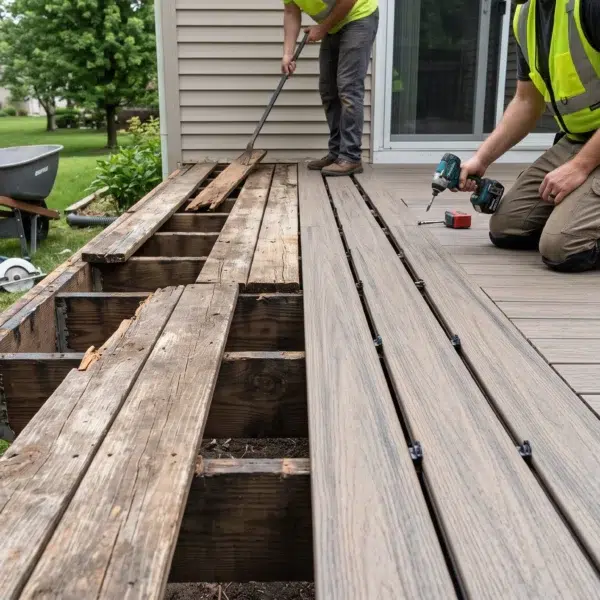
Cost of Removing a Deck Before Building New
The cost of removing an old deck should be included before pricing a new ground-level deck. Professional deck removal in New Jersey often ranges from $5 to $15 per square foot. For a full removal, homeowners may see estimates from $500 to $8,000, depending on the size of the deck, what it is made from, how easy it is to access, and how difficult the demo will be. Before work starts, it is also smart to request an email estimate that separates removal, disposal, permit fees, and any site protection requirements.
Demolition permits can add about $75 to $200. Disposal fees are usually separate and depend on the local transfer station. Wood, concrete footings, railings, and old framing can all increase the amount of debris that needs to be hauled away.
Attached decks tend to cost more because the home has to be protected during removal. Tight work areas, limited parking, and heavy materials like composite boards or masonry can also raise the cost. Contractors may also need eye protection, dust control, and careful cutting methods when old fasteners, concrete footings, or damaged framing are part of the removal. Keeping those details in an email thread makes it easier to compare bids and share the same project information with each contractor.
| Deck removal factor | Typical number or range | Why it affects the project |
| Professional removal cost | $5 to $15 per sq ft | Depends on size, access, and complexity |
| Full deck removal estimate | $500 to $8,000 | Larger or complex decks cost more |
| Basic demolition permit fee | $75 to $200 | Varies by local requirements |
| DIY removal estimate | $500 to $1,000 | Usually covers dumpster rental and tools |
| Approximate professional removal example | around $2,000 | Depends on local labor and site conditions |
These numbers are not design extras. They affect the budget before the first new beam is installed.
Permits, Height, and Building Rules
Deck permit rules usually depend on height, attachment, and structure. If the deck is attached to the house, over 30 inches high, or built with structural components, a permit may be required. Local rules vary, so assumptions are risky.2 Municipal resources can help homeowners confirm what applies before they agree to a final scope or move forward with demolition.3
A ground-level deck still needs to be built with care. Posts, joist hangers, beams, screws, stair placement, and connections are not small details. These details are what keep the deck stable. If a deck is attached, the building department may care even when the deck is low.
The safest approach is to determine permit needs before demo or construction begins and to save any approval emails, permit notes, or inspection requirements for the rest of the project.
Better Ground-Level Deck Ideas Start With Beams
The best ground-level deck ideas are not just about style. They start with how the deck will be used and what homeowners would love the space to handle every week: quiet seating, outdoor meals, a grill area, or continuing access from the house to the yard.
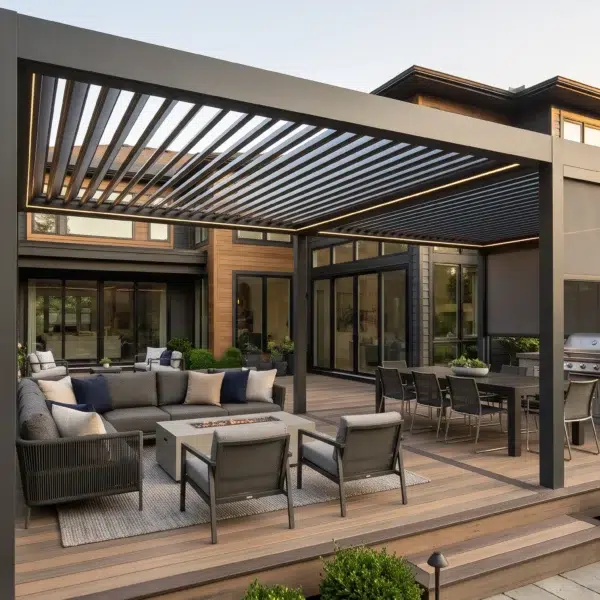
A dining space needs enough room around chairs. A pergola needs posts and beam planning that can support the added feature. A privacy screen changes edge loads and wind exposure. Stairs need comfortable access to the yard. Even a simple platform needs a smart structure if homeowners want it to feel secure and last. The best experience usually comes from planning these decisions together instead of treating each feature as a separate upgrade.
Across the country, the strongest ground-level deck projects usually start with practical questions, not finish selections:
- Where will people enter and exit?
- Does the deck need stairs on one side or multiple sides?
- Will railing be required or useful?
- Can the beams support future additions?
- Is there enough airflow under the frame?
- Will the layout work with neighboring properties, privacy needs, and the view?
This is the difference between a deck that only looks clean when installed and one that keeps working after years of use. Homeowners can also email photos, measurements, and basic layout goals before the first visit, which helps the contractor acknowledge site limits and prepare better questions.
FAQ
Are ground-level decks easier to build?
They are often simpler than elevated or multi-level decks, but they still need careful work. The beams, joists, posts, drainage, and code requirements all affect the final result.
Do ground-level decks need railings?
A ground-level deck under 30 inches may not need railing, depending on local regulations. Some homeowners still choose railing for privacy, a cleaner edge, or added comfort.
What is the most important part of a ground-level deck design?
Beam planning is one of the first things to get right. The beams carry the deck’s load and help determine how firm the surface feels over time.
Can a ground-level deck be freestanding?
Yes. Freestanding ground-level decks are common because they give more layout flexibility and do not always rely on the house for support.
How much does it cost to remove an old deck?
In New Jersey, professional deck removal usually costs between $5 and $15 per square foot. Full removal estimates can range from $500 to $8,000, depending on the project.
Do I need a permit for a ground-level deck?
Permits are generally required for decks attached to a house, decks over 30 inches high, or decks with structural components. Local rules should be checked before assuming anything.
Can composite decking be used on a ground-level deck?
Yes, composite decking can work well on a ground-level deck. It still needs good framing, airflow, drainage, and correct installation.
Why do joist hangers matter?
Joist hangers help hold joists securely in place. Poorly installed hangers can weaken the frame and affect the deck’s long-term stability.