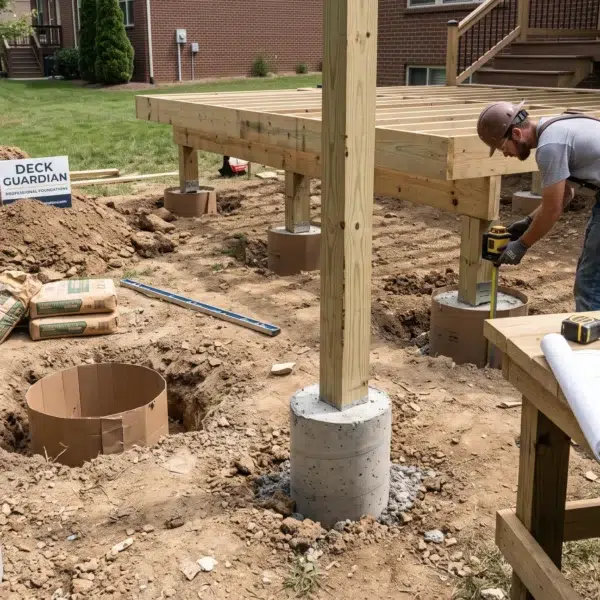
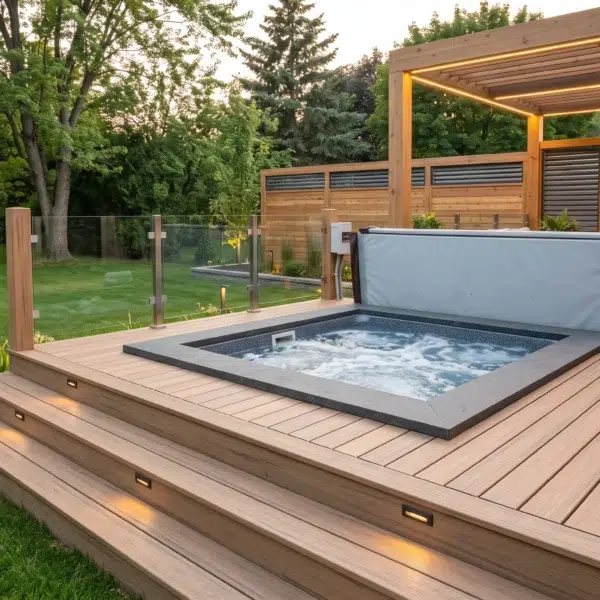
Bamboo decking can look like a material that should work almost anywhere. It has a clean surface, a hardwood-like feel, and a more modern look than standard wood decking. For many residential outdoor applications, treated bamboo planks can be a strong choice on a raised deck with good airflow. On a ground-level deck, the answer gets more complicated.
At Deck Guardian, we do not judge a deck material by the sample board alone. The first thing we check is not just the board itself. It is the whole setup underneath: ground conditions, frame, joists, drainage, fasteners, and airflow. Bamboo can be a durable choice, but it still needs the right installation environment. No material ensures long-term performance if the ground beneath the deck stays wet or the frame cannot dry properly.
Building a Deck at Ground Level Starts Below the Surface
Ground-level decks look simple from the outside. They sit low, they do not need tall stairs, and they avoid the big visual presence of an upper deck. Some are even called floating decks because they can be built on concrete blocks, pavers, or a gravel base rather than attached directly to the house.
The hidden issue is what happens underneath. A low deck is more exposed to ground moisture than many homeowners expect. Soil, mulch, grass, and damp air sit close to the frame. If there are only a few inches between the joists and wet ground, airflow becomes weak. The joists dry slowly, fasteners take more abuse, and boards can start to cup, warp, move, or wear in uneven patterns.
Before any decking goes down, the site has to be ready. That applies to bamboo, composite, tropical hardwood, and every other surface material. Clear the area first. Improve drainage. Compact the gravel. Use landscape fabric where it helps control growth. Then check the slope, because water should move away from the house, not sit under the deck.
Ground Level Deck Conditions That Challenge Bamboo’s Highest Durability Class
A ground-level deck is not automatically bad for bamboo. The real problem is moisture.
Untreated bamboo is not suitable for exterior deck installation. Outdoor bamboo products are made differently. A heat treatment process, such as Thermo-Density, increases the material’s reliability because it removes sugar molecules naturally present in the fibers. Fungi and microorganisms can use those sugars as a food source, so removing them helps improve durability and stability. This is one reason some engineered bamboo decking products can achieve the highest durability class under EU norms.
That performance matters, but installation still matters more. Bamboo needs airflow, proper spacing, and time to dry after rain. Even strong bamboo planks can warp when moisture is trapped on one side for too long.
If the soil below the deck holds water, or if the boards are installed too low, bamboo becomes a less dependable choice.
Decking Boards Need Airflow, Not Just Strength
A deck can fail from the bottom up, even when the boards look strong. Ventilation is one of the big reasons. For a ground-level deck, at least 6 inches of clearance under the joists is commonly recommended so air can move and moisture has less chance to sit under the frame. That clearance is essential because it helps the structure dry after rain and keeps the boards more stable.
Small gaps between decking boards help too. They create drainage and ventilation across the surface. Fasteners are another place where shortcuts show later. Installed wrong, they can cause splitting, board movement, uneven stress, or visible holes around weakened connection points. In New Jersey’s humidity, galvanized or stainless steel fasteners are important because rust weakens connections quietly over time.1
Whether the surface is bamboo, hardwood, composite, or pressure-treated wood, the same rule applies. The boards matter, but the joists, fasteners, supports, and other structural items underneath matter more.
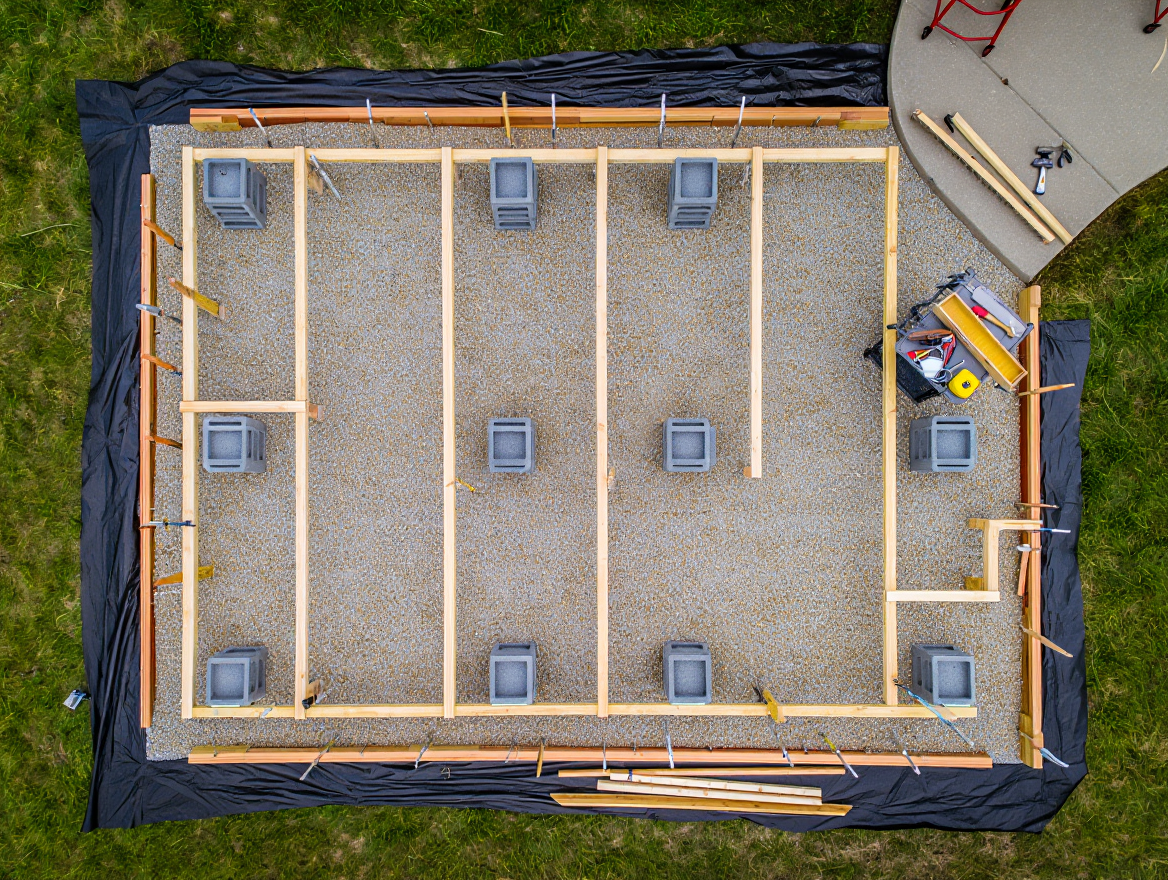
Floating Deck Foundations Need Real Planning
A floating deck can help save on costs when the yard only calls for a low platform, not a raised deck with stairs, railings, or a landing. But it still needs a serious base. If the support below is weak, the deck will show it later.
Concrete blocks, pavers, or compacted gravel can be used for a ground-level deck when the base is done properly. The frame should use pressure-treated lumber rated for ground contact, since low decks deal with more moisture than many homeowners expect. Building a ground-level deck in New Jersey requires careful planning for moisture management because the state’s humid climate and the New Jersey Uniform Construction Code both affect how the structure should be built.
Footing requirements vary by municipality.2 In many New Jersey locations, footings may need to extend below the frost line, often around 30 to 42 inches. Standard code practice often uses at least 36 inches to reduce movement as the soil freezes and thaws. That is why a “simple” floating deck still needs careful planning.
Bamboo, Composite Boards, and Hardwood Compared
Bamboo can be a strong middle option between wood and composite. It has the look of hardwood, a solid feel underfoot, and reliable performance when the deck is installed correctly. The problem is ground contact and trapped moisture. In those conditions, bamboo usually has less margin for error than composite decking, so homeowners should research the site conditions before choosing it for a low build.
PVC and composite boards are popular surface decking materials for New Jersey’s humidity because they are designed for damp outdoor conditions and do not rot. They resist moisture, handle environmental wear, and avoid many of the decay issues that can affect wood. That is why they are often used on low decks in humid climates.
Ipe and other tropical hardwoods are naturally tough against insects and mold. They are durable, but they are not simple budget materials. They still need proper spacing, fastening, and installation.

|
Material |
Ground-level fit | Moisture concern |
Maintenance level |
| Treated bamboo decking | Good with airflow and drainage | Medium | Medium |
| Composite boards | Strong fit for damp areas | Low | Low |
| Tropical hardwood | Durable but costly | Medium to low | Medium |
| Pressure-treated wood | Practical for framing and budget builds | Medium to high | Medium to high |
| Untreated bamboo | Not suitable for exterior deck use | High | High |
The table does not choose the material for every project. It shows the basic pattern in a simplified way. The closer the deck sits to damp ground, the more important moisture resistance becomes.
When Bamboo Decking Makes Sense
Bamboo decking can make sense when the ground-level deck is designed with moisture control from the beginning, and the main features of the build support drying, drainage, and stable fastening.
It is a better fit when:
- the deck has enough clearance under the joists
- gravel or pavers help reduce standing water
- landscape fabric limits weed growth and ground moisture
- fasteners installed are corrosion-resistant
- the frame is stable and built with suitable outdoor-rated materials
- the homeowner accepts some maintenance to preserve color
Bamboo can weather naturally over time, similar to hardwood. If the homeowner wants to keep the original color, annual cleaning and basic refinishing tools may be needed.
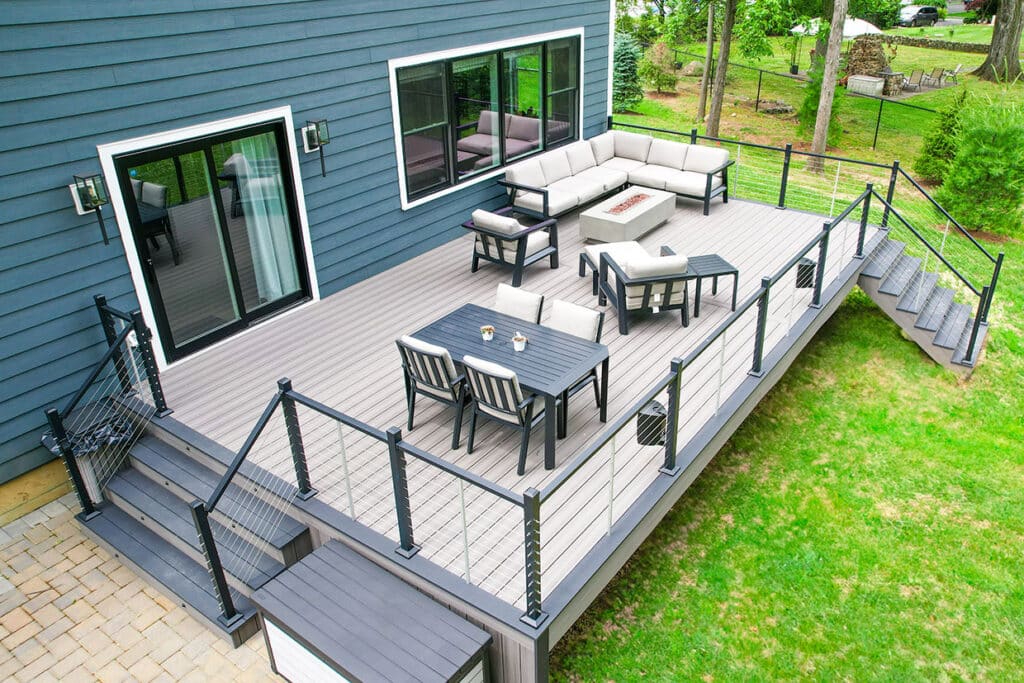
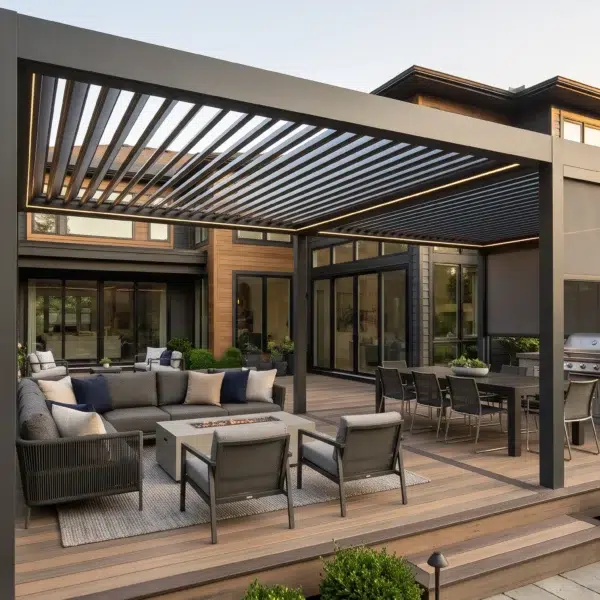
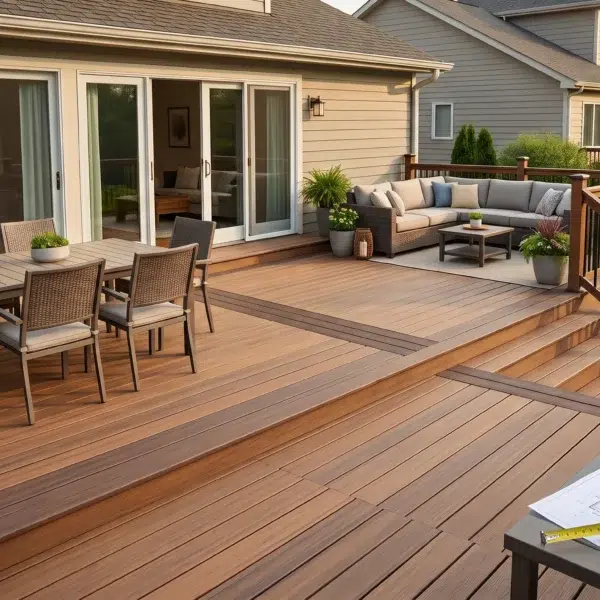
It can also look sharp with a picture frame border, clean stairs, modern railings, or a privacy wall, or a pergola. The material works best when the whole deck design supports it, especially when shade, access, and layout choices are planned together rather than added later.
Where Bamboo Decking Does Not Make Sense
Bamboo is a poor fit when moisture is constant. A deck built too close to the soil, with poor drainage or limited airflow underneath, puts the material in a difficult position. In that kind of setup, composite boards may be safer. Bamboo also asks for more care than homeowners who want the lowest-maintenance option may expect.
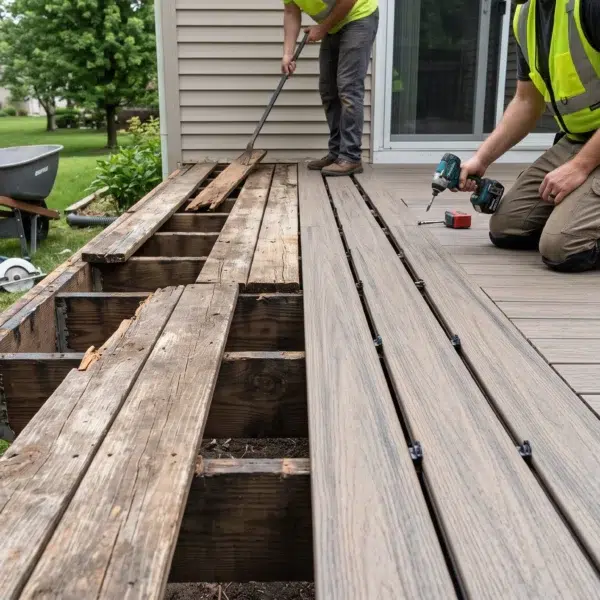
It should also be avoided when the existing frame is already in bad shape. Weak joists, rotted wood, shifting supports, or unstable blocks are structural problems. New bamboo boards cannot make an unreliable frame dependable.
In that case, it may be smarter to inspect the structure and decide when resurfacing is the better option or whether the deck should be rebuilt entirely.
Build a Deck Around the Site, Not the Sample Board
A good ground-level deck is not about choosing the most popular board on the market. It is about choosing what works for the yard, the main interior access point, and the way people actually move through the outdoor space.
Bamboo can be a strong option when the backyard drains properly, the frame has clearance, and the installation is done with care. If the site stays damp or the deck cannot get enough ventilation, the material choice becomes more limited, even when the rest of the design feels complete.
That is why the plan has to come first. Size, shape, stairs, access points, fencing, patio connections, covers, fire features, ceiling details in covered areas, and nearby landscaping all influence how the deck holds up over time.
Looking through decking design ideas, including gazebo ideas after deck resurfacing, can help homeowners think beyond the surface and consider how the full outdoor space should work.

FAQ
Is bamboo decking good for a ground-level deck?
Bamboo can work, but it is not the most forgiving material in wet ground-level conditions. It needs solid drainage, enough clearance, airflow, and careful installation. Without those, the risk goes up.
What is a floating deck?
A floating deck is a low deck that usually is not attached to the house. It often rests on concrete blocks, pavers, gravel, or another stable support system.
Is bamboo decking rot-resistant?
Treated bamboo can be rot-resistant because heat treatment removes natural sugars that can feed fungi and microorganisms. Good treatment helps, but poor installation can still cause problems.
How much clearance does a ground-level deck need?
At least 6 inches below the joists is commonly recommended to improve airflow and reduce moisture buildup.
Is composite better than bamboo for ground-level decks?
In many damp sites, yes. Composite boards resist moisture and do not rot like wood, so they can be more reliable near the ground.
Can untreated bamboo be used outside?
No. Untreated bamboo is not suitable for outdoor decking. Exterior bamboo boards must be treated and engineered for weather exposure.
Do ground-level decks need permits in New Jersey?
Permit requirements depend on the municipality. Decks attached to the house, over 30 inches high, or affected by local zoning rules often need permits.
What matters most when building a ground-level deck?
A deck performs from the bottom up. Drainage, airflow, stable support, joists, fasteners, and material choice matter more than the surface appearance alone.