Waiting for spring to build a deck feels like common sense. The weather warms up, the ground thaws, and suddenly every homeowner in the neighborhood has the same idea. Building a deck is a significant investment in your home, and that shared instinct is costing people real money, real time, and real headaches.
Contractors across Pennsylvania and New Jersey, including the team at Deck Guardian, see the same pattern repeat every single year. March arrives, phones ring constantly with last-minute spring planning, and everyone wants their new deck finished “before Memorial Day.” The problem is simple economics: when demand spikes, so do prices and wait times, and homeowners who delay construction end up paying more for the same project.
The short answer? Spring deck construction typically costs 15-25% more than off-season building due to peak demand pricing across labor and materials.1
This article breaks down why the spring rush is the most expensive habit in home improvement, covering:
- The hidden “spring rush tax” that adds thousands to identical projects
- What actually happens to your timeline when you wait
- Why cold weather construction is safer than most homeowners realize
- The real math behind off-season savings

The Spring Rush Tax Nobody Talks About: Deck Building Costs and Material Availability
Every contractor in the Mid-Atlantic is slammed from March through June. When demand spikes, labor costs rise, suppliers raise material prices during peak season, and lead times stretch from weeks to months.
Consider a realistic comparison. A deck project that costs $18,000 in November might run $21,000 to $23,000 in April. Focusing on a simple design, smart material choices, and even timing can unlock budget-friendly deck construction strategies that keep costs down without sacrificing quality. That is supply and demand in action, and it represents a 16-28% increase for waiting a few months.
Quality deck builders in NJ often book out months in advance. During off season months, crews have flexible scheduling and can focus entirely on your build. During spring, they are juggling multiple jobs, dealing with rain delays across all of them, and prioritizing whoever booked first.
In the Philadelphia suburbs, Bucks County, or the Jersey Shore corridor, spring demand is especially fierce; in these markets, spring means intense competition for limited contractor availability. Homeowners want their outdoor space ready for family dinners and summer entertaining, and that Memorial Day deadline means everyone calls at once, driving higher costs across the board.2
Material availability takes a hit too. Suppliers know spring means peak season, so they price accordingly. The composite decking that sat discounted in January suddenly costs full price in April.
What Actually Happens to Your Project and Outdoor Living Season When You Wait
When you call a contractor in March, you are not third in line. You might be twentieth. Your “spring build” becomes a July build, and you spend the best outdoor living season months staring at a half-finished frame all summer long while the summer heat beats down.
The timeline shift is dramatic: early spring planning that starts in March often does not see actual construction until late spring or early summer. By the time crews are available, permits are processed, and weather cooperates, you have missed half the warm weather season and may already be sliding into late summer.
Municipal offices in NJ and PA process permits year-round, but spring applications create bottlenecks. A permit that takes two weeks in December might take six in April. Those extra weeks push your entire project further into summer, potentially causing delays that ripple through the whole schedule.
Weather interruptions tell an interesting story. Most homeowners worry about winter cold, but April showers cause far more construction delays than January temperatures. Spring in the Mid-Atlantic is unpredictable. Rain soaks the ground, turning yard conditions into mud pits. Footings cannot be poured, framing gets postponed, and potential delays stack up.
Meanwhile, the neighbor who broke ground in January? They finished weeks ahead and have been grilling since February.
Off-Season Deck Building Is Not the Risk You Think It Is
Deck building is one of the most cold-weather-friendly construction projects available, especially when you compare it with rushed summer deck construction. This surprises homeowners who assume all outdoor work stops when temperatures drop, but the reality is far different, especially when you consider the many advantages of building a deck in the fall.
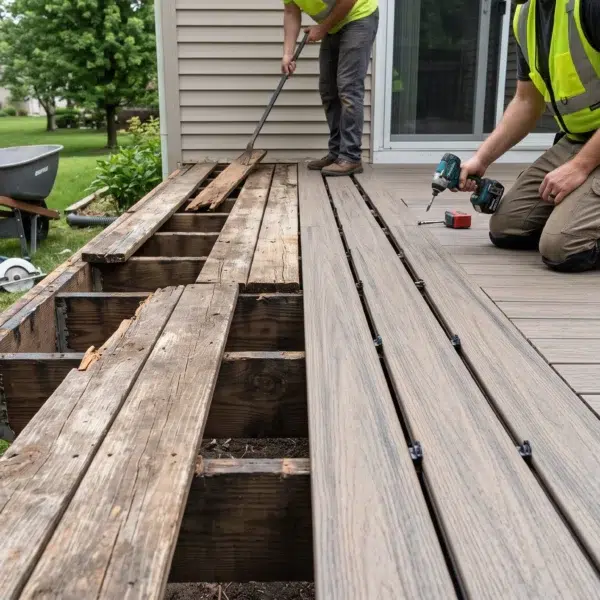
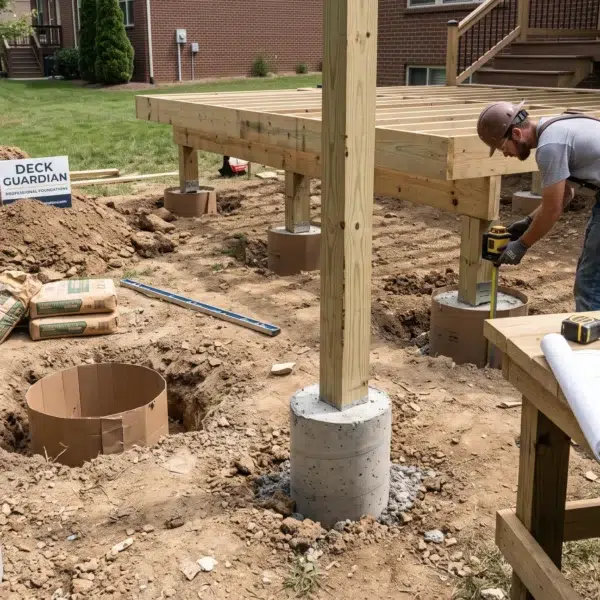
Footings can be dug in frozen ground with the right equipment. Composite decking and PVC materials are temperature-neutral, performing identically at 30 degrees and 70 degrees. Framing lumber does not care about the thermometer, but choosing the best wood or composite materials for your deck still has a major impact on long-term performance. Experienced crews that handle year-round deck construction know exactly how to manage cold-weather builds without cutting corners.
The key factors that actually matter are crew experience and proper methodology, not mild weather or perfect conditions.
One honest limitation exists: concrete pours below 20 degrees require extra precautions, and certain staining work should wait for cooler temperatures above freezing. But these represent specific technical constraints, not blanket restrictions on building a deck during winter months.
Ground conditions in late fall and winter are often better than early spring. While spring brings soft, saturated soil from snowmelt and rain, frozen or dry winter ground can be easier to work with for foundation installation, and to manage drainage, ensure proper drainage around the deck site to prevent moisture buildup.
Quality outcomes often improve during off season builds. With less scheduling pressure and crew fatigue, installers can focus on detail work rather than rushing to the next job, especially when the project is planned with a clear budget using a reliable decking cost calculator.
The Math That Changes Everything About the Best Time to Build
A homeowner in central New Jersey who signs in November gets lower material pricing, faster crew availability, quicker permits, and a finished deck by February, instead of cramming their summer deck construction into the busiest weeks of the year. They are grilling while neighbors are still collecting quotes and making informed decisions about their own projects, and they can extend that season even further by learning how to keep their deck warm and cozy in colder weather.
Contrast with spring: sign in March, wait six weeks for the permit, wait another month for crew availability, deal with rain delays, and maybe have a deck ready by late June. Same deck, several thousand dollars more, finished four months later.
The best time to build is when everyone else is not building. October through January offers the best combination of pricing, availability, and timeline in Pennsylvania and New Jersey.
Save money by starting when demand is low. Avoid delays by booking when contractor schedules are open. A deck can transform your backyard into a place for connection and relaxation.
Choosing the Best Time for Your Outdoor Space
The spring building instinct feels logical. A deck adds value to your home and enhances your outdoor living experience. But the numbers tell a different story.
Smart homeowners in PA and NJ are learning the best time to build has nothing to do with the thermometer and everything to do with the calendar. When you decide to start matters more than what season it is.
The family down the street who broke ground in December is already hosting backyard gatherings. The family who waited for “perfect weather” is still staring at their lawn, wondering when their contractor will finally show up.
FAQ Key Factors and Deck Building in Different Seasons
Is it cheaper to build a deck in winter than in spring?
Yes. Off-season pricing typically runs 15-25% lower due to reduced demand for labor and materials. Contractors offer better rates during slower months, and suppliers often discount inventory they want to move before new stock arrives. The savings on a typical project can reach several thousand dollars.
Can a deck be built in cold weather, or do you need perfect weather?
Absolutely. Deck construction is one of the most cold-weather-friendly home projects. Composite and PVC materials are temperature-neutral, and structural framing works fine in freezing conditions. The main limitation is concrete work below 20 degrees, which requires extra precautions for proper curing.
How long does it take to build a deck in the off-season vs. spring?
Off-season builds often finish 4-8 weeks faster.3 Shorter permit wait times, immediate crew availability, and fewer rain delays compress the timeline significantly. If upfront budget is a concern, flexible deck financing options for your project can make it easier to start in the optimal season. A November start can mean February completion, while a March start might not finish until late June.
What is the best month to start a deck project in Pennsylvania?
October through January offers the best combination of pricing, availability, and timeline. Permits process faster during these months, contractors have open schedules, and material costs hit their annual low point, especially when you can stack those advantages with seasonal deck building offers and promos. Fall and winter builds consistently outperform spring timing.
Do deck materials get damaged if installed in winter?
No. Modern composite, PVC, and pressure-treated lumber are engineered to handle temperature extremes. These materials are manufactured, shipped, and stored in all conditions year-round. Installation temperature does not impact performance, longevity, or warranty coverage, as shown in many real-world deck resurfacing projects using modern composites.
Why are deck prices higher in spring and the early outdoor living season?
Peak demand drives everything. When every homeowner calls at once, contractors charge premium rates, suppliers raise prices, and wait times balloon. Basic supply and demand pushes spring pricing up 15-25% over fall and winter months for identical projects.
How much does a new deck cost in New Jersey for your outdoor space?
Typical projects range from $15,000 to $35,000 depending on material choice and size. Composite decking sits higher, while pressure-treated wood is more affordable. For more complex layouts, understanding the average cost of multi-level decks in New Jersey can help you budget more accurately. Timing matters significantly. Off-season builds can save thousands compared to identical spring projects.
Can I get a building permit for a deck or porch project in winter in NJ?
Yes. New Jersey municipal offices issue permits year-round without seasonal restrictions. Winter applications often process faster due to lower volume. A permit that takes six weeks during the spring rush might clear in two to three weeks in December, giving you more time to focus on design details like the kind of 700 sq ft composite deck layout and features that best match your yard.
What key factors should I look for when hiring an off-season deck builder?
Licensed, insured contractors with documented cold-weather experience. Ask for winter project references and photos from previous builds, and use a detailed guide on what to know when hiring a deck builder so you can spot red flags early. Verify they understand frost line requirements for your county and carry workers’ compensation coverage for cold-weather job conditions.