Table of Contents
ToggleStrong deck rail design starts earlier than most people think. It does not begin with material selection or finish details. It begins with how the deck is meant to work, how people move through the outdoor area, and how the structure connects back to the house. That is where most railing choices either hold together or start to unravel. The most successful railing options are usually the ones that respond to circulation, views, and the way the outdoor space is used every day, rather than trying to force a perfect railing idea onto a layout that does not support it. That introduction matters because the way people move through the deck often affects railing behavior long before materials are selected.
At Deck Guardian, railing is treated as part of the structure, not an accessory added at the end of a project. A deck with railing that feels natural usually comes from a clear plan where layout, posts, and railing lines are aligned from the beginning. Without that, even the best railing systems can feel disconnected from the rest of the deck.
Deck Rail Layout Is Driven by Structure, Not Preference
Every deck rail is tied directly to the structure. Post spacing, beam layout, and framing decisions determine where railing can sit and how consistent those railing lines will look across the entire outdoor living space. That is why railing systems are not independent design elements. If the framing is not resolved early, it becomes harder to attach railing cleanly and keep each deck rail line visually consistent from one section of the deck to the next. It also becomes harder to align posts, keep spacing balanced, and control the visual form of the railing from one run to another.
When railing is treated as an afterthought, the problems show up quickly. Posts land in awkward positions, spacing becomes inconsistent, and installation becomes more complicated than expected. A clean deck rail layout usually means the plan accounted for railing early rather than after the structure was already built. That also affects cost, because railing prices can vary significantly based on material, labor, and design extras, and late changes are rarely the more cost effective option.
This also explains why some homeowners struggle with deck railing kits. While kits can simplify installation, they assume predictable spacing and structure. Real projects rarely stay that clean, especially when stairs, corners, or multiple levels are involved. Some railing options also come with strict installation instructions, which work best only when the underlying framing matches the manufacturer’s assumptions. A simple example is a deck where stair geometry forces changes in post placement, rail length, and connection points that a stock kit was never designed to handle.
Choosing Between Railing Systems Means Understanding Use First
There is no universal best railing. The right system depends on how the space functions and what the railing is expected to do within that setup. Some homeowners compare railing options mainly by style, while others need the best railing for safety, openness, durability, or easier long-term upkeep.
Some railing choices are about keeping sightlines open. Others are more practical for durability, low maintenance, or overall cost. The problem comes when visual appeal drives the whole decision, and performance gets treated as an afterthought. The most cost-effective choice is not always the cheapest one up front, especially since many systems now come with warranties ranging from 15 to 50 years.1
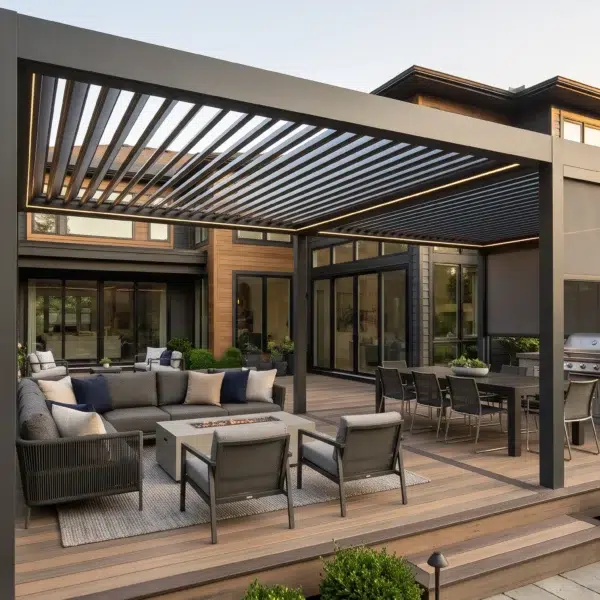
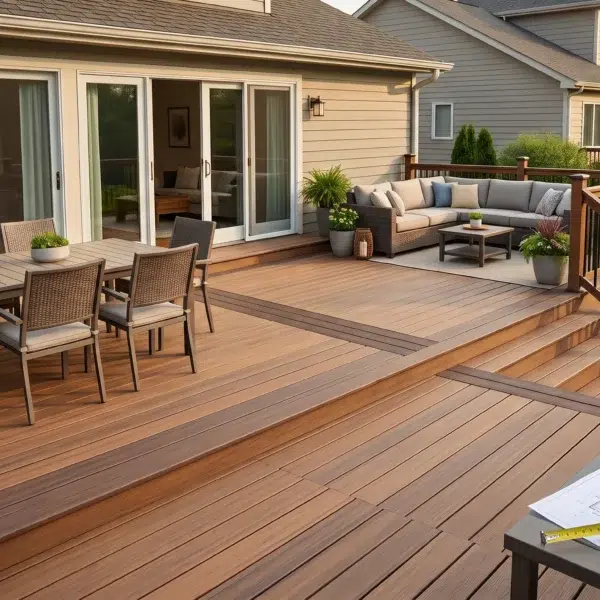
A deck that functions as a complete outdoor living area, with seating, dining, and frequent use, calls for a different railing solution than a small patio platform. The system should support how people use the space instead of compromising it. In a larger outdoor space, railing options often need to do more than provide a boundary; they shape circulation, define zones, and keep the layout from feeling fragmented. On a complete deck layout, posts also help organize access points and guide movement in a way that feels intentional rather than awkward.
Composite Railing and Why It Dominates Modern Projects
In many cases, composite railing becomes the default choice for deck builders, especially in climates like New Jersey. The reason is not just appearance. What composite offers most clearly is consistency, durability, and better long-term predictability. For many homeowners, composite railing stands out because it can work across a wide range of layouts without demanding the same level of upkeep as painted wood. Established systems from brands such as Trex are often chosen for that reason, especially when durable finishes and cleaner integration around posts both matter.
Most composite railing systems are produced as coordinated systems, with posts, top rails, and infill designed to fit together properly. That helps simplify installation and gives the finished project a more consistent look. Compared with wood or vinyl, composite generally does a better job of handling moisture, temperature swings, and regular use over time. It is also one reason budget-friendly composite systems remain popular: some are easier to install, come with warranties, and give homeowners more room for price comparisons across brands.
That does not mean composite always wins. It often makes sense for homeowners who want a deck that performs reliably without demanding constant upkeep. In practice, composite systems from manufacturers such as Trex are often evaluated alongside aluminum options when homeowners want durable performance in a changing outdoor environment.
Cable Railing, Glass Infill, and Rod Rail for Open Views
When the goal is to keep views open, cable railing and glass infill usually come up first. Both are designed around visibility, but they get there in different ways.
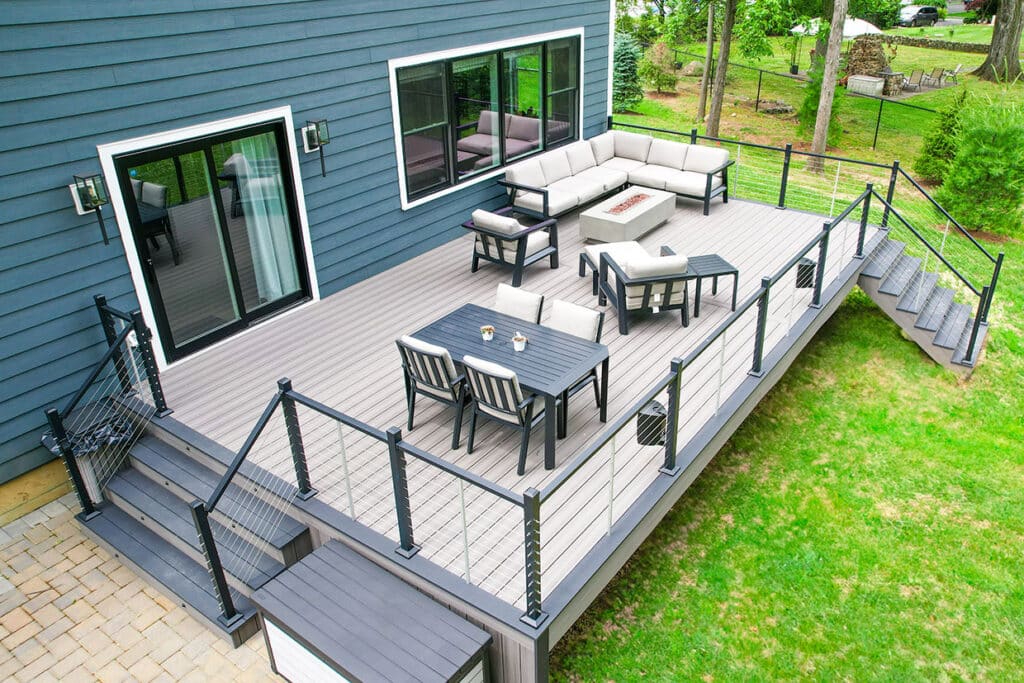
Cable railing uses horizontal lines under tension, so it interferes very little with the view. That tends to work best on decks facing open yards, woods, or other natural surroundings where nature should stay visually present. Cable railing is popular because it maintains safety, visibility, and a clean, modern look. It is not the only open-view solution, though, since rod rail layouts can create a different effect in some modern projects.
Glass infill creates a solid transparent surface instead of a lined pattern. That keeps sightlines open while also reducing wind, so the deck can feel more sheltered without feeling closed off. Glass railings are often chosen for unobstructed views and a sleek, modern look, though they still need regular cleaning to stay visually effective.
Both systems rely heavily on correct installation and structural alignment. If those details are off, even an expensive railing system can feel less refined than it should. That becomes more obvious when glass infill, cable railing, or rod rail panels take center stage and the design is expected to deliver unobstructed views.
Drink Rail and Top Rail Change How People Use the Deck
A drink rail is one of the easiest upgrades you can make, but it often changes the way a deck gets used in a very noticeable way. Once the top rail is widened, the railing becomes more than a boundary. It becomes a usable surface. A well-sized drink rail can make the entire deck rail edge feel more intentional, especially when that drink rail supports casual gathering and everyday use.
People lean on it, set drinks down, and gather around it during conversation. That changes the flow of the space, especially when the deck is used socially. On many projects, the drink rail becomes one of the most used features almost by accident.
The top rail needs to be designed carefully for that reason. It should be wide enough to work in a practical way, but not so wide that it starts dominating the railing visually. The best versions support how people use the deck without making themselves the center of attention.
Railing Materials Affect More Than Appearance
Railing materials matter for reasons that go beyond style. They affect how much care the system will need, how well it holds up, and what the long-term ownership cost really becomes. The raw materials behind each system also influence stiffness, finish quality, and how well the railing performs after years of exposure. Material density, surface coating, and internal reinforcement all play a role here, especially when posts and rails are exposed to weather year after year.
Wood gives a railing a more traditional character, but that also means more upkeep. Moisture and seasonal temperature changes affect how it performs, so maintenance becomes part of the commitment. Composite reduces much of that work and usually keeps a more consistent look over time.
Metal railing systems bring strength and corrosion resistance, especially when aluminum or steel is involved. A metal deck railing can be a strong choice where sharper lines, durability, and long-term corrosion resistance matter most. In coastal areas, marine-grade T-316 stainless steel and powder-coated aluminum are often the safer call. Vinyl stays attractive because it is low maintenance, easy to install, cost-effective, and able to create a cleaner or more unique look depending on profile choice.
The right choice depends on how the deck will function and how much upkeep the homeowner is willing to manage. In freeze-thaw conditions, aluminum and high-grade PVC often hold tighter joints than materials that expand and contract more aggressively.
Post Caps, Details, and the Finishing Layer
Post caps are a small detail, but they often have an outsized effect on the finished look of a railing system. Because posts repeat across the deck, their finishing elements become part of the overall design language. Well-chosen post caps can also help a deck rail feel more resolved instead of visually abrupt from section to section. When the posts are substantial, these details can make the entire assembly feel more sturdy without making it look heavy.
Simpler caps tend to support a cleaner look, while decorative versions can introduce a focal point. Integrated LED lighting can also make sense here, especially in modern outdoor living spaces where evening safety matters as much as appearance. In the right layout, post caps can strengthen a composite railing design without pushing the detail too far.
These details are not what define the deck on their own, but they do influence how polished and resolved the railing feels after installation.
Installation, Codes, and Why They Influence the Final Result
Every deck railing system has to satisfy local code, and those requirements affect both design and construction. In New Jersey, residential deck railings generally need to be at least 36 inches high when the deck is more than 30 inches above grade, and baluster spacing cannot exceed 4 inches.2 Commercial applications typically require 42-inch railings. Those local building codes shape height, spacing, and connection details early, including cases where posts land on the deck surface or on concrete.3
That is why not every design concept can go straight from the sketch stage to the finished deck without revision. Some changes are often necessary to meet code while keeping the original design intent in place. That is especially true when railing has to tie into existing posts, columns, walls, or house cladding without compromising the water barrier.
Installation quality also plays a major role in performance over time. The easiest systems to install usually rely on pre-assembled parts that reduce labor without giving up structural integrity. Many brands also support installers with videos or live assistance during business hours. Even so, poor field work still shows up later, whether the deck rail uses composite railing, metal deck railing, or another system entirely.
A few code-related dimensions help clarify what those requirements look like in practice:
| Requirement | Typical Number |
| Residential railing height | 36 in. minimum |
| Commercial railing height | 42 in. minimum |
| Maximum baluster spacing | 4 in. |
| Guard required when deck is above | 30 in. |
Those baseline dimensions are only part of the picture, but they shape railing layout from the start.
Sloped Yards Change Everything About Railing Design
Not every site is level, and that has a direct impact on railing systems. On sloped properties, post heights vary, railing lines need to adjust, and the structure itself carries load differently.
These projects often highlight the challenges of building on sloped yards, where maintaining consistent lines becomes more difficult as elevation changes across the site. A railing system that works on flat ground may need major adjustments to function properly on a slope.
A well-planned approach aligns structure, posts, and railing so the final result feels balanced, even when the terrain is not.
Railing as Part of the Outdoor Living Experience
Decks are increasingly treated as extensions of the home, not just outdoor platforms. That shift changes how railing is designed and used.
As shown in how patios are becoming outdoor living rooms, outdoor spaces are expected to support daily life, not just occasional use. Railing becomes part of that experience, defining edges, guiding movement, and supporting how the space functions.
A well-designed deck rail does not dominate the project. It supports it. It enhances the outdoor living space without pulling attention away from how the space is actually used.
FAQ
What is the best deck rail for low maintenance?
Composite railing is often one of the most practical low-maintenance choices because it usually requires far less upkeep than wood.
Is cable railing a good option for decks?
Yes. It works especially well where visibility matters, though it still depends on proper installation and some ongoing upkeep.
What is a drink rail?
A drink rail is a wider top rail that turns the railing into a more usable surface for drinks, plates, or small personal items.
Do deck rails need to follow building codes?
Yes. Every deck rail system has to meet local building code requirements for safety.
Can I use deck railing kits for any project?
Not always. They are often a good fit for simpler layouts, but more complex decks usually need custom installation.
What materials last longest for deck railing?
Composite and metal railings are often strong, long-term options because they perform well under weather exposure and resist corrosion. Aluminum is popular for its durability and modern appearance, while PVC systems often use aluminum reinforcement for better performance. A composite railing system or metal deck railing setup usually makes more sense than wood when long-term performance matters most.
Does railing design affect how the deck is used?
Yes. It can influence circulation, seating, views, and how comfortable the outdoor space feels overall.
Should I replace railing when resurfacing a deck?
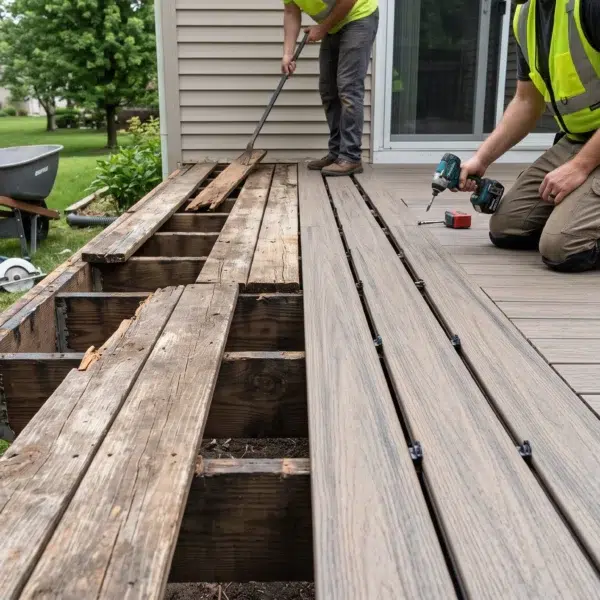
In many cases, yes. An updated railing can improve both the appearance of the resurfaced deck and how well the system works over time.