New Jersey patios used to be an afterthought in the backyard — a flat rectangle of concrete behind the sliding door, maybe a plastic table and a charcoal grill. They were leftover outdoor space, not a planned piece of the hardscaping. That was five years ago. In 2026, NJ homeowners are treating their patios like they treat their kitchens. Planned. Zoned. Built for daily use, not just July 4th.
At Deck Guardian, we have watched this shift happen project by project across Somerset, Morris, and Middlesex counties. The patio is no longer extra space. It is the room people want most.
This article breaks down exactly what that transformation looks like once the concrete truck leaves, the pavers are set, and the furniture goes in — why the basic slab stopped working, what defines a true outdoor living room in New Jersey, and how thoughtful design can transform compact lots more effectively than sprawling slabs, turning leftover outdoor space into a room you actually use.
Here is what you will walk away with:
- The anatomy of a 2026 NJ patio built for daily life
- Why fire features extend your season by four months
- Materials and surfaces that set a room-like tone
- What holds most homeowners back and how to move past it
Why the Basic Slab Stopped Working for Your New Jersey Outdoor Space
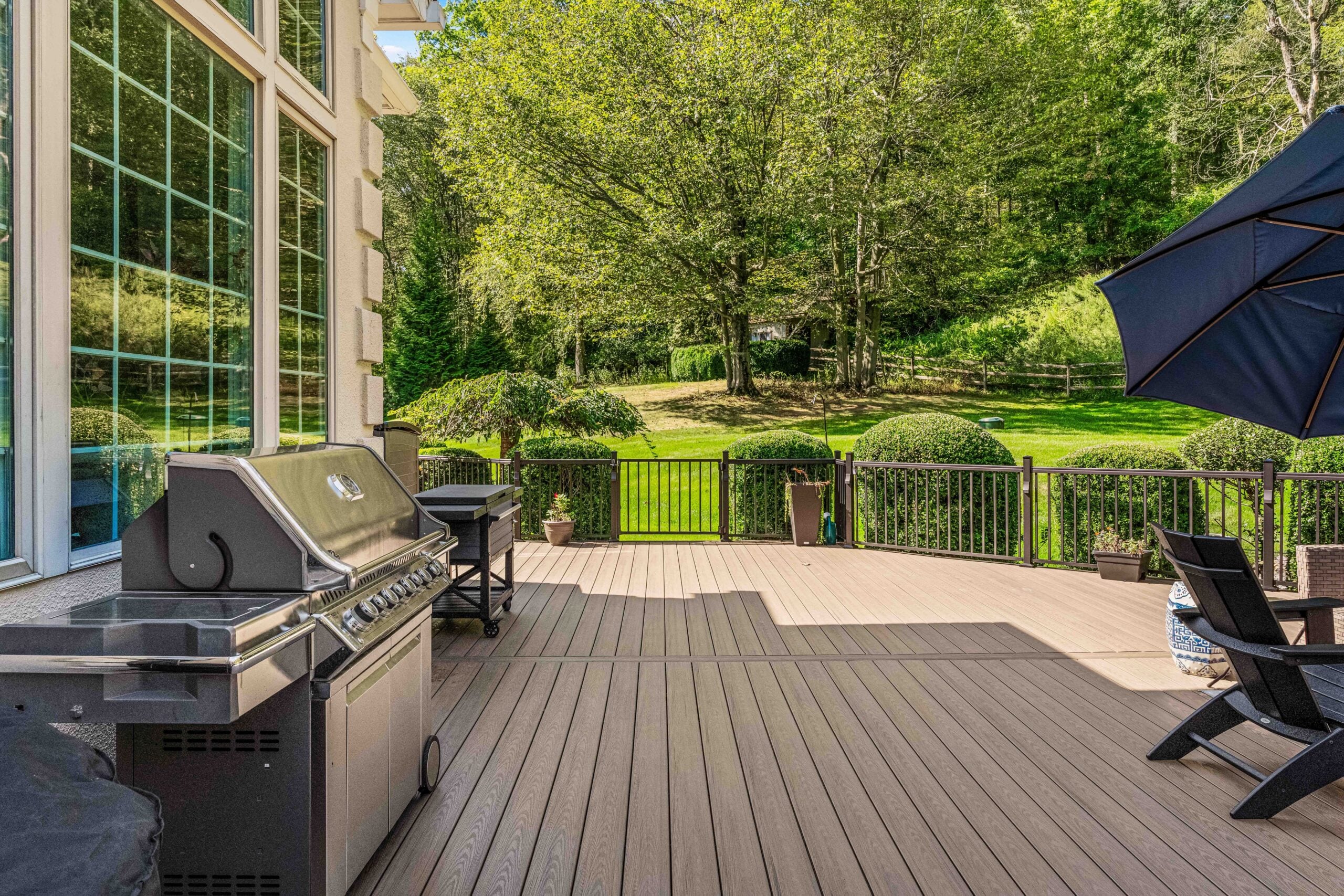
The old New Jersey patio formula looked like this: a 12×12 concrete pad, maybe stamped if the budget allowed, one outlet, zero coverage. It worked when outdoor living meant grilling burgers on Saturday. It does not work now that modern paving services and masonry can turn the same footprint into a true outdoor space with real function.
What changed: COVID pushed families outside. Remote work made backyards into offices. Entertaining moved from dining rooms to backyards. And it stuck. Property values climbed in many New Jersey suburban areas between 2021 and 2025. Homeowners realized that a well-built patio and the right landscape hardscaping add real ROI, not just curb appeal.
A basic slab adds almost nothing to an appraisal. Meanwhile, patios with fire elements and coverage recoup 50 to 80 percent of their cost at resale.1 The gap became clear. Homeowners started expecting their outdoor space to function like an indoor room, but most patios were never designed for that.
That gap is what 2026 is closing.
What an Outdoor Living Room Actually Looks Like in NJ
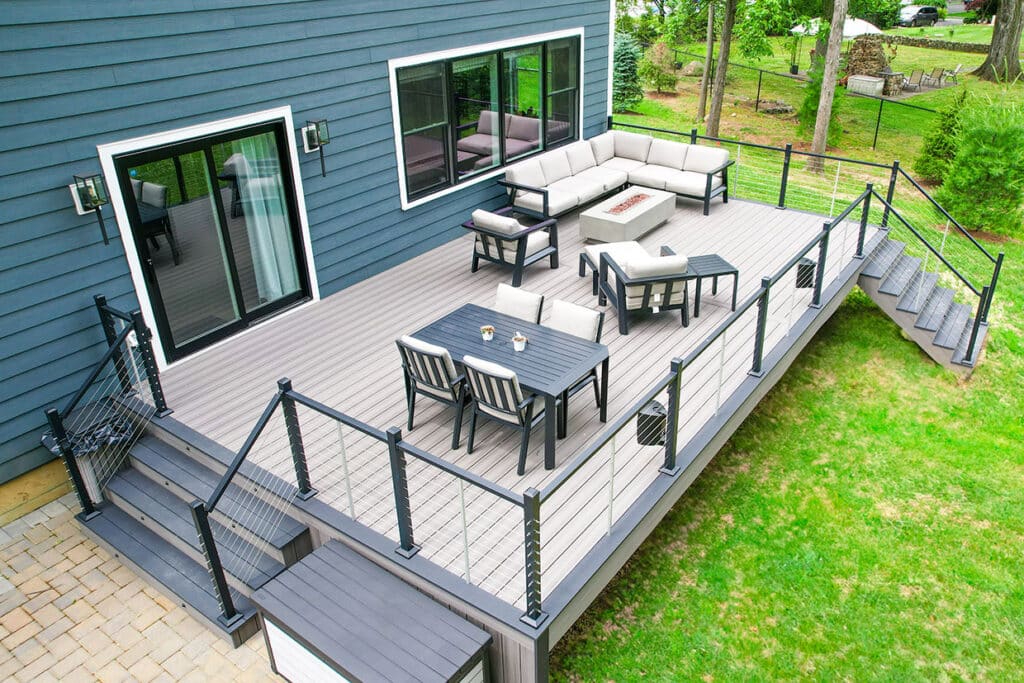
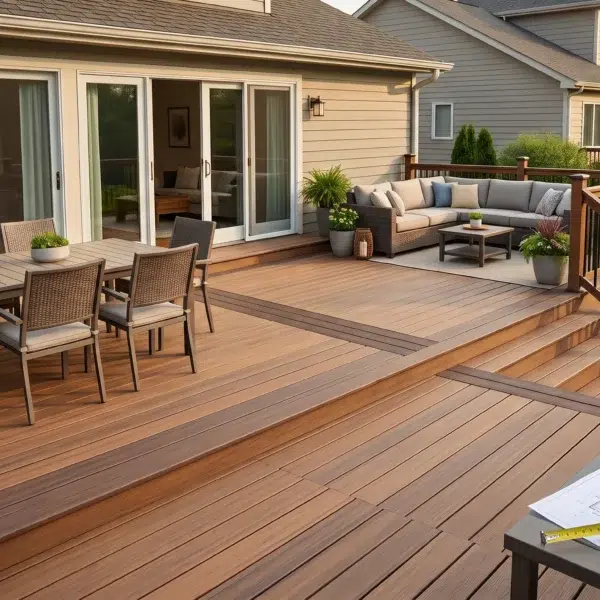
A functional 2026 New Jersey patio breaks down into distinct zones, each serving a purpose. This is not accidental. It is intentional design that makes every square foot work harder. Custom designs for patios can be created to fit individual homeowner needs.
Defined seating zone: Deep sectional or modular furniture arranged for conversation, not lined up against a wall. The best layouts orient seating toward a fire feature, not toward the house. Angling furniture 45 degrees to the fire creates natural conversation flow.
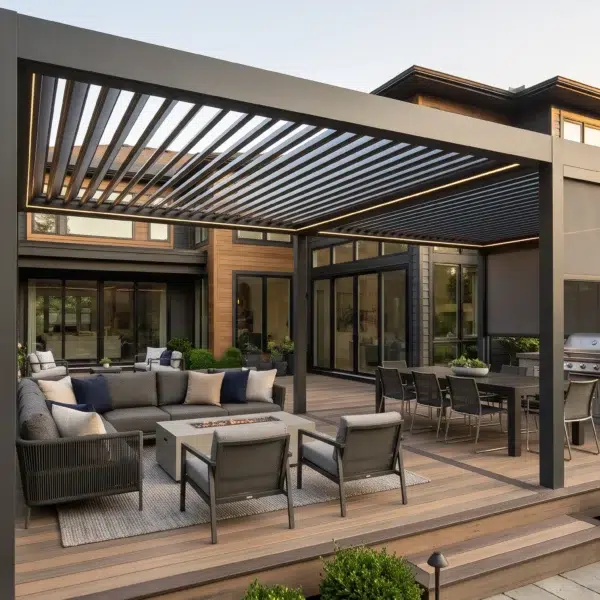
Dining zone: Separate from lounging. Often tied into outdoor kitchens so you can cook and serve without sprinting back inside. Outdoor kitchens in New Jersey feature built-in grills, refrigerators, and pizza ovens, making them popular for entertaining. Covered by a pergola or solid roof structure so rain does not cancel dinner plans. Sized for 6 to 8 people, which is the NJ sweet spot for regular entertaining. The hardscaping and walkways around the table should make it easy to move between house, grill, and pool. Any overhead structure has to be engineered to local snow-load requirements so it quietly does its job year after year.
Transition zone: The strip between the sliding door and the patio surface. In 2026, builders are matching interior flooring tones to exterior pavers so the step outside feels seamless, not jarring. Porcelain tiles that echo oak hardwood floors reduce the perceived step-down dramatically.
Utility zone: The part nobody photographs but everybody needs. Concealed storage for cushions, a built-in cabinet for grilling supplies, hidden electrical runs for lighting and heaters, and low retaining walls that double as seating. Quality workmanship and solid masonry here mean built-ins that actually hold weight, stay square, and keep gear out of sight instead of scattered across the patio.
This is not a 5,000 sq ft Texas layout. These zones work on 300 to 500 sq ft NJ patios because the design is intentional, not sprawling. Compact yards averaging a quarter acre are the norm in central counties. Multi-zone patio design was built for exactly this situation.
Fire Features and Retaining Walls Changed Everything for NJ Patios
Gas fire pits and outdoor fireplaces are one of the biggest drivers of patio transformation in New Jersey. Built-in fire pits and fireplaces are essential for extending the use of patios into cooler New Jersey evenings. They extend the season on both ends. With a properly sized gas unit — many residential models run in the tens of thousands of BTUs per hour — March through November becomes realistic on a well-sheltered patio.
Fire features create a natural anchor point. Furniture arranges itself around a fire the way a living room arranges around a TV. You do not have to guess where the couch goes.
NJ homeowners are choosing gas over wood-burning in 2026. No ash. No smoke complaints from neighbors on tight lots. Instant on and off. Lots under 10,000 square feet are common here, and zero-ash compliance matters when your neighbor is 20 feet away.
Linear fire features built into seat walls are the top request this year. They double as architecture and warmth. A 72-inch linear pit integrated into a 400 sq ft patio anchors the space and appraises higher than comparable properties without one. This kind of patio upgrades in NJ approach delivers 2x the ROI of standalone fire feature installs.
Materials, Masonry Services, and Surfaces That Set the Tone
The surface is what makes a patio feel like a room instead of a slab. Material choice matters more than square footage, and this is where professional masonry services, paving services, and the right pavers reshape what’s possible.
Large-format pavers (24 inches and up): Tight 1/16-inch joints mean fewer seam lines. Cleaner, more architectural feel. This single change makes a patio look intentional. On a well-prepared base, modern concrete pavers and porcelain products handle New Jersey’s repeated freeze-thaw cycles far better than many older concrete pads that were poured without drainage or base prep.
Natural bluestone: Still the most popular premium choice in northern and central NJ. Thermal-finished cuts in 1.5 to 3 inch slabs can be used for patios, steps, low stone walls, and even outdoor fireplaces. Installed correctly, bluestone offers high compressive strength and excellent slip resistance when wet. Durable, attractive, and built for Jersey weather.
Wood-grain porcelain tiles: For homeowners who want a deck look without the maintenance cycle. No rot, no annual staining, no splinters. These outsell ipe decking 3 to 1 because they eliminate 80 percent of the upkeep.
Color shift: Warm earth tones are replacing gray. Sandstone, terracotta, and warm taupe are outselling cool grays for the first time in years. These tones absorb 20 percent less heat than grays, making summer lounging more comfortable.
Borders and edges matter too. Contrasting border pavers or brick inlays, a seat-wall perimeter, and clearly defined steps visually frame the patio the way baseboards frame a room. When those same materials carry onto walkways, the driveway, or pool coping, the hardscaping reads as one coordinated project instead of a patchwork of small jobs. Permeable paver patios are gaining ground in New Jersey because stormwater rules in many municipalities are tightening. In practice, that means slope, base prep, and joint detail have to be baked into the design so water moves off the patio and through the landscape without pooling against the house.2 A good installation protects both the hardscaping and the rest of the property.
Regular cleaning is essential to remove dirt and debris that can cause wear over time, and patios should be maintained to ensure they remain functional and beautiful for years to come. Patios should also be inspected regularly for cracks and damage to prevent costly repairs later on.
Quality Workmanship and the Tech That Stays Invisible
NJ homeowners do not want their patio to look like a tech showroom. They want it to feel comfortable and just work. The crew that installs visible, complicated systems is not the team you want.
What is actually going in on 2026 projects:
- Recessed LED step lights and edge lighting on dimmers (safety plus ambiance, no visible fixtures)
- Weatherproof GFCI outlets built into seat walls or planter bases so cords stay hidden
- Pre-wired runs for ceiling fans under covered structures, mounted heaters, and outdoor TVs
- Bluetooth-connected landscape speakers buried in planter beds
What NJ homeowners are skipping: app-controlled water features, color-changing LED strips, anything that requires its own instruction manual. Per 2025 NKBA data, 80 percent of homeowners prioritize seamlessness over flashy features.
The rule of thumb from the jobsite: if a guest notices the technology, it was installed wrong. Visible apps correlate with 30 percent abandonment rates. Expert craftsmanship means you relax and enjoy without thinking about the wiring.
What Holds Most NJ Homeowners Back
Address the real objections honestly.
“My yard is too small.” It is not. Multi-zone design works on compact NJ lots. A 300 sq ft patio with two intentional zones outperforms a 600 sq ft slab with no plan. Vertical elements like 18 to 24 inch seat walls and low retaining walls double as storage and seating, maximizing every inch of your backyard.
“It costs too much.” A well-designed patio costs $15 to $30 per square foot, which puts most projects between $4,500 and $15,000. That is less than a kitchen remodel and adds comparable value. A clear, line-item free estimate shows exactly where the money goes and makes the numbers easier to live with. Detailed consultations are offered to discuss project costs and financing options. Phased builds are an option: start with the hardscape, add fire and coverage next year. Budget concerns dissolve when you spread the project over two seasons.
“I do not know where to start.” That is what a site consultation is for. A contractor who builds in NJ full-time can read your lot, your drainage, and your house style in one visit and sketch a layout that works. The first step is a 60-minute walkthrough that assesses infiltration needs and style-matching.
The gap between a slab and a living room is not money. It is a plan. Contact a family-owned team with local expertise to schedule a free estimate and start with one.
FAQ
How are New Jersey patios different from patios in other states?
New Jersey patios must handle freeze-thaw cycles, heavy rainfall, humid summers, and tight lot sizes.3 This combination demands frost-resistant materials, smart drainage planning, and compact multi-zone layouts that differ significantly from designs built for Southern or Western climates.
What does an outdoor living room patio include?
A full outdoor living room patio typically includes a defined seating area, a dining zone with overhead coverage, a fire feature as a focal point, integrated lighting, and concealed storage. The goal is distinct functional zones that mirror how indoor rooms are arranged.
How do you turn a basic concrete patio into an outdoor living room?
Start with a paver overlay or full resurface to upgrade the surface. A site visit and free estimate from a contractor who offers paving services will clarify what should stay and what needs to be rebuilt. Then add structure with a pergola or roof cover, install a fire feature to anchor seating, and build in lighting and electrical. Even a simple slab can become a multi-zone space with the right plan.
What is the most popular patio material in New Jersey in 2026?
Large-format porcelain pavers and natural stone bluestone are the two most requested materials across NJ in 2026. Both handle freeze-thaw conditions well, require low maintenance, and give patios a clean, architectural appearance.
Can I build an outdoor living room patio on a small NJ lot?
Yes. Multi-zone patio design is specifically built for compact spaces. A 300 to 400 square foot patio can include separate lounging and dining areas when the layout is planned with intention rather than just filling available ground. Retaining walls, planters, and built-in benches help define outdoor space without making a small yard feel boxed in.
Do fire features work on New Jersey patios year-round?
Gas fire pits and fire tables extend NJ patio season from early March through late November. Paired with a covered structure and built-in heaters, some homeowners use their patios comfortably even on mild winter days when temperatures hit 40 degrees.
How much value does a patio add to a New Jersey home?
A professionally designed and installed patio can recoup 50 to 80 percent of its cost at resale in NJ. Patios with fire features, coverage, and defined zones consistently appraise higher than basic concrete slabs.4
What is the best way to create indoor-outdoor flow with a patio?
Match your patio surface tones to your interior flooring. Use large sliding or folding doors to widen the opening. Keep the patio surface level as close to the interior floor height as possible to eliminate a visual or physical step down.
How long does a full outdoor living room patio take to build in NJ?
Most full outdoor living room patio projects in New Jersey take 2 to 4 weeks from excavation to final walkthrough. Timelines vary based on size, site conditions, permit requirements, and features like fire pits, electrical work, or roof structures.