Table of Contents
ToggleThe hillside backyard with the walkout basement looks like prime deck territory. You can already picture the outdoor living space, the views, maybe even a spot for seating, a grill, and the kind of outdoor living space that makes the whole backyard feel more usable. Building a deck on a sloped yard in PA seems straightforward enough, and Deck Guardian hears this from homeowners across the state every season. But here is the reality: what works on flat ground does not translate to slopes, and the gap between a simple backyard carpentry project and a structural problem closes fast when grade enters the picture.
This guide covers why sloped sites demand more planning, what permit review typically flags, and when DIY becomes a liability rather than a money saver. The focus is Pennsylvania, where local building codes under the Uniform Construction Code (UCC) shape what gets approved and what gets sent back for engineering. That is also why checking local permitting requirements before construction starts is not optional on a sloped site.
The short answer: slopes amplify load paths, lateral forces, soil movement, and drainage concentration. Miss any one of those, and the deck can shift, rack, or settle unevenly over its life.
Sloped yards change deck building from “carpentry” to “structure” for deck builders
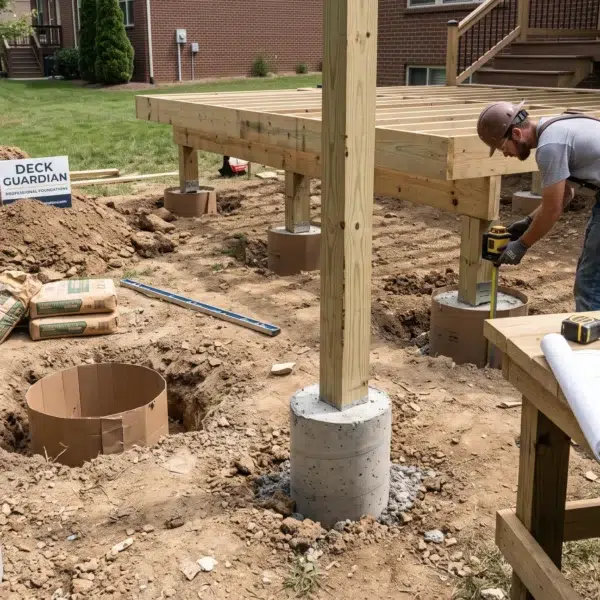
On flat ground, building a deck is mostly about joists, beams, and fasteners.1 You attach a ledger board to the house, set posts on footings, frame out the layout, and lay your first board. The load path is predictable: weight goes straight down through the joists and beams, into the posts, and into the ground. That is the basic construction logic most homeowners picture when they plan to build a deck.
Slopes change everything. Gravity no longer pulls straight down relative to the structure. Instead, loads concentrate toward the downhill side, soil bearing varies across the site, and water funnels into patterns that can erode footings over time. The posts are different heights, which introduces lateral forces that flat decks rarely experience. If the framing is not braced properly, the whole thing can rack, meaning it shifts sideways like a parallelogram. That is one of the first signs the structure is no longer behaving as intended, even when the joists and beams looked fine during the initial build.
This is why building a deck on a sloped yard in PA requires more than standard construction knowledge. The materials might be the same, but the planning, the footing layout, and the connection details all need to account for how the slope affects the structure.
The biggest structural risk on a slope is not what most DIYers think
Most homeowners worry about sagging, rot, or materials weathering too quickly. On slopes, the bigger risk is lateral movement and uneven settlement.
Here is how it plays out: the downhill posts sit on fill or looser soil, while the uphill posts rest on more stable ground. Over time, the downhill side settles a fraction of an inch more. That small difference puts stress on every connection. The railings loosen. The ledger board attachment to the house wall gets stressed. The corners start to feel unstable. Balusters wobble. Post caps pop off. Fascia boards can start to separate, and the railings begin to look out of line. For homeowners, that is often the first visible sign that the structure is losing stability and safety.
This is racking, and it happens because the frame is no longer square. DIY builds often skip the diagonal bracing, use undersized fasteners, or bolt key connections poorly, which accelerates the problem. By the time the deck feels “off,” the damage is structural and harder to deal with.
Footings, frost, and soil: why sloped-yard decks often need more planning
Pennsylvania frost line requirements mean footings need to extend deep enough to avoid heave from freezing soil. Depending on location, that depth varies. Northern PA sees colder winters, so footings go deeper. The issue on slopes is that runoff saturates soil unevenly, which can cause some footings to heave while others stay put. That is why footing depth, location, spacing, and the relationship between joists and beams matter so much on this kind of build.
Soil bearing also varies across a sloped site. The uphill side might rest on native soil with good capacity, while the downhill side sits on fill that compresses over time. Without a site assessment, you are guessing at how the ground will behave, where the holes should go, and what kind of support the structure will actually need.
Municipalities often flag decks above certain heights for additional review under the UCC framework. If your project triggers that threshold, expect questions about footing size, piers, permit requirements, and how the design handles the grade. Deck construction on sloped ground often relies on post-and-beam framing, while some designs use cantilevered sections, but either way, the structural support has to match the site. Concrete footings or helical piers are common solutions, but the right choice depends on the site, the materials, the joists, and the long-term installation conditions.
Erosion and drainage are structural issues, not landscaping details
Water does not stay still on a slope. It runs, and it runs toward the lowest point. On a sloped backyard, that often means water concentrating at the base of downhill posts, cutting channels under the framing, washing out the soil around footings, and reducing safe access around the structure.
This is not a landscaping problem. It is a structural one. If the ground under a post erodes, the post loses bearing. Water sitting at the base of a deck is not just a nuisance. It increases the likelihood of frost heave, and over time, that can throw the whole structure out of shape. A drainage issue that seems minor at first can eventually leave posts leaning, footings shifting, the frame no longer sitting square, and the usable space below the deck harder to access safely.
In Pennsylvania, disturbing soil on sloped ground also means thinking about erosion and sediment control.2 If you are grading around a deck, moving earth to create a flatter area, or cutting into a hillside, the work is no longer just about the framing. You also have to account for runoff, the resources needed to stabilize the site, and how the disturbed soil will be kept in place. On some sites, terracing becomes part of the solution, breaking a long slope into smaller level areas with retaining walls or boulders so runoff is easier to manage and soil is less likely to move.3 Gravel beds, French drains, permeable hardscaping, and correct grading are not side features.4 They are part of the actual construction job, part of the actual build, and part of what protects the materials below the deck over time.
Retaining wall or not: when grade control becomes unavoidable
A retaining wall is not part of every sloped-yard deck project. But there are plenty of sites where it becomes necessary, especially when the slope is steep, runoff keeps moving soil, or the deck supports end up too close to a cut or fill section. In some cases, it is also the only practical way to create stable borders around the new deck area. Tiered retaining walls can break the slope into flatter steps for planting, seating, or circulation while helping reduce soil movement at the same time.
What the wall does is hold the grade in place so the soil does not gradually shift and start affecting the structure. Without that restraint, the ground can creep downhill over time, leaving footings exposed or changing the bearing conditions around the posts. Whether you need one depends on the slope itself, the water flow across the yard, and the way the deck is positioned within that landscape. On steeper sites, groundcovers and native plantings with deeper root systems can also help stabilize exposed soil, while larger runoff problems may call for check dams or other flow-control measures.5 It is one of the details that can prevent weathering, protect the materials below, and reduce movement over time.
If there is real uncertainty, this is one of the smarter places to pay for professional advice. A wrong guess here usually gets expensive later, and the final price is rarely lower than the cost of hiring the right team from the start.
What permit review can flag on sloped sites before finishing touches and why engineers get pulled in
Pennsylvania deck permitting runs through local building code officials under the UCC. Plan review for sloped sites often focuses on structural support, footing details, permissions, and how the design handles site conditions before installation crews add finishing touches.
When an engineer becomes likely
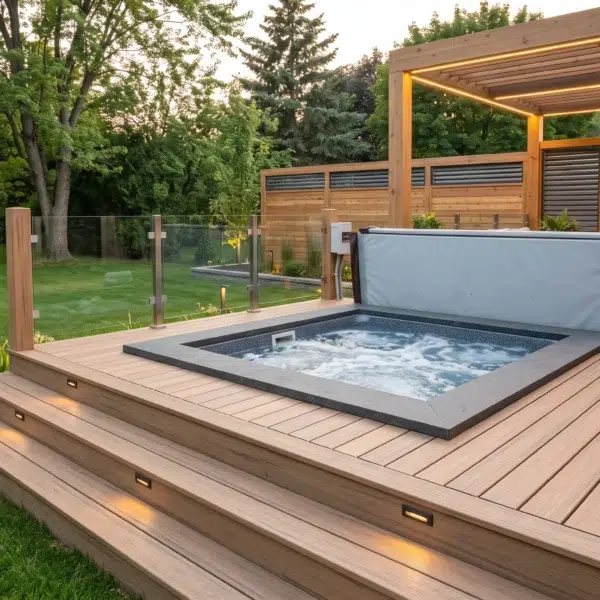
Non-standard conditions trigger additional scrutiny. If you are adding heavy concentrated loads like a hot tub or outdoor kitchen, or if the geometry is unusual, reviewers may request a stamped design from a licensed engineer. Complex attachments, long spans, or unusual points where framing has to attach back to the house can also trigger this requirement. On very steep grades, heavily anchored engineered structures may be the only option that satisfies both performance and review requirements.
What a professional process looks like
A professional deck building process for sloped sites starts with a site assessment tied to grade. That means understanding the slope, the soil, and the drainage before the layout is finalized. From there, the team develops a footing plan, a drainage plan, and framing details that match the site conditions. Inspections happen at key stages, and the project is built to pass review, not just look finished. That process matters whether the owner wants pressure-treated wood, composite decking, or other durable materials for new decks, especially when the final goal is a polished look rather than a rushed build.
Table: Common Slope Issues and Permit Review Focus
| Slope Issue | What It Can Cause | What Reviewers/Inspectors Look For |
| Uneven post heights | Racking and sway | Bracing, connections, consistent load path |
| Downhill soil washout | Settlement and leaning | Grading plan, drainage routing, bearing conditions |
| Water concentrating at footings | Frost heave and movement | Below-frost footings, drainage control |
| Long unsupported spans | Bounce and overstress | Beam and joist sizing, layout clarity |
| Added heavy features | Overload and deflection | Engineered design when loads are concentrated |
Conclusion and Next Steps
Sloped yards demand more than standard deck building knowledge. The risks are structural, and they build over time. If you are weighing DIY against hiring a team, the slope is the deciding factor. On a site like this, it often makes more sense to hire experienced deck builders than to treat the work as a handy weekend project, especially when multiple joists, beams, and railings all need to work together under load.
Before you start, get a site assessment. Understand where water goes, how the soil behaves, what the site will require, and what the permit process will demand. If the project triggers engineering review, that is a sign the site is not simple.
Talk to a professional before you commit to a plan. The cost of getting it right is far less than the cost of fixing it later, especially once installation problems start affecting safety, access, or the usable space around the house. Decks are load-bearing structures, and on sloped sites that means the planning stage matters just as much as the finished result.
FAQ
Can you build a deck on a sloped yard in PA?
Yes, but the design and layout have to match the grade and soil conditions. Slopes amplify movement, so structural planning matters more than the decking material, whether you build with composite or wood. The wrong composite choice will not fix structural problems in the joists, beams, or support layout.
When does a sloped-yard deck need an engineer?
When the site conditions or loads are outside typical residential deck details, like heavy concentrated loads or unusual structural attachments. Some municipalities will request a stamped design in those cases.
What’s the biggest structural risk when deck building on a slope?
Uneven support and lateral movement. If the downhill side settles or shifts, the whole frame can rack, loosen connections, affect railings, and feel unstable. That kind of movement can also throw off the spacing between joists and stress the beams.
Do sloped-yard decks require deeper footings in PA?
Sometimes. Footings still need to meet frost and bearing requirements, and slopes often demand more careful placement, spacing, and stability to avoid settlement and movement.
How do you prevent erosion under a deck on a hill?
Control runoff so it does not cut channels under the structure, stabilize disturbed soil, manage drainage so water is not dumping at the downhill posts, and keep the ground line around the supports intact.
Do you need a retaining wall for a sloped yard deck?
Not always. Retaining walls are typically used when the site needs grade control to prevent undermining, to create usable flat areas, or to make room for safer access and cleaner finishing touches, which depends on the slope and runoff patterns. In some layouts, that extra control also helps railings and other finish materials stay aligned.
Is composite decking enough to solve drainage issues on sloped decks?
No. Slopes concentrate water flow, and unmanaged runoff can erode soil, destabilize footings, and create long-term movement issues that composite decking alone will not solve.
Will permits flag slope issues during deck plan review?
They can. Plan review often focuses on structural support, footing details, sign-off requirements, and how the design handles site conditions under the UCC permitting process.