Key Takeaways
- Sparta’s “Wet-Freeze” Climate: Sparta sits 400 to 900+ feet above sea level. This elevation traps moisture that freezes overnight, expanding by 9% and cracking porous wood decks far faster than in lower Morris County towns.
- Installation Math Matters: Premium materials don’t fail because they “aren’t rated” for the cold – they fail when generic installation ignores deck materials performance amid Sparta’s aggressive thermal swings. Proper expansion gapping is critical to prevent buckling.
- The Right Materials: Choosing non-porous capped polymer composites, PVC decking, and stainless steel fasteners is the most effective way to combat the Highlands’ moisture and double your deck’s lifespan.
- Code Compliance: Sparta Township’s strict 40 psf snow-load requirements often mean “resurfacing” an old frame isn’t legally possible without structural reinforcements to handle the heavier snowpack.1
Introduction
Sparta, New Jersey sits significantly higher than its neighbors. While Denville and Parsippany average 200 to 400 feet above sea level, Sparta climbs from 600 to over 1,000 feet in neighborhoods like the actual Highlands. This elevation difference creates a distinct microclimate that impacts Sparta deck materials more than most homeowners realize.
Turning your vision for an outdoor oasis into reality requires more than just picking a pretty color. Materials that look flawless on a valley deck can start warping or loosening after just a few winters on a Lake Mohawk property. The boards didn’t come defective. They simply weren’t installed with the engineering required for this altitude. That’s why working with deck specialists familiar with Sussex County’s unique conditions is a structural necessity to ensure safety for your family, not just a preference.
This piece reveals the elevation-specific choices most remodeling advice skips. You’ll learn how altitude, humidity, and snow load change the way materials perform, and why generic solutions from lower-elevation New Jersey just don’t perform the same way at 700 feet.
Why Elevation Matters for Sparta Deck Remodeling
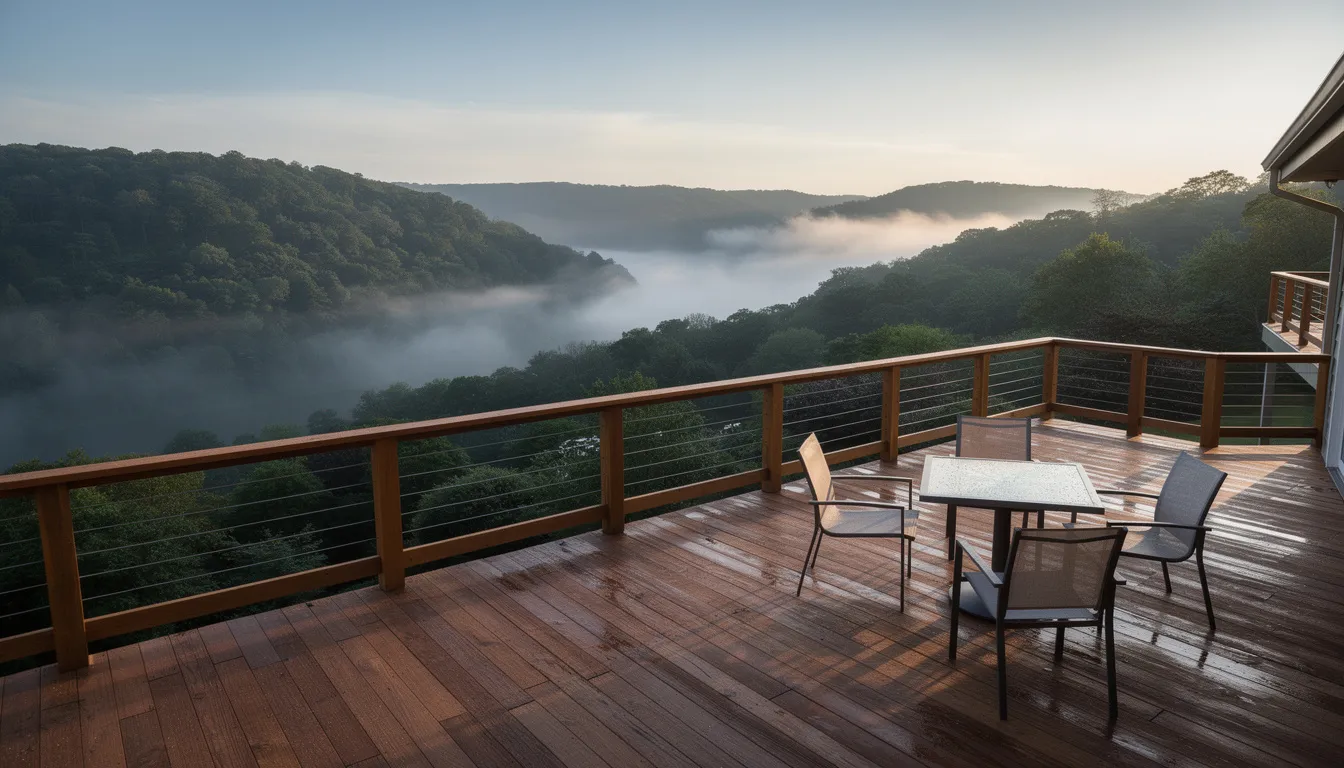
Sparta Township ranges roughly 400 to 900+ feet above sea level. That’s not a minor detail. Hilltop streets regularly run 5 to 10°F cooler than lower-lying New Jersey towns on the same calendar day. Your outdoor space doesn’t experience the same weather as your cousin’s place in Morristown.
Higher elevation brings more frequent freeze-thaw cycles each winter. Sparta sees 50 to 70 cycles per season compared to 30 to 40 in Morris County. North-facing decks and shaded lots above Lake Mohawk and Glen Lake get hit hardest. Every cycle stresses your decking material, fasteners, and framing.2
Wind exposure increases with altitude too. Decks on ridgelines take 20 to 30% more lateral stress and wind-driven rain than decks tucked into valleys. Gusts pushing 40 mph are common at 900 feet. Your outdoor living space becomes a wind tunnel your lower-elevation neighbors never experience.
Here’s the twist most people miss: proximity to Lake Mohawk and Highland Lakes keeps moisture in the air and under deck boards even when the thermometer looks harmless. Relative humidity hangs at 75 to 85% year-round near the water versus 65% on hillsides. That humidity fosters mold growth in materials that weren’t engineered for it.
These aren’t background details. They’re primary design forces that decide whether your Sparta NJ deck lasts 10 years or 30.
The Temperature Swing Problem Across Deck Material Options
The freeze-thaw process sounds simple until you watch it destroy a deck. Water seeps into tiny cracks in wood or composite material. Overnight, temperatures drop below 32°F and that water expands up to 9% as it becomes ice. Midday sun melts it. Repeat this dozens more times in Sparta than in many lower Morris County zip codes and you’ve got visible damage within a few seasons.
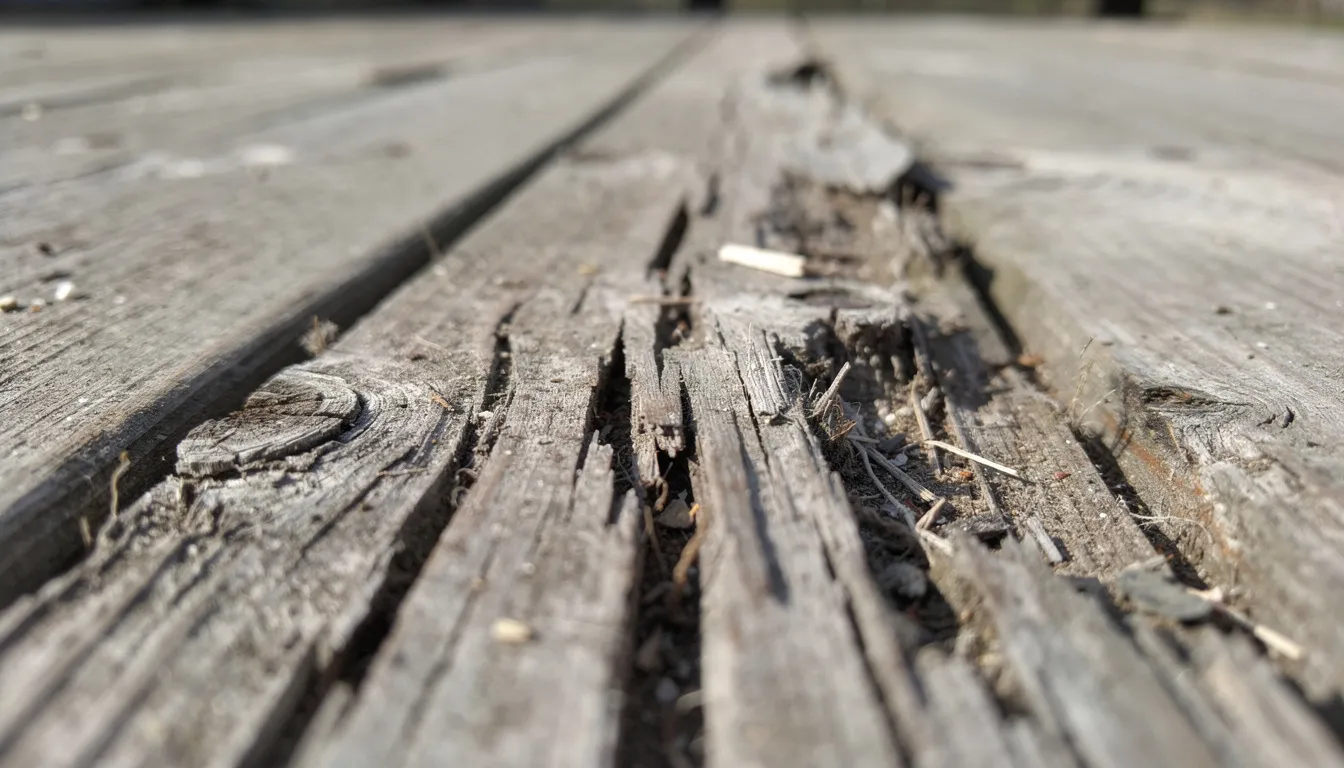
What does that damage look like? Hairline cracks in composite skins. Popped fasteners that worked loose overnight. Shattered end-grain on pressure treated lumber framing. While real wood offers undeniable aesthetic charm, specific wood types like soft pine or even cedar struggle here. Without rigorous staining and sealing every season, they become susceptible to deep moisture penetration and insect damage far faster than in drier climates.
Several popular decking material options prove especially vulnerable at altitude:
| Material Type | Common Failure Mode at Elevation |
| Early-gen uncapped composites | Delamination and micro-cracking from moisture absorption |
| Coated steel screws | Corrosion 40% faster from acidic highland rain |
| Bargain rail connectors | Loosening under expansion-contraction stress |
| Generic big-box sealants | Brittleness below mid-20s°F |
Here’s something counter-intuitive: some luxury composites and dark, dense boards marketed nationally actually move and expand more under Sparta’s 20°F to 90°F annual swings, stressing the frame beyond its tolerance. Premium options don’t automatically mean highland-ready performance.
Look for materials capable of withstanding USDA Hardiness Zone 6a extremes. Sparta typically falls in this zone, with winter lows dipping near negative 10°F.3 Many homeowners don’t realize that while premium decking is sold nationally, it performs differently depending on the region. A composite board installed with “standard” gapping suitable for Zone 7 (Central NJ) can buckle or warp in Sparta’s Zone 6a because it lacks the calculated room to contract during deep freezes.
A concrete example: pressure treated wood decking in southern yellow pine needs cleaning and sealing every 12 to 18 months at 700 feet elevation to stay ahead of checking and surface rot. That same treated lumber gets away with a 24 to 36 month cycle in milder New Jersey suburbs. The maintenance requirements aren’t suggestions. They’re survival protocols.
Snow load compounds everything. Sussex County snow at elevation comes down heavier and wetter. Building codes require 50 to 60 psf design loads here versus 20 to 30 psf on the coast. Joist spacing, beam sizing, and post connections all matter more on a Sparta deck than on a low-elevation project.
Is your home sitting in a high-risk microclimate? Don’t guess about your structural needs. Click here to get a Free, Site-Specific Estimate from Deck Guardian.
Best Decking Materials: Composite Decking and Exotic Hardwoods That Perform
The myth that all composite decking is basically the same falls apart the moment Sparta’s first icy winter hits. Deck remodeling Sparta projects quickly separate winners from failures.
Capped polymer or advanced PVC decking boards outperform first-generation wood-plastic composites by 50 to 100% in freeze-thaw testing. The closed-cell cores resist moisture absorption below 0.5%, maintaining integrity through 2,000 cycles per ASTM D6662. Certain materials are specifically engineered with advanced cap stocks to resist fading under high-altitude UV exposure, ensuring the color you choose remains the perfect match for your home’s exterior for decades.
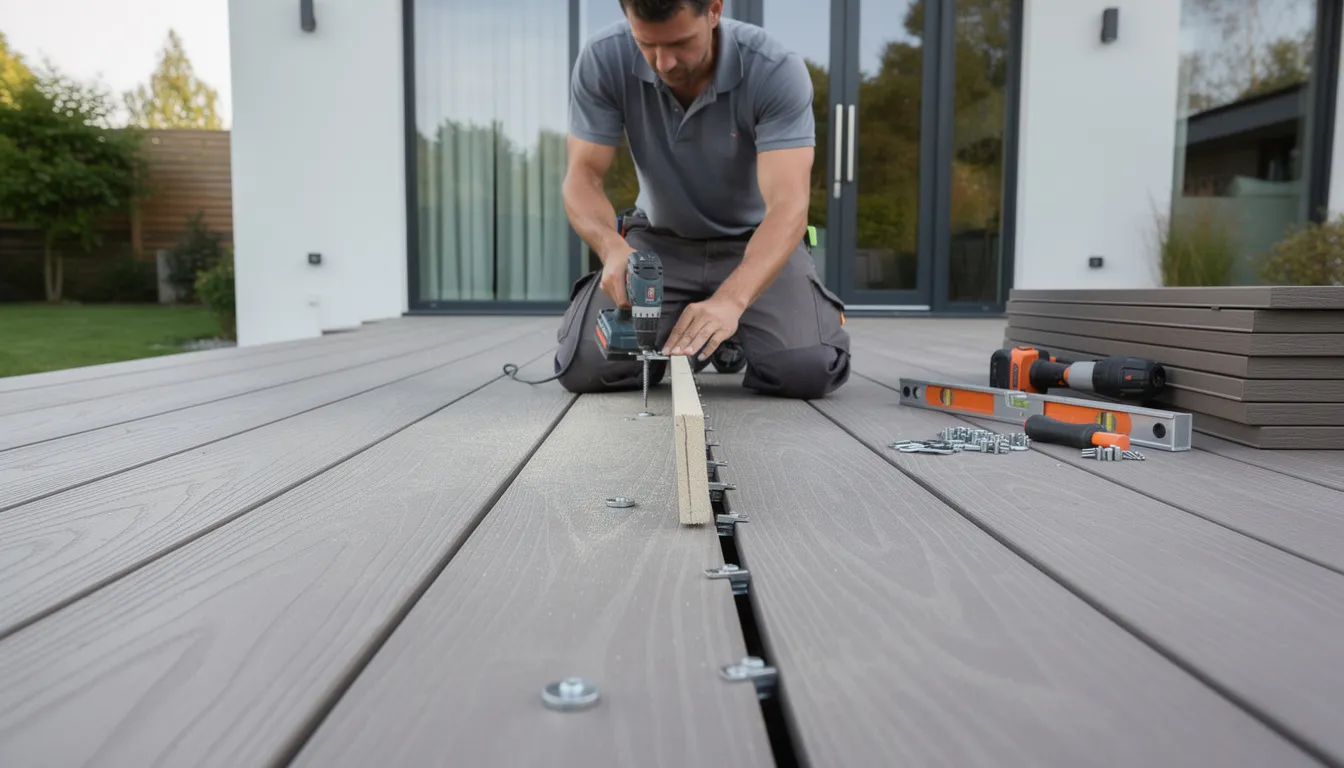
Certain PVC decking lines with textured, slip resistant surfaces shine on Lake Mohawk decks where snow and lake humidity mix. Polyvinyl chloride contains zero wood content, so there’s nothing to absorb water and swell. These boards shed moisture and clean easily in spring. For busy homeowners who want minimal maintenance and a maintenance free experience, PVC stands out as the best decking materials choice for highland conditions.
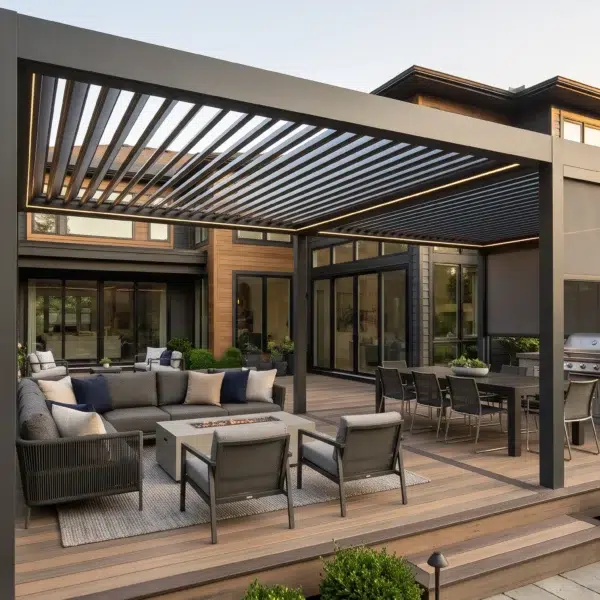
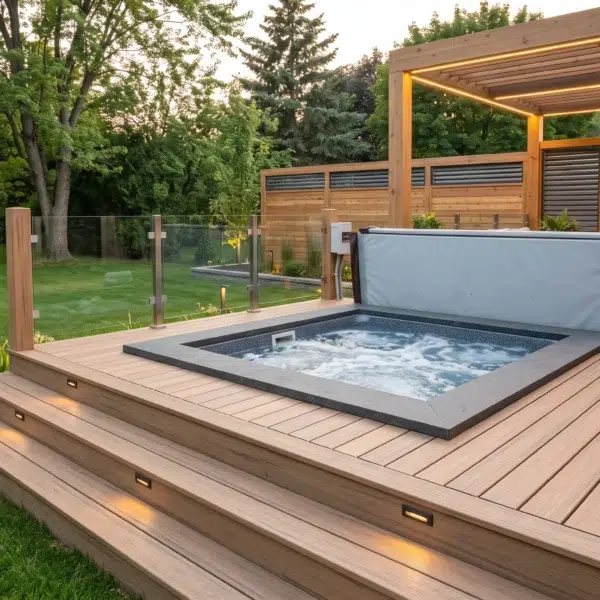
Louvered roof systems and adjustable pergola technology deserve serious consideration for Highland Lakes deck projects. Louvers close to block snow and heavy rain, open to vent heat and reduce wind uplift. They handle 60 psf snow loads and 110 mph winds. For lakefront properties where weather exposure runs extreme, these systems extend your usable season and protect the deck boards below.
If your design plan includes heavy amenities like outdoor kitchens or built-in stone fire features, structural planning becomes even more vital. These features add significant dead load to the deck, requiring tighter joist spacing and reinforced footings to handle the weight in addition to Sparta’s heavy snow pack.
Fastener strategy separates amateur builds from professional work. Specify stainless steel 316 screws and hidden fasteners for any Sparta NJ deck project. Cheaper coated hardware corrodes faster in humid, high-elevation air with its acidic rain (pH 4.5 to 5.0). Stainless maintains 90% torque retention after 10 years. Other materials simply can’t compete.
Color choice at altitude involves real tradeoffs. Darker boards on Highland Lakes decks feel nicer on cool spring days because they absorb more solar heat. But they also expand more in full July sun. Follow manufacturer-specific installation temperatures and spacing requirements carefully. The aesthetic appeal of dark boards comes with engineering requirements.
Here’s a pro secret: test or check third-party data on moisture absorption and thermal expansion for candidate products against Sparta’s specific humidity plus altitude combo. Many deck builders skip this step. Industry leaders don’t.
Unexpected winners? Exotic hardwoods like Ipe and Cumaru. Their density (Janka hardness 3,500 to 3,900 lbf) and natural tannins help them ride out 40°F day-night swings without twisting. Natural wood with this density offers long term value that surprises many homeowners. Proper spacing and stainless fasteners remain critical. The higher initial cost compared to pressure treated pine pays back in decades of performance.
Sussex County’s Regulatory Reality
Sparta deck remodeling isn’t shaped just by climate. Sparta Township and Sussex County rules quietly impact your design, cost, and schedule in ways many homeowners discover too late.
Sparta Township building codes follow New Jersey’s Uniform Construction Code based on the 2021 IRC. This includes stricter guardrail, footing, and ledger requirements for elevated decks and hillside builds. Decks over 30 inches high on slopes exceeding 20% often require structural engineering review. That’s common terrain at 600+ feet.
Lakefront and hillside realities add complexity. Some Lake Mohawk and Highland Lakes properties have community-level standards for deck height, rail style, and shoreline view corridors. These affect material type and layout choices before you ever pick a color. A 10-foot setback from shorelines and permeable surfacing requirements exist in certain areas.
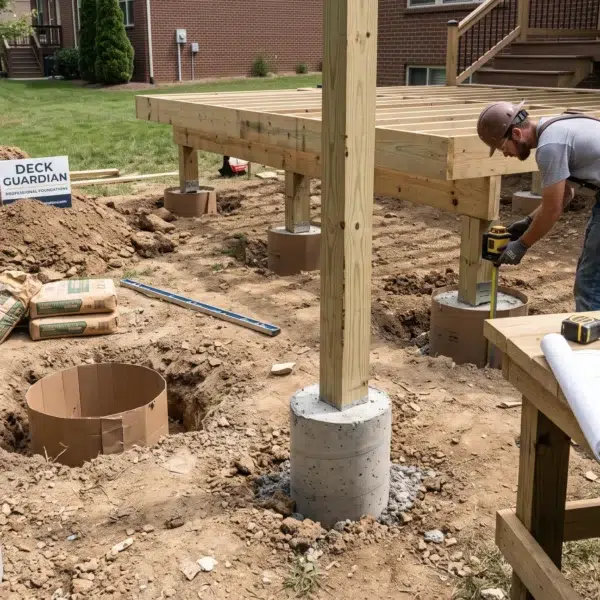
Setbacks on slopes require careful attention. Decks on steep lots often need deeper footings, with frost depth requirements hitting 42 inches compared to the 36-inch piedmont standard. Careful placement must meet both structural stability and property line rules. Geotechnical reports become necessary when slope and elevation combine.
Structural engineers typically get pulled in for tall decks, multi-story structures, or builds perched on significant grades where snow load and lateral wind forces combine. Budget conscious homeowners sometimes resist this, but skipping it creates liability and permit problems.
A timeline insight worth knowing: winter and early-spring permit processing moves differently than summer. Inspections during peak season can extend schedules 6 to 8 weeks. Winter permits sometimes process in 2 to 4 weeks but frost depth requirements affect when footing work can actually start. Roughly 15% of highland submissions fail initial soil tests, adding months.
Smart move: have a quick pre-application conversation with the building department or a contractor experienced with Sparta Township permits before finalizing your entire process. Deck remodelers with Sussex County experience know which requirements trip up homeowners.
The Resurfacing vs Replacement Decision At Elevation
Can a Sparta NJ deck be resurfaced with modern boards, or does the high-elevation structure underneath need full replacement to handle current snow and wind loads? This question drives most budget decisions.
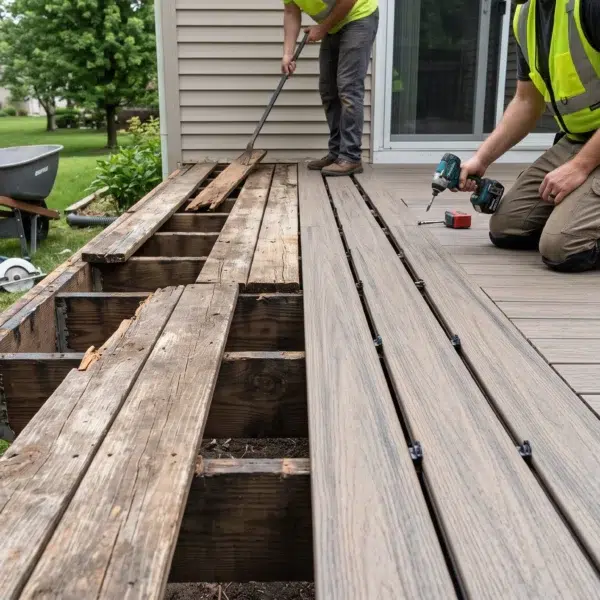
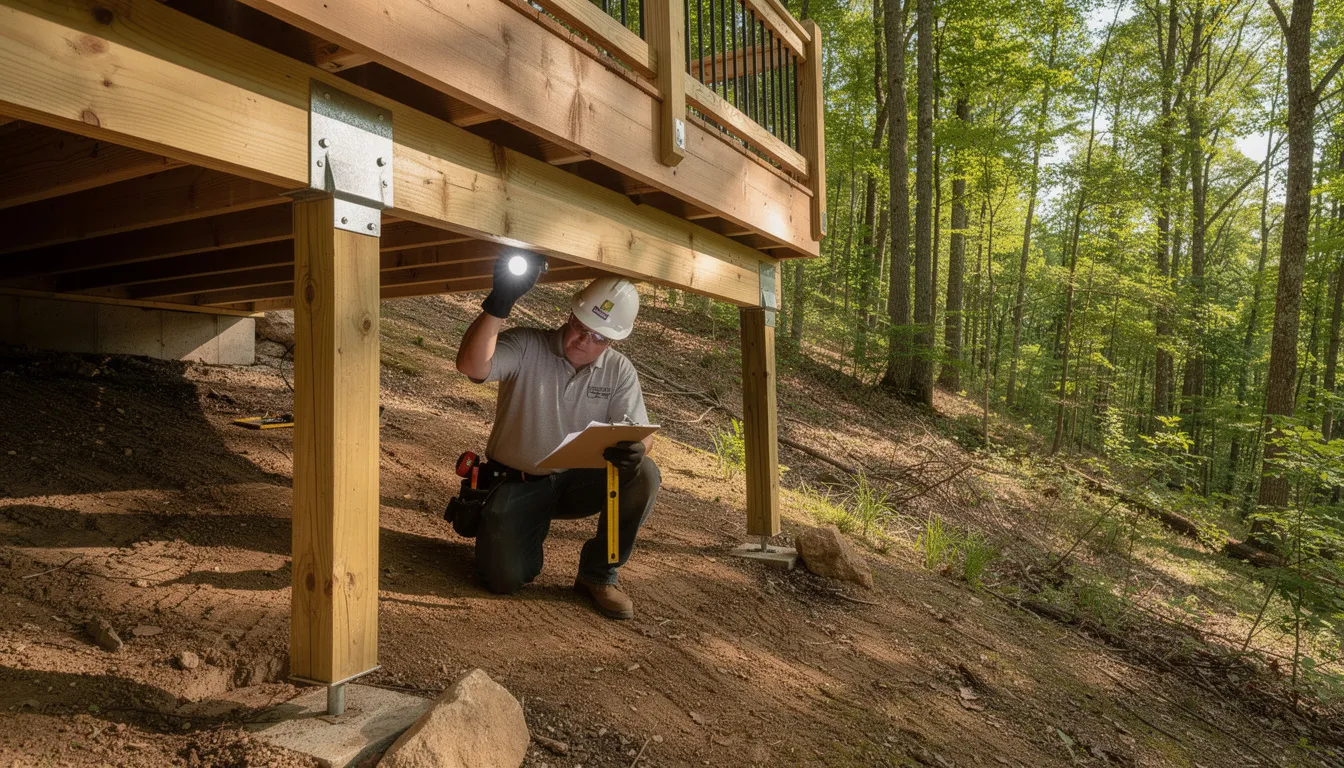
The first step involves assessing the substructure honestly. Posts, beams, and joists must be checked for rot from repeated moisture cycling, fastener corrosion, and undersized framing relative to today’s code and snow-load standards. Moisture damage in the frame isn’t always visible from the surface.
Deck resurfacing makes sense in specific situations. Framing must be sound, properly flashed at the ledger, spaced to support heavier composite or PVC boards, and originally built close to current code. If less than 20% shows rot and joists remain intact, resurfacing saves 40 to 60% of initial costs while giving you a new deck surface. Deck remodelers report resurfacing extends life 10 years for structurally sound decks under 15 years old.
Replacement becomes unavoidable when you find widespread rot, ledger issues on older homes, inadequate footings on sloped lots, or framing that cannot safely carry modern composite plus wet snow common in Sussex County winters. Custom decks on challenging sites sometimes reveal these problems only during tear-off.
A realistic cost note for informed decision making: Highland and lakefront installs in Sparta often run 10 to 15% higher than Sussex County averages. That means $45 to 65 per square foot versus $40 to 55 county-wide. Access challenges, extra bracing, and upgraded fasteners and flashing drive initial costs up. Engineer fees add $2,000 to $5,000 for complex projects.
Think cost-per-year, not just upfront price. A cheaper resurfacing that buys 7 to 10 more years costs roughly $4 to 6 per square foot annually. A full Sparta deck remodeling project with high-performance materials lasting 25 to 50 years drops to $1.50 per square foot annually. The homeowner who runs the math often chooses quality.
Sustainability matters too. Resurfacing that reuses a safe structure keeps lumber out of landfills and aligns with NJ sustainability incentives. But only pursue this when elevation-specific safety and snow-load requirements are truly met. Many modern composites now feature high percentages of recycled content, adding another eco-friendly choice for the finished product without sacrificing durability.
Ready to build a deck that lasts? Get your free estimate from Deck Guardian here.
Conclusion
In Sparta, NJ, elevation, wind, and moisture aren’t side notes on your build specs. They’re the primary forces that should drive every deck material and design decision from day one.
The best Sparta deck remodeling projects respect Sussex County’s microclimate reality. From Lake Mohawk’s humidity to Highland Lakes’ cooler, wind-exposed hillsides, from heavier snow loads to relentless freeze-thaw cycling, this region demands different materials than the team building dreams in Morristown or Parsippany ever needs to specify.
Ask any potential contractor specific questions about altitude-aware material choices. Quiz them on snow-load calculations. Find out about their past projects in higher parts of Sparta. Their answers reveal whether they understand your project or whether they’re applying generic NJ advice to a place where it doesn’t belong.
Frequently Asked Questions
Do I really need different deck materials in Sparta, NJ than I would in lower-elevation New Jersey towns?
Yes. Sparta’s elevation, snow load, and humidity create conditions where certain composites, fasteners, and finishes last significantly longer than bargain alternatives. Materials rated for Zone 6a handle the 50 to 70 annual freeze-thaw cycles common in Highland pockets. Different materials designed for coastal or piedmont conditions often fail within 10 years at Sparta’s altitude.
How do I know if my existing Sparta deck can be resurfaced safely?
Start with a visual checklist: look for soft spots when you walk, rusted or raised hardware, wobbly rails, and discoloration suggesting moisture damage. A professional should verify joist spacing meets current code, ledger condition is solid with proper flashing, and footing depth accommodates high-elevation snow loads of 50 to 60 psf. Resurfacing works when framing shows less than 20% damage.
Will darker deck colors be too hot in Sparta’s summer sun?
At Sparta’s elevation, darker boards actually feel comfortable on many days because ambient temperatures run cooler than lower New Jersey. However, dark colors expand more in full July sun, potentially stressing fasteners and frame connections. Follow manufacturer spacing requirements and installation temperature guidelines to avoid aesthetic preferences creating structural problems.
Are louvered roof systems worth it on a Lake Mohawk or Highland Lakes deck?
Adjustable louvers protect decking from heavy snow and rain by closing during storms, then open to vent summer heat and reduce wind uplift. They handle 60 psf snow loads and 110 mph winds. For high-exposure lakefront decks where weather hits hardest, these systems extend your usable season significantly and reduce wear on the deck surface below. The higher initial cost often pays back in durability and comfort.
How far ahead should I start planning a Sparta deck remodeling project?
Allow several weeks for design decisions, then 4 to 8 weeks for permits and contractor scheduling. If structural engineering review is required for hillside builds or tall decks, add another 2 to 4 weeks. Winter footing work faces frost depth limitations, so projects starting in late fall may pause until spring. Pre-consultation with Sparta Township’s building department avoids the multi-month delays that catch unprepared homeowners.