Table of Contents
Toggle[vc_row kd_background_image_position=”vc_row-bg-position-top” css=”.vc_custom_1661216998004{margin-top: 2rem !important;}”][vc_column][vc_single_image image=”20037″ img_size=”full” css=””][vc_separator][vc_column_text css=”.vc_custom_1668562759612{margin-top: 1rem !important;}”]
Choosing the best materials for your deck?
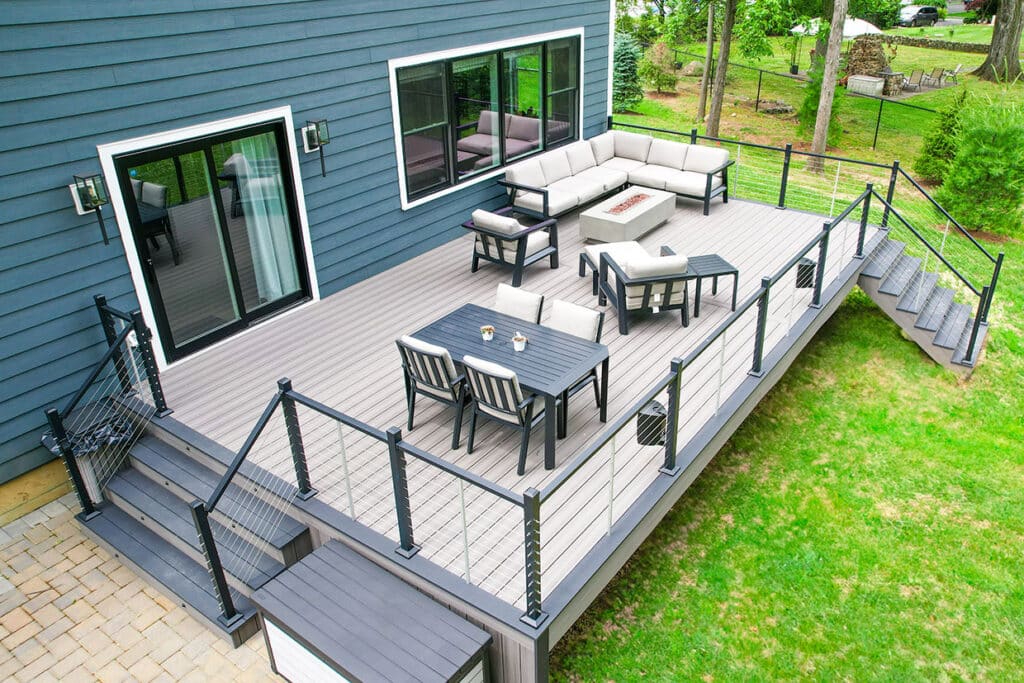
For most customers, PVC or composite decking is one of the best decking materials for all purposes, if not the best.
Although it has a somewhat greater initial investment, decking of composite requires significantly less maintenance and is far more durable. It does not split or weather like pressure-treated or traditional decking materials. As a result, it is a better long-term value alternative.
Decking of composite is the most weather-resistant material and requires nearly little annual maintenance. If you want to build a beautiful dream deck that will endure for a long time, composite decking offers the best option, whether evaluated in terms of long-term maintenance costs or time saved on maintenance.
Sometimes, the best decking materials for you can be something else like the natural wood decks such as pressure-treated wood or specialty wood, or other materials that we will be discussing later.[/vc_column_text][vc_text_separator title=”Deck Guardian” color=”custom” border_width=”2″ accent_color=”#2196f3″][vc_row_inner kd_background_image_position=”vc_row-bg-position-top”][vc_column_inner][vc_column_text]
Why is it important to choose the right decking materials?
There are several common decking materials to pick from, such as wood boards, composite boards, and exotic wood boards. Before deciding on the best decking material for you, it’s vital to research your alternatives, understand the benefits and disadvantages of each, and the degree of upkeep necessary to keep your deck looking wonderful for years to come.
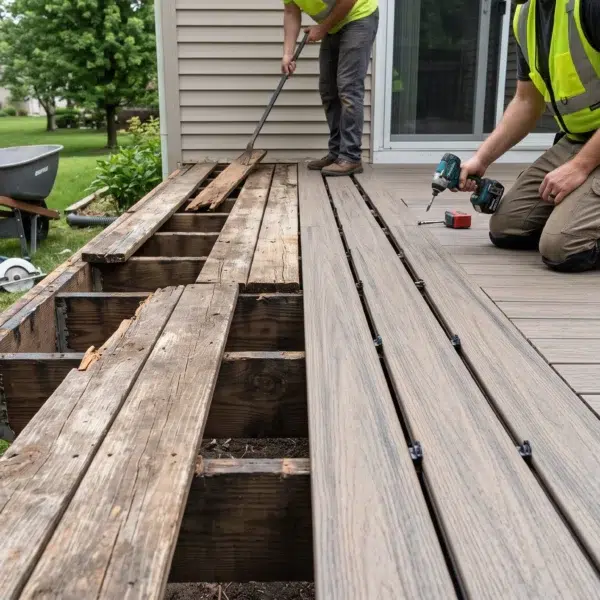
Installing a new deck or upgrading an old one may be a massive undertaking. Begin your decking project by examining your whole outdoor space to choose which sort of decking material is the best answer for your yard.
You will select materials, textures, and colors when designing your deck ideas. Consider the location of your deck, its height, and the architectural aspects of your home and other property fixtures that you would like to match.[/vc_column_text][vc_column_text]
Decking material options
Now, it’s time to deeply discuss the best decking materials and rank them for you so that you know what to choose:[/vc_column_text][/vc_column_inner][/vc_row_inner][vc_row_inner kd_background_image_position=”vc_row-bg-position-top”][vc_column_inner width=”1/3″][tek_photobox phb_title=”Composite Decking” phb_description=”$45 to $65+ per square foot” phb_text_align=”text-center” image_source=”media_library” phb_image=”20031″ phb_custom_link=”#” css_animation=””][/vc_column_inner][vc_column_inner width=”1/3″][tek_photobox phb_title=”Pressure-Treated Wood” phb_description=”$15 to $35 per square foot” phb_text_align=”text-center” image_source=”media_library” phb_image=”20032″ phb_custom_link=”#” css_animation=””][/vc_column_inner][vc_column_inner width=”1/3″][tek_photobox phb_title=”Hard Woods” phb_description=”$50 to $70+ per square foot” phb_text_align=”text-center” image_source=”media_library” phb_image=”20033″ phb_custom_link=”#” css_animation=””][/vc_column_inner][/vc_row_inner][/vc_column][/vc_row][vc_row kd_background_image_position=”vc_row-bg-position-top” css=”.vc_custom_1668224929240{margin-top: 3rem !important;}” el_class=”d-flex-center”][vc_column width=”1/6″ el_class=”blog-step-left-side” offset=”vc_col-xs-2″][vc_column_text css=”.vc_custom_1668546989557{background-color: #2196f3 !important;}” el_class=”number-square”]1[/vc_column_text][/vc_column][vc_column width=”5/6″][vc_column_text]
Composite Deck Boards
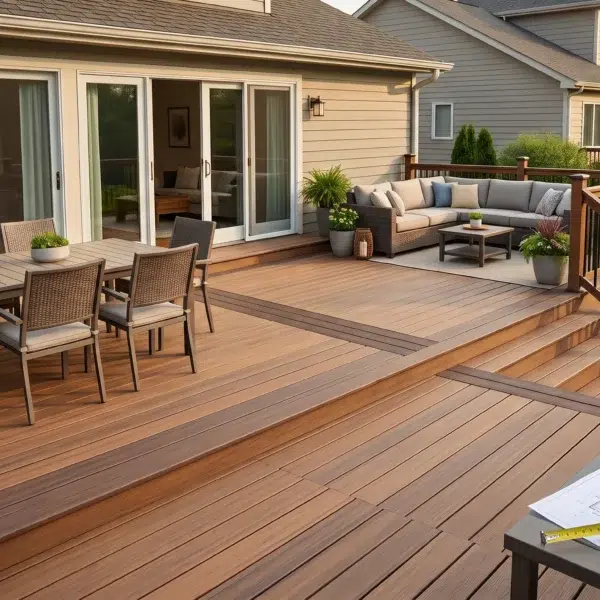
[/vc_column_text][vc_text_separator title=”” color=”custom” accent_color=”#9bcbf2″][/vc_column][/vc_row][vc_row kd_background_image_position=”vc_row-bg-position-top”][vc_column][vc_row_inner kd_background_image_position=”vc_row-bg-position-top”][vc_column_inner][vc_single_image image=”20027″ img_size=”full” alignment=”center” css=””][/vc_column_inner][/vc_row_inner][vc_column_text]There’s no doubt that composite decking products are one of the best decking materials together with PVC decking. Decking of composite has been a popular choice for many backyard renovations since it is more ecologically friendly and easier to maintain than the natural wood decks. It has progressed significantly from materials that formerly resembled plastic more than wood.
Decking of composite nowadays is made up of different combinations of wood chips, recycled materials, bamboo, and other raw materials. Composite decking is known for being extremely durable, making it an excellent choice for areas exposed to extreme weather conditions. Deckorators composite materials for example, are made up of a polypropylene-calcium carbonate blend used instead of organic material like wood fibers to avoid moisture absorption and limit heat movement.
Decking of composite is extremely low maintenance, requiring no sanding or refinishing. Typically, composite decks require only occasional cleaning to maintain their appearance, making them ideal for homeowners seeking minimal upkeep. High-quality materials, such as TimberTech composite decking, may endure for 25-50 years with minimal upkeep and offer superior protection against UV rays, moisture damage, and insect damage.
When it comes to composite materials, there are several manufacturers and color variations to pick from, including multiple product lines, thus the cost of composite decking can range from $45 – $65 per square foot. Some of the benefits of adopting decking of the composite are as follows:[/vc_column_text][/vc_column][/vc_row][vc_row kd_background_image_position=”vc_row-bg-position-top”][vc_column][vc_raw_html]JTNDdWwlM0UlMEElMjAlM0NsaSUzRSUzQ3N0cm9uZyUzRVJlZHVjZWQlMjBsb25nLXRlcm0lMjBtYWludGVuYW5jZSUyMGV4cGVuc2VzJTNDJTJGc3Ryb25nJTNFJTNDJTJGbGklM0UlMEElMjAlM0NiciUzRSUwQSUzQ3AlM0UlMEFXaGlsZSUyMGRlY2tpbmclMjBvZiUyMGNvbXBvc2l0ZSUyMG1hdGVyaWFscyUyMGlzJTIwb2Z0ZW4lMjBtb3JlJTIwZXhwZW5zaXZlJTIwdGhhbiUyMHdvb2QlMjBwbGFua3MlMkMlMjB5b3UlMjBtYXklMjBzYXZlJTIwbW9uZXklMjBvbiUyMGxvbmctdGVybSUyMG1haW50ZW5hbmNlJTIwY29zdHMlMjBieSUyMG5vdCUyMGhhdmluZyUyMHRvJTIwcmVzdGFpbiUyMG9yJTIwcGFpbnQlMjB5b3VyJTIwZGVjayUyMGluJTIwdGhlJTIwZnV0dXJlLiUyMFRoZSUyMHBsYW5rcyUyMHdpbGwlMjBzdXJ2aXZlJTIwd2VhciUyMGFuZCUyMHRlYXIlMjB3aGlsZSUyMHVuZGVyZ29pbmclMjBsaXR0bGUlMjBhZXN0aGV0aWMlMjBjaGFuZ2VzJTIwb3ZlciUyMHRpbWUuJTBBJTNDJTJGcCUzRSUwQSUwQSUzQ2xpJTNFJTNDc3Ryb25nJTNFVGhlJTIwZmluYWwlMjBwcm9kdWN0JTIwdGhhdCVFMiU4MCU5OXMlMjBtb3JlJTIwbW9kZXJuJTIwYW5kJTIwYmV0dGVyJTIwcmVwbGljYXRlcyUyMHRoZSUyMGJlbmVmaXRzJTIwb2YlMjB3b29kJTIwJTNDJTJGc3Ryb25nJTNFJTNDJTJGbGklM0UlMEElM0NiciUzRSUwQSUzQ3AlM0UlMEFPbmUlMjBvZiUyMHRoZSUyMG1vc3QlMjBjb21tb24lMjBjb25jZXJucyUyMGFib3V0JTIwdGhlJTIwZGVja2luZyUyMG9mJTIwY29tcG9zaXRlJTIwaXMlMjB0aGF0JTIwaXQlMjBkb2VzJTIwbm90JTIwZmVlbCUyMGxpa2UlMjB3b29kLiUyMFdoaWxlJTIwdGhpcyUyMHdhcyUyMHRydWUlMjBvZiUyMGVhcmx5JTIwZ2VuZXJhdGlvbiUyMGNvbXBvc2l0ZSUyMGJvYXJkcyUyQyUyMHRvZGF5JTI3cyUyMGRlY2tpbmclMjBvZiUyMGNvbXBvc2l0ZSUyMGlzJTIwZGlmZmljdWx0JTIwdG8lMjBkaXN0aW5ndWlzaCUyMGZyb20lMjB0aGUlMjAlMjJnZW51aW5lJTIyJTIwdGhpbmcuJTIwVG9kYXklMjdzJTIwY29tcG9zaXRlJTIwYm9hcmRzJTIwYXJlJTIwaGlnaGx5JTIwZXZvbHZlZCUyQyUyMHdpdGglMjB0aGUlMjB0ZXh0dXJlJTIwYW5kJTIwYXBwZWFyYW5jZSUyMG9mJTIwd29vZCUyMGdyYWluJTIwYWRkZWQlMjB0byUyMGElMjBsYXJnZXIlMjBjb2xvciUyMHBhbGV0dGUlMjBhY2Nlc3NpYmxlJTIwdG8lMjBtYXRjaCUyMG90aGVyJTIwd29vZCUyMHZhcmlldGllcy4lMEElM0MlMkZwJTNFJTBBJTBBJTNDbGklM0UlM0NzdHJvbmclM0VSZXNpc3RhbnQlMjB0byUyMGRlY2F5JTIwYW5kJTIwd2VhdGhlciUzQyUyRnN0cm9uZyUzRSUzQyUyRmxpJTNFJTBBJTNDYnIlM0UlMEElM0NwJTNFJTBBSWYlMjBub3QlMjBwcm9wZXJseSUyMG1haW50YWluZWQlMkMlMjB3b29kJTIwcGxhbmtzJTIwY2FuJTIwc3VjY3VtYiUyMHRvJTIwdGhlJTIwZWxlbWVudHMlMjBhbmQlMjBlbmR1cmUlMjByb3R0aW5nJTJDJTIwc3BsaW50ZXJzJTJDJTIwYW5kJTIwd2FycGluZyUyMG92ZXIlMjB0aW1lLiUyMERlY2tpbmclMjBvZiUyMGNvbXBvc2l0ZSUyQyUyMHdpdGglMjB0aGUlMjB1c2UlMjBvZiUyMHJlY3ljbGVkJTIwcGxhc3RpYyUyMHRvJTIwc3VwcG9ydCUyMHdvb2QlMjBjb21wb25lbnRzJTJDJTIwY2FuJTIwbmV2ZXIlMjBkZXRlcmlvcmF0ZSUyMGR1ZSUyMHRvJTIwdGhlJTIwZWxlbWVudHMuJTBBJTNDJTJGcCUzRSUwQSUwQSUzQ3AlM0UlMEFCZWNhdXNlJTIwb2YlMjB0aGUlMjBuYXR1cmUlMjBvZiUyMGNvbXBvc2l0ZXMlMkMlMjBtYW55JTIwbWFudWZhY3R1cmVycyUyMG1heSUyMGVtcGxveSUyMHJlY3ljbGVkJTIwbWF0ZXJpYWxzJTIwd2l0aG91dCUyMHNhY3JpZmljaW5nJTIwcGVyZm9ybWFuY2UuJTIwU29tZSUyMGNvbXBhbmllcyUyMGVtcGxveSUyMHVwJTIwdG8lMjA5NSUyNSUyMHJlY3ljbGVkJTIwbWF0ZXJpYWxzLiUyMElmJTIweW91JTIwYXJlJTIwY29uY2VybmVkJTIwYWJvdXQlMjB5b3VyJTIwY2FyYm9uJTIwaW1wYWN0JTJDJTIwY29udGFjdCUyMGVhY2glMjBtYW51ZmFjdHVyZXIlMjBmb3IlMjBmdXJ0aGVyJTIwaW5mb3JtYXRpb24lMjBvbiUyMHRoZSUyMG1hdGVyaWFscyUyMHVzZWQuJTBBJTNDJTJGcCUzRSUwQSUwQSUzQyUyRnVsJTNF[/vc_raw_html][/vc_column][/vc_row][vc_row kd_background_image_position=”vc_row-bg-position-top” css=”.vc_custom_1668224929240{margin-top: 3rem !important;}” el_class=”d-flex-center”][vc_column width=”1/6″ el_class=”blog-step-left-side” offset=”vc_col-xs-2″][vc_column_text css=”.vc_custom_1668546982120{background-color: #2196f3 !important;}” el_class=”number-square”]2[/vc_column_text][/vc_column][vc_column width=”5/6″][vc_column_text]
Pressure-Treated Wood
[/vc_column_text][vc_text_separator title=”” color=”custom” accent_color=”#9bcbf2″][/vc_column][/vc_row][vc_row kd_background_image_position=”vc_row-bg-position-top”][vc_column][vc_row_inner kd_background_image_position=”vc_row-bg-position-top”][vc_column_inner][vc_single_image image=”20028″ img_size=”full” alignment=”center” css=””][/vc_column_inner][/vc_row_inner][vc_column_text]This is the least expensive choice of the best decking materials. This is a good option for individuals who don’t mind the frequent upkeep. Pressure-treated timber is the most often used form of wood decking. While not all timber is treated the same way, pressure-treated lumber is saturated with preservative chemicals that include insecticides and anti-rot qualities, which serve to improve its natural durability.
It’s also simple to find, simple to cut, and simple to deal with in general. If you don’t like the natural beauty of your pressure-treated timber, a stain can help to cover it up and make it more visually acceptable to your liking. It’s usually best to let your deck weather for a few months before staining, although there are certain advantages to sanding before staining.
It’s also worth noting that there are several grades of treated lumber, and your local supplier may assist you in selecting the quality that’s best for your budget. When comparing composite versus the wood decking, the most significant distinction is how regular timber tends to split, warp, or fracture. The wood types commonly used tend to be warp resistant but require proper maintenance to avoid moisture damage.
Regular maintenance is also required for pressure-treated wood. However, with proper minimal maintenance, such as power washing, sanding, and re-staining regularly, you may extend the life of your pressure-treated deck. Pressure-treated wood is also reasonably priced, ranging from $15 to $35 per square foot, and that’s why it’s one of the best decking materials.[/vc_column_text][/vc_column][/vc_row][vc_row kd_background_image_position=”vc_row-bg-position-top” css=”.vc_custom_1668224929240{margin-top: 3rem !important;}” el_class=”d-flex-center”][vc_column width=”1/6″ el_class=”blog-step-left-side” offset=”vc_col-xs-2″][vc_column_text css=”.vc_custom_1668547958361{background-color: #2196f3 !important;}” el_class=”number-square”]3[/vc_column_text][/vc_column][vc_column width=”5/6″][vc_column_text]
Hardwoods
[/vc_column_text][vc_text_separator title=”” color=”custom” accent_color=”#9bcbf2″][/vc_column][/vc_row][vc_row kd_background_image_position=”vc_row-bg-position-top”][vc_column][vc_row_inner kd_background_image_position=”vc_row-bg-position-top”][vc_column_inner][vc_single_image image=”20029″ img_size=”full” alignment=”center” css=””][/vc_column_inner][/vc_row_inner][vc_column_text]Tropical hardwoods, such as Ipe wood, are on the list of the best decking materials. The benefit of hardwoods is implied by their name: they are hard. Because of their thick nature, they are resistant to infection and decay. They also contain natural tannins, which operate in the same way as the chemicals used in pressure-treated timber.
Each hardwood has a unique look. Ipe, for example, is a rich color red-brown that fades to a light grey unless oiled 1-2 times a year. Tigerwood, Cumaru, and Mahogany are among the more hardwood possibilities. When opposed to softwood, hardwoods can survive longer and provide excellent aesthetic appeal, offering rich colors and grain patterns that enhance any outdoor space.
One disadvantage of several hardwoods is that they grow slowly and in low density in the areas where they are harvested. As a result, there has been discussion concerning how renewable some specific species are. Many hardwoods are sustainably sourced but can be costly. If this is a problem, there are several tools available online to help you select which material is ideal for your project.
Many variables influence deck material selection, from cost and beauty to maintenance and installation. It helps to be completely aware of your alternatives if you want to pick the ideal choice for your deck. Learn more about decking materials by clicking here.[/vc_column_text][vc_zigzag color=”custom” custom_color=”#2196f3″][/vc_column][/vc_row][vc_row kd_background_image_position=”vc_row-bg-position-top”][vc_column][vc_column_text]
What materials are right for your deck project?
To know the best decking materials for your deck project, you must know the advantages of most of the best materials, let’s get right into it:[/vc_column_text][/vc_column][/vc_row][vc_row kd_background_image_position=”vc_row-bg-position-top”][vc_column][vc_raw_html]JTNDZGl2JTIwY2xhc3MlM0QlMjJiZXR0ZXItbnVtYmVyaW5nJTIyJTNFJTBBJTNDdWwlM0UlMEElMEElMjAlM0NsaSUzRSUzQ3N0cm9uZyUzRVdvb2QlMjBEZWNraW5nJTNDJTJGc3Ryb25nJTNFJTNDJTJGbGklM0UlMEElM0NiciUzRSUwQSUzQ3AlM0UlMEFXaGVuJTIwcGxhbm5pbmclMjB5b3VyJTIwZGVjayUyQyUyMHlvdSUyMG1heSUyMHBpY2slMjBmcm9tJTIwc2V2ZXJhbCUyMHNvZnQlMjBhbmQlMjBoYXJkd29vZHMlMkMlMjBtYW55JTIwb2YlMjB3aGljaCUyMHdpbGwlMjBiZSUyMGxlc3MlMjBleHBlbnNpdmUlMjB0aGFuJTIwY29tcG9zaXRlJTIwbWF0ZXJpYWxzLiUyMElmJTIweW91JTIwaGF2ZSUyMGElMjB2ZXJ5JTIwcmVzdHJpY3RlZCUyMGJ1ZGdldCUyMG9yJTIwaWYlMjB5b3VyJTIwZGVjayUyMGRlc2lnbiUyMGlzJTIwc28lMjBodWdlJTIwdGhhdCUyMGZpbmRpbmclMjBzYXZpbmdzJTIwYmVjb21lcyUyMHZpdGFsJTJDJTIwdGhpcyUyMGlzJTIwYSUyMGRlZmluaXRlJTIwYmVuZWZpdCUyMGZvciUyMHlvdXIlMjBkZWNraW5nJTIwcHJvamVjdC4lMEElM0MlMkZwJTNFJTBBJTNDcCUzRSUwQUFsdGhvdWdoJTIwZW5naW5lZXJlZCUyMGNvbXBvc2l0ZSUyMGRlY2tpbmclMjBoYXMlMjB0cmVtZW5kb3VzbHklMjBpbXByb3ZlZCUyMGluJTIwaXRzJTIwYWJpbGl0eSUyMHRvJTIwcmVwbGljYXRlJTIwdGhlJTIwbG9vayUyMGFuZCUyMGZlZWwlMjBvZiUyMHdvb2QlMkMlMjBub3RoaW5nJTIwcml2YWxzJTIwdGhlJTIwYXV0aGVudGljaXR5JTIwb2YlMjByZWFsJTIwd29vZCUyMHBsYW5rcy4lMjBXb29kJTIwaGFzJTIwYSUyMGRpc3RpbmN0JTIwb2RvciUyMGFuZCUyMHNvdW5kJTJDJTIwYW5kJTIwaXQlMjBuYXR1cmFsbHklMjBhYnNvcmJzJTIwaGVhdCUyMHJlY2VpdmVkJTIwZnJvbSUyMHRoZSUyMHN1bi4lMEElM0MlMkZwJTNFJTBBJTNDcCUzRSUwQVdvb2QlMjBkZWNraW5nJTIwbWF5JTIwYXBwZWFyJTIwbW9yZSUyMG5hdHVyYWwlMjBhbmQlMjBtaXglMjBpbiUyMGJldHRlciUyMHdpdGglMjBzdXJyb3VuZGluZyUyMG5hdHVyYWwlMjBjYXBlcy4lMjBZb3UlMjBtYXklMjBtYXRjaCUyMHRoZSUyMHR5cGUlMjBvZiUyMGx1bWJlciUyMHlvdSUyMHVzZSUyMGZvciUyMHlvdXIlMjB3b29kJTIwZGVjayUyMHRvJTIwdGhlJTIwdHJlZXMlMjBpbiUyMHlvdXIlMjBiYWNreWFyZC4lMEElM0MlMkZwJTNFJTBBJTNDcCUzRSUwQVlvdSUyMGNhbiUyMGNob29zZSUyMHRoZSUyMHBlcmZlY3QlMjBjb2xvciUyMHlvdSUyMHdhbnQlMEElM0MlMkZwJTNFJTBBJTBBJTNDbGklM0UlM0NzdHJvbmclM0VDb21wb3NpdGUlMjBEZWNraW5nJTNDJTJGc3Ryb25nJTNFJTNDJTJGbGklM0UlMEElM0NiciUzRSUwQSUwQSUzQ3AlM0UlMEFXaGlsZSUyMGNvbXBvc2l0ZSUyMGRlY2tpbmclMjBtYXRlcmlhbHMlMjBhcmUlMjBvZnRlbiUyMG1vcmUlMjBleHBlbnNpdmUlMjB0aGFuJTIwd29vZCUyMHBsYW5rcyUyQyUyMHlvdSUyMG1heSUyMHNhdmUlMjBtb25leSUyMG9uJTIwbG9uZy10ZXJtJTIwbWFpbnRlbmFuY2UlMjBleHBlbmRpdHVyZXMlMjBieSUyMG5vdCUyMGhhdmluZyUyMHRvJTIwcmVmaW5pc2glMjBvciUyMHBhaW50JTIweW91ciUyMGRlY2suJTIwVGhlJTIwcGxhbmtzJTIwd2lsbCUyMHN1cnZpdmUlMjB3ZWFyJTIwYW5kJTIwdGVhciUyMHdoaWxlJTIwdW5kZXJnb2luZyUyMGxpdHRsZSUyMGFlc3RoZXRpYyUyMGNoYW5nZXMlMjBvdmVyJTIwdGltZS4lMEElM0MlMkZwJTNFJTBBJTBBJTNDcCUzRSUwQUlmJTIwd29vZCUyMHBsYW5rcyUyMGFyZSUyMG5vdCUyMHByb3Blcmx5JTIwbWFpbnRhaW5lZCUyQyUyMHRoZXklMjBjYW4lMjByb3QlMkMlMjBzcGxpbnRlciUyQyUyMGFuZCUyMGRpc3RvcnQlMjBvdmVyJTIwdGltZS4lMjBDb21wb3NpdGUlMjBkZWNrcyUyQyUyMHdpdGglMjB0aGUlMjB1c2UlMjBvZiUyMHJlY3ljbGVkJTIwcGxhc3RpYyUyMHRvJTIwc3VwcG9ydCUyMHdvb2QlMjBjb21wb25lbnRzJTJDJTIwY2FuJTIwbmV2ZXIlMjBkZXRlcmlvcmF0ZSUyMGR1ZSUyMHRvJTIwdGhlJTIwZWxlbWVudHMuJTBBJTNDJTJGcCUzRSUwQSUzQ3AlM0UlMEFPbmUlMjBvZiUyMHRoZSUyMG1vc3QlMjBjb21tb24lMjBjb25jZXJucyUyMGFib3V0JTIwY29tcG9zaXRlJTIwZGVja3MlMjBpcyUyMHRoYXQlMjBpdCUyMGRvZXMlMjBub3QlMjBmZWVsJTIwbGlrZSUyMHdvb2QuJTIwV2hpbGUlMjB0aGlzJTIwd2FzJTIwdHJ1ZSUyMG9mJTIwZWFybHklMjBnZW5lcmF0aW9uJTIwY29tcG9zaXRlJTIwYm9hcmRzJTJDJTIwdG9kYXklMjdzJTIwY29tcG9zaXRlJTIwZGVja3MlMjBhcmUlMjBkaWZmaWN1bHQlMjB0byUyMGRpc3Rpbmd1aXNoJTIwZnJvbSUyMHRoZSUyMCUyMmdlbnVpbmUlMjIlMjB0aGluZy4lMjBUb2RheSUyN3MlMjBjb21wb3NpdGUlMjBib2FyZHMlMjBhcmUlMjBoaWdobHklMjBldm9sdmVkJTJDJTIwd2l0aCUyMHRoZSUyMHRleHR1cmUlMjBhbmQlMjBhcHBlYXJhbmNlJTIwb2YlMjB3b29kJTIwZ3JhaW4lMjBhZGRlZCUyMHRvJTIwYSUyMGxhcmdlciUyMGNvbG9yJTIwcGFsZXR0ZSUyMGFjY2Vzc2libGUlMjB0byUyMG1hdGNoJTIwb3RoZXIlMjB3b29kJTIwdmFyaWV0aWVzLiUwQSUzQyUyRnAlM0UlMEElMEElM0NsaSUzRSUzQ3N0cm9uZyUzRVNwZWNpYWx0eSUyMFdvb2QlM0MlMkZzdHJvbmclM0UlM0MlMkZsaSUzRSUwQSUzQ2JyJTNFJTBBRm9yJTIwbWFueSUyMHBlb3BsZSUyQyUyMHRoaXMlMjBpcyUyMHRoZSUyMGJlc3QtbG9va2luZyUyMGRlY2tpbmclMjBtYXRlcmlhbC4lMjBJdCUyMGFsc28lMjB3aXRoc3RhbmRzJTIwdGhlJTIwZWxlbWVudHMlMjBiZXR0ZXIlMjB0aGFuJTIwcHJlc3N1cmUtdHJlYXRlZCUyMHdvb2QuJTBBJTNDJTJGdWwlM0UlMEElM0MlMkZkaXYlM0U=[/vc_raw_html][/vc_column][/vc_row][vc_row kd_background_image_position=”vc_row-bg-position-top”][vc_column][vc_column_text css=””]
Wood Versus Composite Decking – Which deck material is better?
Many homeowners find appealing real wood because it is familiar, widely accessible, and reasonably priced. Simultaneously, the issues of the natural charm of the wood decks such as splinters, decay, and excessive upkeep bring several hassles, especially under full sun or extreme weather conditions.
Although the composite options are less expensive to maintain, some homeowners are concerned that it will not look as attractive as wood. However, innovations in manufacturing have resulted in capped composite decks that mimic the rich, natural look of wood without the headaches of maintaining a wood deck. These synthetic options provide maintenance free, slip resistant, and warp resistant surfaces that resist fading and damage from UV rays.
Let’s see the best decking material for each specific key issue:[/vc_column_text][/vc_column][/vc_row][vc_row kd_background_image_position=”vc_row-bg-position-top”][vc_column][vc_raw_html]JTNDdWwlM0UlMEElMjAlM0NsaSUzRSUzQ3N0cm9uZyUzRVRoZSUyMExvb2tzJTNDJTJGc3Ryb25nJTNFJTNDJTJGbGklM0UlMEElMjAlM0NiciUzRSUwQSUzQ3AlM0UlMEFXaGlsZSUyMGVhcmx5LWdlbmVyYXRpb24lMjBjb21wb3NpdGUlMjBkZWNrcyUyMGFwcGVhcmVkJTIwdW5uYXR1cmFsJTIwYW5kJTIwcGxhc3RpYy15JTJDJTIwc29tZSUyMG5ld2VyJTIwY29tcG9zaXRlcyUyMGhhdmUlMjBhJTIwdmFyaWVkJTIwYXBwZWFyYW5jZSUyMGFuZCUyMHJhbmRvbWl6ZWQlMjBlbWJvc3NlZCUyMGdyYWluJTIwcGF0dGVybiUyQyUyMHNvJTIwbm8lMjB0d28lMjBib2FyZHMlMjBhcmUlMjBzaW1pbGFyLiUyMFRoZXJlZm9yZSUyQyUyMGNvbXBvc2l0ZXMlMjBsaWtlJTIwdGhlJTIwb25lcyUyMGZyb20lMjBEZWNrb3JhdG9ycyUyMGxpbmUlMjBzZWVtJTIwbW9yZSUyMGxpa2UlMjB3b29kJTIwZGVjayUyMHBsYW5rcy4lMEElM0MlMkZwJTNFJTBBJTBBJTNDbGklM0UlM0NzdHJvbmclM0VNb2lzdHVyZSUzQyUyRnN0cm9uZyUzRSUzQyUyRmxpJTNFJTBBJTNDYnIlM0UlMEElM0NwJTNFJTBBT25lJTIwbWFqb3IlMjBpc3N1ZSUyMHdpdGglMjB0aGUlMjB3b29kJTIwZGVja3MlMjBpcyUyMHRoYXQlMjB0aGUlMjBwbGFua3MlMjByYXBpZGx5JTIwYWJzb3JiJTIwd2F0ZXIuJTIwV29vZCUyMGRlY2tpbmclMjBpcyUyMHByb25lJTIwdG8lMjB3YXJwaW5nJTJDJTIwc3BsaW50ZXJpbmclMkMlMjBjcmFja2luZyUyQyUyMGFuZCUyMHJvdHRpbmclMjBpZiUyMG5vdCUyMHRyZWF0ZWQlMjByZWd1bGFybHklMjB3aXRoJTIwc3RhaW5zJTJDJTIwc2VhbGVycyUyQyUyMG9yJTIwcGFpbnQuJTIwJTBBJTNDJTJGcCUzRSUwQSUwQSUzQ3AlM0UlMEFDb21wb3NpdGUlMjBkZWNraW5nJTIwcHJvZHVjdHMlMjBzdWNoJTIwYXMlMjBEZWNrb3JhdG9ycyUyQyUyMG9uJTIwdGhlJTIwb3RoZXIlMjBoYW5kJTJDJTIwYXJlJTIwZW50aXJlbHklMjBtb2lzdHVyZS1yZXNpc3RhbnQlMjB0byUyMHRoZSUyMGNvcmUlMkMlMjBhbGxvd2luZyUyMHRoZW0lMjB0byUyMGJlJTIwZXJlY3RlZCUyMGluJTIwaGlnaCUyMG1vaXN0dXJlJTIwc2l0dWF0aW9ucyUyMHdpdGhvdXQlMjBkZXRlcmlvcmF0aW5nLiUwQSUzQyUyRnAlM0UlMEElMEElM0NsaSUzRSUzQ3N0cm9uZyUzRVByaWNlJTNDJTJGc3Ryb25nJTNFJTNDJTJGbGklM0UlMEElM0NiciUzRSUwQSUzQ3AlM0UlMEFBbW9uZyUyMHRoZSUyMGJlbmVmaXRzJTIwYW5kJTIwZHJhd2JhY2tzJTIwb2YlMjB0aGUlMjB3b29kJTIwZGVja3MlMkMlMjBwcmljaW5nJTIwaXMlMjBhJTIwY2xlYXIlMjBhZHZhbnRhZ2UuJTIwSXQlRTIlODAlOTlzJTIwdHlwaWNhbGx5JTIwbGVzcyUyMGV4cGVuc2l2ZSUyMHRvJTIwYWNxdWlyZSUyMHRoYW4lMjBkZWNraW5nJTIwb2YlMjBjb21wb3NpdGUlMkMlMjBwYXJ0aWN1bGFybHklMjBpbiUyMHRoZSUyMGZpcnN0JTIwcHVyY2hhc2UuJTIwJTBBJTNDJTJGcCUzRSUwQSUwQSUzQ3AlM0UlMEFEZXNwaXRlJTIwdGhlJTIwbG93ZXIlMjBpbml0aWFsJTIwY29zdCUyMG9mJTIwd29vZCUyQyUyMGNvbXBvc2l0ZSUyMGdlbmVyYWxseSUyMHBheXMlMjBmb3IlMjBpdHNlbGYlMjB3aXRoaW4lMjAyLTMlMjB5ZWFycyUyMHdoZW4lMjBhbm51YWwlMjBtYWludGVuYW5jZSUyMGlzJTIwaW5jbHVkZWQlMjBpbi4lMjBUaGUlMjBwcmljZSUyMGRpZmZlcmVuY2UlMjBpcyUyMGFsc28lMjBhZmZlY3RlZCUyMGJ5JTIwdGhlJTIwd29vZCUyMHNwZWNpZXMlMjBzZWxlY3RlZCUyMGFnYWluc3QlMjB0aGUlMjBicmFuZCUyMG9mJTIwdGhlJTIwY29tcG9zaXRlJTIwZGVja3MlMkMlMjBhcyUyMHdlbGwlMjBhcyUyMGxvY2FsJTIwbWFya2V0JTIwY2lyY3Vtc3RhbmNlcy4lMEElM0MlMkZwJTNFJTBBJTBBJTNDJTJGdWwlM0U=[/vc_raw_html][/vc_column][/vc_row][vc_row kd_background_image_position=”vc_row-bg-position-top” css=”.vc_custom_1661219310394{margin-top: 2rem !important;}”][vc_column][vc_column_text]
Contact Our Team of Decking Experts
Now, that you completely know the best decking materials, any of your choices can be done with the help of our team at Deck Guardian. You can also check out our other post on 10 things to know when hiring a deck builder
After knowing the right decisions, don’t hesitate to contact us, and let’s start getting your work done![/vc_column_text][vc_single_image image=”20030″ img_size=”full” add_caption=”yes” css=””][/vc_column][/vc_row][vc_row kd_background_image_position=”vc_row-bg-position-top”][vc_column][vc_column_text][/vc_column_text][/vc_column][/vc_row][vc_row kd_background_image_position=”vc_row-bg-position-top”][vc_column][vc_column_text]
[/vc_column_text][/vc_column][/vc_row]