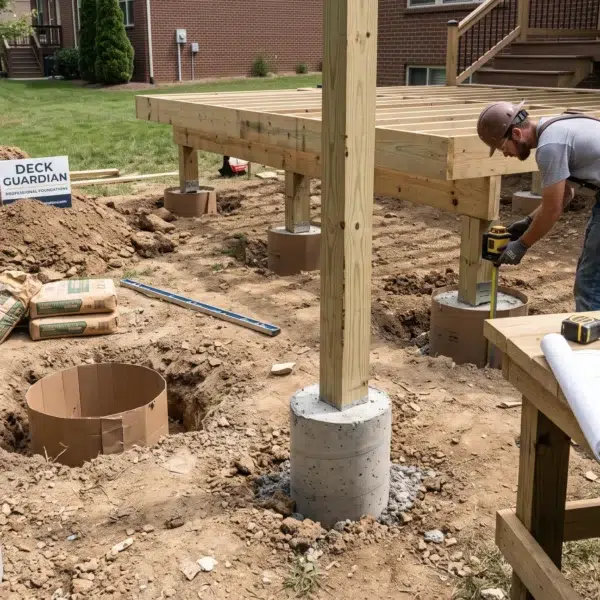
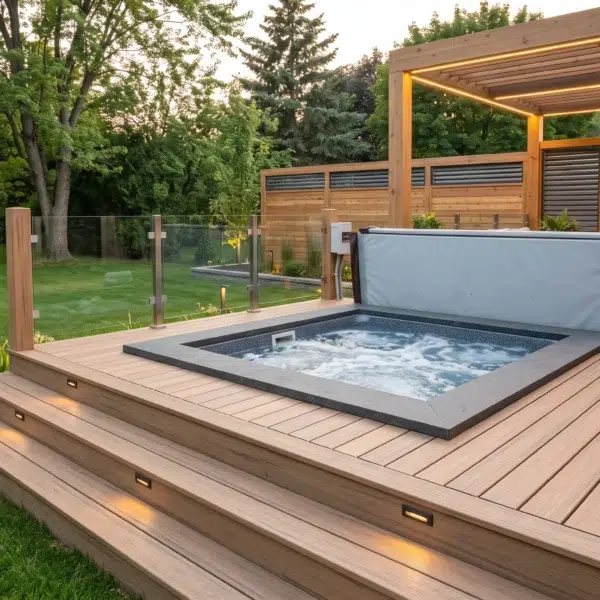
Key Takeaways
- Hanover’s historic architecture, dating back to 1763, can absolutely coexist with a new deck when your design respects the home’s scale, materials, and period details.
- Smart Hanover deck design choices in materials, colors, and railings can achieve a period-appropriate look while delivering low maintenance and full code compliance.
- Working with Pennsylvania deck builders who understand historic properties helps you navigate permits, preservation rules, and the approval process with far less stress.
- This guide covers the special considerations for historic homes, material selection, deck ideas that bridge past and present, invisible modern upgrades, and how to handle Hanover PA’s approval process.
Introduction
Picture a 1905 Colonial Revival on a quiet Hanover street. The brick foundation is solid, the wraparound porch trim still has most of its original millwork, but the back of the house? Just a tired concrete stoop where the owner dreams of a cohesive Hanover deck design for summer dinners and lazy Sunday mornings with coffee.
Hanover’s streets are lined with Victorian homes sporting ornate gingerbread trim, Colonial Revival properties with their symmetrical facades, and Arts & Crafts bungalows built for durability with natural materials and horizontal lines. This architectural richness is exactly what makes the town special. It’s also what makes adding a deck feel complicated.
Here’s the dilemma you’re probably facing: you want space for grilling, lounging, maybe even a built-in hot tub or pool for those chilly Pennsylvania country evenings. But you don’t want a boxy modern backyard deck that looks like it was bolted onto a 19th-century facade by someone who didn’t notice what era the house was built in. Working with local deck specialists who understand Hanover’s architectural heritage makes all the difference between a renovation that enhances your home’s character and one that fights against it.
What follows are practical, specific strategies for Hanover deck design that respects history while realizing your vision for modern comfort. You can have both.


Why Historic Hanover Homes Need Special Deck Considerations
Hanover was founded in 1763, and walking through certain neighborhoods feels like stepping through a timeline of American residential architecture. The borough contains eight designated historic districts, each with homes that have stood through two and a half centuries of Pennsylvania weather.1 Any exterior project on these properties carries weight.
Older houses come with quirks that affect deck planning in ways you might not expect. Irregular lot lines from pre-zoning survey methods. Existing porches with structural connections that can’t simply be removed. Stone or brick foundations that sit at odd heights relative to interior floor levels. These aren’t problems exactly, but they do require more thoughtful planning than slapping a platform onto the back of a 2020 subdivision home.
Specific constraints vary by location. The Borough of Hanover’s zoning ordinance typically requires minimum rear yard setbacks in residential districts, with stricter requirements often applied in historic overlays.2 If your property falls within a designated historic district, the Hanover Historic Architectural Review Board (HARB) reviews exterior changes for properties over 50 years old. Some neighborhoods with HOA rules limit rail height, restrict visible colors, or regulate under-deck storage visibility.
Here’s something that surprises most homeowners: many “historic looking” elements are actually modern materials. Those elegant fiberglass columns? Contemporary. Composite balusters with turned profiles? Manufactured last year. The idea that period-appropriate decking requires 19th-century technology is a myth.
A thoughtful Hanover deck design can actually highlight your historic architecture instead of competing with it. You have more options than you probably assume.
Modern Deck Material Choices That Honor History
Let’s challenge a common assumption right away. A historic deck renovation doesn’t require traditional pressure-treated wood. In fact, wood decking in Pennsylvania’s climate means splinters, annual sealing, and watching your boards cup and crack through freeze-thaw cycles. That’s not honoring history. That’s just choosing to fight your weather.
Modern composite decks and PVC decking have evolved dramatically. Products like Trex Transcend in “Heritage” tones or Azek’s Vintage Collection feature subtle grain textures and low sheen finishes that convincingly mimic period lumber. We’re not talking about the shiny plastic-looking boards from 15 years ago. Today’s options offer luxury finishes with 50-year fade and stain warranties, compared to the 10 to 15 years you’d get from even high-quality cedar.
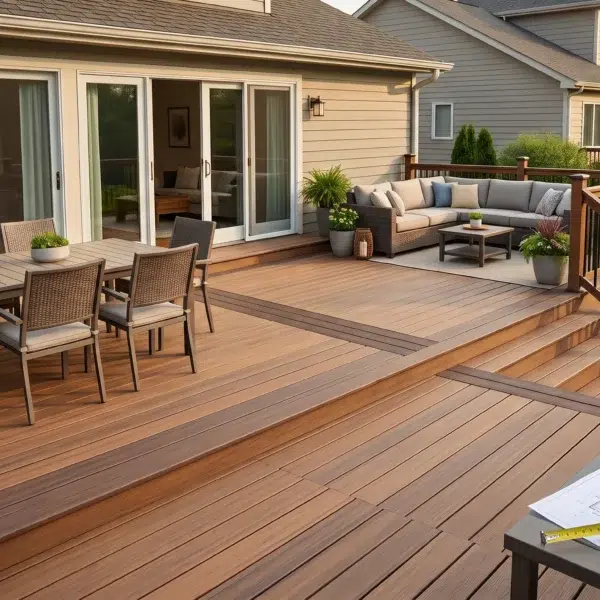
Matching your home’s existing materials matters more than most people realize. For a brick or stone foundation typical in Hanover’s Victorian and Colonial Revival homes, medium-to-dark brown or slate-toned boards create a balance of form and function. If your home has white Colonial Revival siding, softer grays or warm cedar tones keep the deck from shouting for attention.
Color psychology plays a role here too. Deeper, richer composite colors complement ornate Victorian deck design details, where the home itself already has visual complexity. Calmer, muted tones work better for Colonial Revival and Arts & Crafts homes, allowing you to feel closer to nature rather than competing with it.
Insider Tip: Here is a trick from experienced designers: order physical samples, then set them against your actual siding or brick on a sunny afternoon. Check them again at dusk. Pennsylvania light changes dramatically through the day and across seasons.
Thinking about updating your historic home? Get a Free Estimate from Deck Guardian who respect your home’s legacy.
Contemporary Deck Designs and Deck Ideas That Bridge Past and Present
The shapes and details of your deck are what neighbors notice first. Railings, posts, stairs. These elements need to echo your home’s era without turning your outdoor space into a theme park replica of “Ye Olde Porch.”
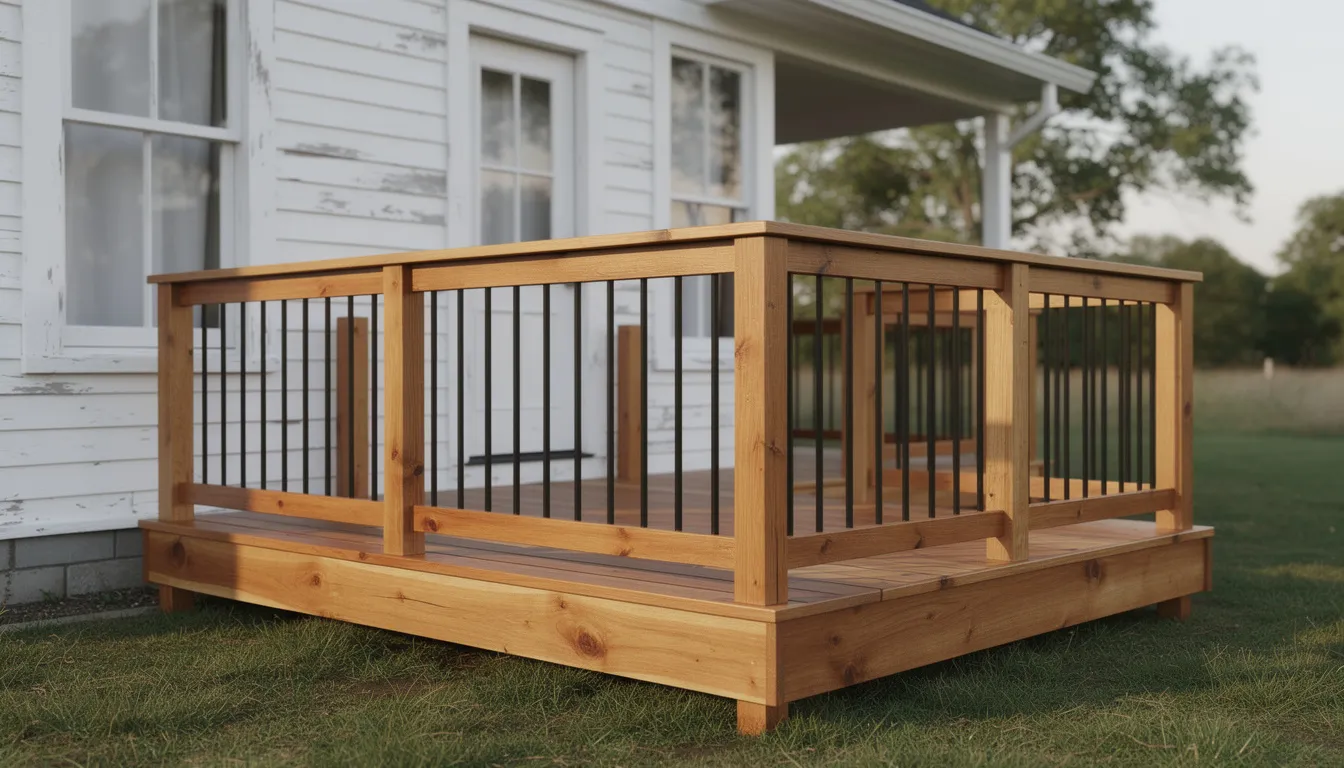
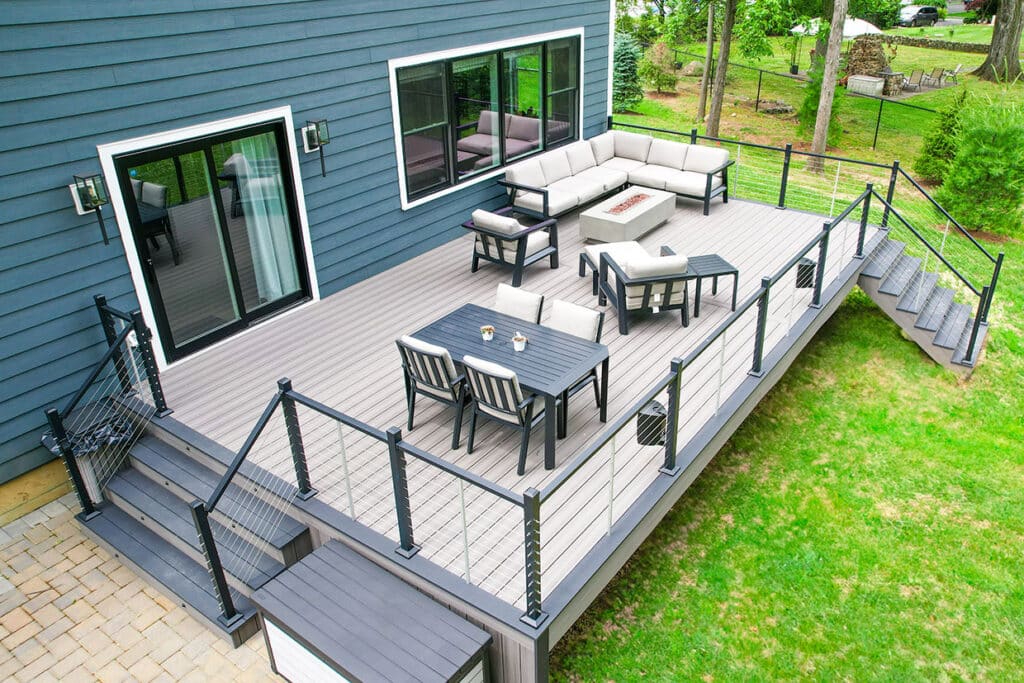
Railing approaches vary by architectural period. Slender black metal balusters suit early 1900s homes beautifully, referencing the wrought iron that was common in that era. Simple square balusters with a clean top rail work well for Colonial Revival properties. Arts & Crafts homes call for more substantial wood posts that echo the sturdy aesthetic of the style. What you want to avoid: overly chunky, purely modern deck ideas like cable or glass systems on small historic facades. They read as contemporary deck designs that ignore context.
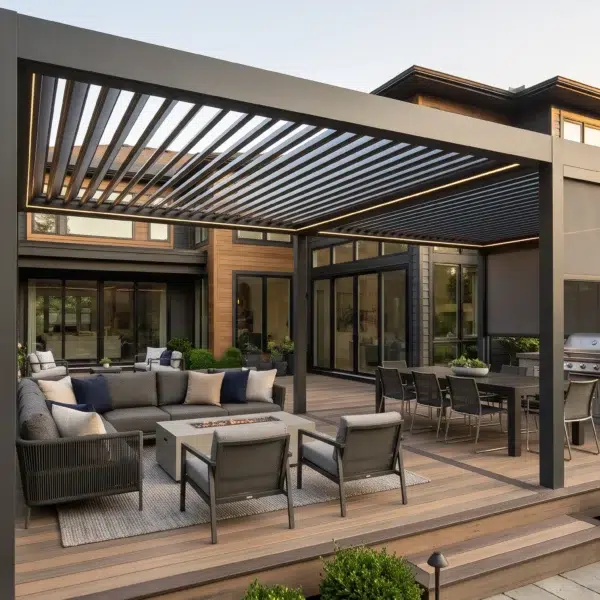
Louvered structures and pergola systems deserve consideration for shade and weather protection. A rectangular pergola with clean lines can nod to classic porch trim when proportions and colors match the existing house. Modern louvered roof systems, including motorized options that adjust for sun and rain, work on historic properties when you choose finishes that complement rather than contrast.
Creating Distinct Zones with Fire Features
Built-in seating creates an inviting space for entertaining without cluttering the deck with furniture. The key is proportion. Bench heights of 18 to 20 inches and depths around 24 inches echo period porch furniture dimensions. You might also consider creating distinct zones for dining and lounging. Avoid bulky box seating that overwhelms smaller Hanover PA deck footprints. Think elegant, not massive.
For those who love to host, adding an outdoor kitchen for summer cooking is a smart upgrade. To maintain the historic vibe, use materials that blend with the home, like stone veneers that match the foundation. You can also incorporate fire features – perhaps a cozy fire pit or a gas fireplace – to extend the usability of the deck into the cooler months so you can always relax outdoors.
Ambient Lighting and Scale
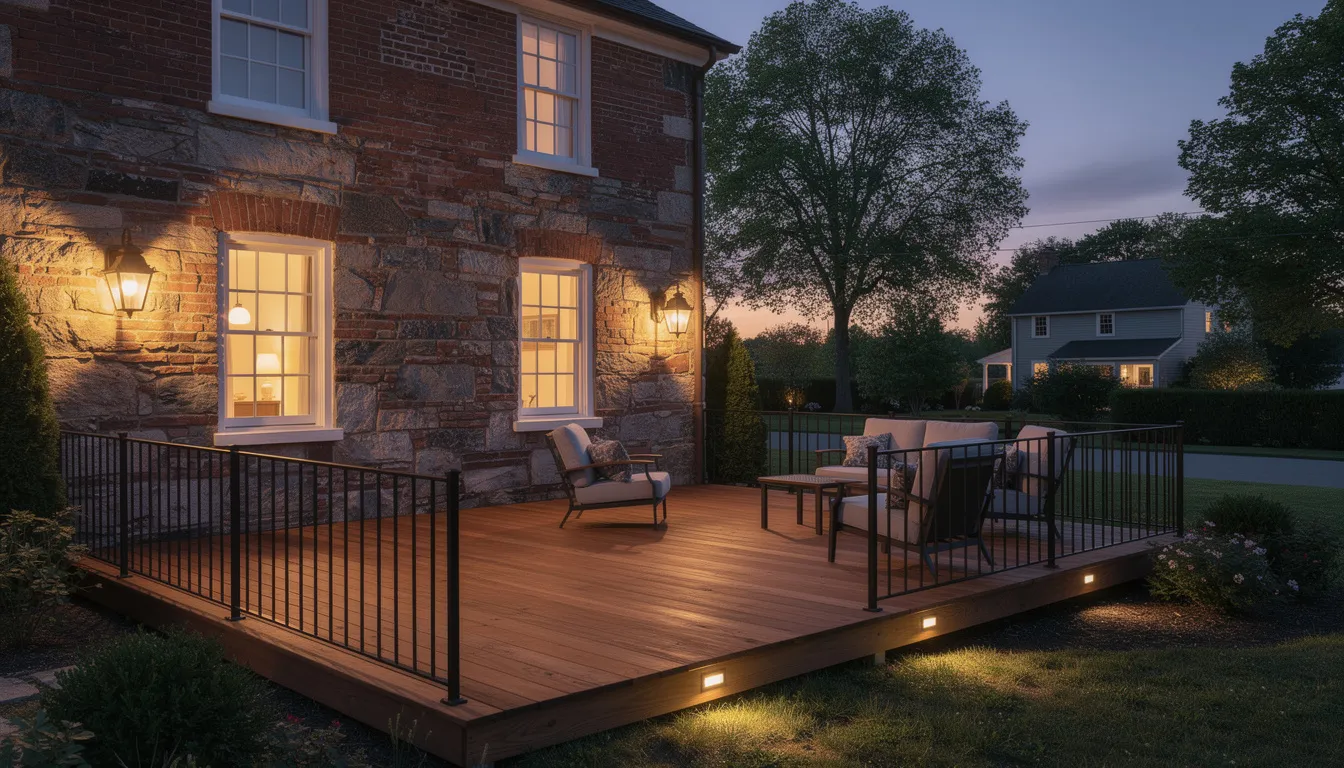
Ambient lighting offers unexpected opportunities for illumination that feels authentic. Gas lamp-style fixtures with LED bulbs provide the flicker and warmth of historic lighting without gas line installation. Lantern-inspired post lights create safety and atmosphere without exposed conduit. Low-voltage path lights and post-cap fixtures tuck into trim work invisibly.
Scale matters enormously. Your deck should usually sit a step or two below major trim lines and roughly match window spacing. It should never jut far past the side walls on a narrow historic home. A 1920s brick foursquare, for instance, suits a modest 12×16 deck with symmetric stairs. That’s enough space for a dining area and ample seating while keeping unobstructed views of the garden. Integrating stone pavers and connecting walkways can further ground the design, making the deck feel surrounded by the landscape.
For inspiration on scaling your project, explore our guide on multi-level decks which can add space without bulk. If you need more square footage, using multiple levels is often a better solution than one massive platform.
Invisible Upgrades for a Modern Backyard Deck
The best modern perks on a historic Hanover PA deck are the ones you barely see. Comfort, durability, and safety without visual clutter. Your neighbors should notice how nice your outdoor living space looks, not the technology making it function.
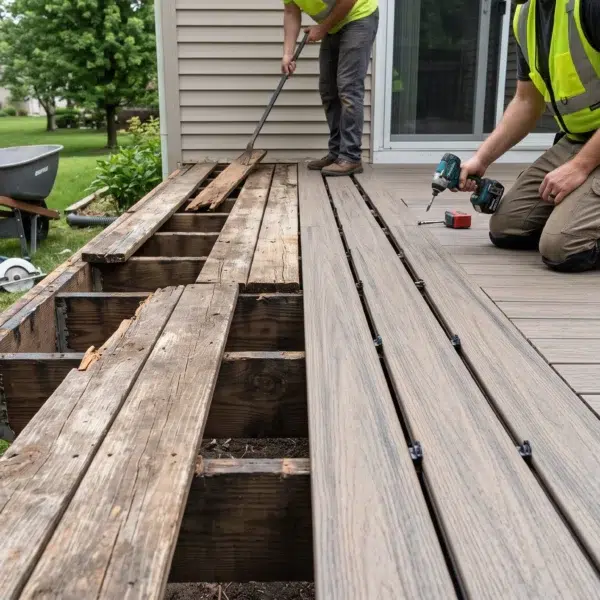
Hidden fasteners transform deck appearance. Concealed clip systems create uninterrupted board surfaces that look more like traditional tongue-and-groove porch floors from the street. Products like the Camo Edge system achieve nearly 100% board coverage compared to the scattered screw heads of traditional installation.
Modern drainage systems keep spaces underneath usable. Under-deck drainage like Trex RainEscape diverts water through concealed channels, protecting a ground-level patio or storage area while keeping the deck edge looking clean and period-appropriate. No visible guttering fighting with your home’s trim lines.
Pennsylvania’s weather demands serious structural attention to complete the project safely. Snow load requirements under current building codes call for a minimum of 40 psf ratings in York County. That means stronger framing, extra posts, and potentially engineered beams. All of this hides behind classic skirting or lattice that matches your home’s existing trim. The structure is modern and rock-solid. The appearance is timeless.
| Invisible Upgrade | What It Does | Why It Matters for Historic Homes |
| Hidden fasteners | Eliminates visible screws | Creates clean, traditional floor appearance |
| Under-deck drainage | Channels water away | Protects lower areas without visible gutters |
| Reinforced framing | Meets PA snow load codes | Hides behind period-appropriate skirting |
| Recessed outlets | Provides power without visible boxes | Maintains clean deck edge lines |
| Concealed speakers | Delivers audio invisibly | Keeps focus on architecture, not technology |
Tech integration done right means recessing speakers into soffits, placing weather-proof outlets near posts where they’re accessible but not prominent, and hiding cable runs for string lights so you can enjoy the deck at night. Nothing should distract from the historic facade while bridging the gap between indoor luxury and outdoor living.
Navigating Hanover’s Approval Process Without Losing Your Mind
In Hanover, PA you’ll likely need permits for most new decks. The triggers include attachment to the house, height above 30 inches, or footprint changes over 200 square feet. Understanding the process upfront prevents frustrating surprises midway through your project.
Simple repairs on existing structures might avoid permits entirely, but a full historic deck renovation or significant changes like new railings definitely trigger reviews under Pennsylvania building codes. When in doubt, contact the borough office before you start planning. A five-minute conversation can prevent costly mistakes that could delay your build.
Historic district considerations add another layer. In designated areas or near listed properties, design review examines rail style, visibility from the street, and materials. The Hanover Historic Architectural Review Board typically wants photos, a simple drawing or sketch, and a material list. Document existing conditions from multiple angles before any demolition. This protects you if questions arise later.
| Approval Step | What to Prepare | Typical Timeline |
| Zoning verification | Property survey, setback measurements | 1-2 weeks |
| Building permit | Structural plans, material specs | 2-4 weeks |
| Historic review | Photos, drawings, material samples | 4-6 weeks |
| HOA approval | Design renderings, color samples | 2-4 weeks |
Set realistic expectations for timing. Allow several weeks for approvals during busy spring and summer seasons. If your neighborhood requires HOA sign-off in addition to borough permits, build that into your schedule. Starting the approval process in winter for a spring build gives you breathing room.
Ready to start your project? Get a Free Estimate and let Deck Guardian handle the design and approval details for you.
Conclusion
Historic character and modern function aren’t opposites. They never were. The right Hanover deck design feels like it’s always belonged while finally giving you space for dinners outdoors, weekend reading, or grandkids playing on warm summer evenings.
The elements that create success are straightforward: thoughtful materials that complement rather than compete, restrained color choices, correctly scaled railings, and hidden modern upgrades that deliver comfort without demanding attention. These create historic home outdoor spaces that feel both authentic and genuinely livable.
Your deck isn’t a bolt-on feature. It’s the next chapter in your home’s story. Partnering with Pennsylvania deck pros who respect history and understand local requirements simplifies everything from material selection to final inspection.
Here’s something worth remembering: the projects done well today will be part of what people admire about Hanover’s streetscapes in another 50 years. Your deck can join the Victorian porches and Colonial Revival facades as something worth preserving. With the right design ideas, that’s a legacy worth building.
FAQ
Can I build a new deck on the front of my historic Hanover home, or does it have to stay a porch?
Front-facing decks in historic districts face much tighter controls than rear additions. Preservation guidelines generally prefer porches or low platforms that maintain the home’s original street presence. Before planning a front deck, check local zoning and historic guidelines through the borough office. In many cases, a restored or enhanced porch achieves the outdoor living goals while staying within review board preferences.
What’s the most low-maintenance material that still looks right on an older house?
Composite and PVC lines with matte finishes and traditional board widths work best. Look for products like Azek’s Harvest collection or Trex Transcend in heritage tones. The key is choosing subdued, historically sympathetic colors rather than the high-gloss or obviously synthetic finishes. These materials resist Pennsylvania’s freeze-thaw cycles while requiring only occasional cleaning.
How big is too big for a deck on a small historic lot?
A useful rule of thumb: keep deck depth in proportion to house width, and never extend past the side walls by more than a few feet. Staying well within setback requirements matters both for permits and for visual balance. If you need more space, multi-level or L-shaped layouts add square footage without creating a single massive platform that overwhelms the facade.
Will adding a deck hurt or help my home’s value in a historic neighborhood?
Well-designed, context-appropriate Hanover PA decks typically help resale because buyers increasingly want outdoor living space. Studies show 65 to 70% ROI on historic home deck additions when design respects the property’s character. However, poorly scaled or visually clashing designs can actually reduce value by 5 to 10%. The design quality matters as much as the addition itself.
Do I need to match my existing porch railing exactly on a new back deck?
An exact match isn’t always required or even desirable. What matters is echoing key details like baluster spacing, color family, or profile style so the new deck feels related to the home without copying every element. Think of it as a conversation between old and new rather than a duplication. Many successful projects use simplified versions of existing details that read as harmonious without being identical.