

Creative Landscaping Ideas for Your Deck
Deck landscaping connects your outdoor living space with the rest of your yard. Planting beds, well-placed shrubs, defined borders, and clear pathways can soften the edges of a deck while keeping stairs, seating areas, and maintenance access usable.
At Deck Guardian, we plan decks with the surrounding backyard in mind. This guide explains how to choose plants, arrange borders, and adapt your landscaping to a ground-level or raised deck. You’ll also find ideas for small spaces, vertical gardens, and lower-maintenance planting schemes.
1. Planning Your Deck Landscaping Project
Before buying plants or materials, map out the space around your deck and decide what you want to improve. You may need more privacy, a clearer route into the backyard, or planting that softens an exposed edge. Use those priorities to guide your layout and budget.
Assess Your Space
Measure the planting area around your deck and mark the locations of stairs, posts, downspouts, gates, and existing trees. Leave room for people to move between the deck and backyard, as well as access for inspecting and maintaining the structure.
Observe the area after rain before choosing plants or ground coverings. Note where water collects or flows toward the house. Landscaping should work with a suitable drainage plan; adding mulch, gravel, or planting beds alone will not resolve a drainage problem.
Determine Your Style
Think about how you want your backyard to look and feel from the deck. Straight borders and repeated planting groups suit a more formal design, while curved beds and mixed planting create a relaxed setting. Choose a few colors and materials that complement your home and enhance the beauty of the plants without making the space feel crowded.
Consider Sunlight and Shade
Observe how much sunlight and shade your deck area gets throughout the day. Some plants need full sun, while others thrive in partial shade or full shade. Choose plants that match the light conditions of your space so they’ll grow well and look their best.
Budget for the Project
Set a budget for your backyard project that includes plants, soil preparation, edging, mulch, and any tools or delivery costs. If the budget is limited, complete one planting bed at a time rather than spreading the work across the entire space. A bit of planning at this stage can help you avoid buying more plants than you have room for and reduce replacement costs in the long run.

2. Choosing the Right Plants
Choose plants based on the conditions in your backyard and the role each plant will serve. Shrubs can screen a seating area, perennials can add seasonal color, and ground covers can soften the edges of planting beds. Before visiting a garden center or greenhouse, note the available space, sunlight, and soil conditions so you can compare suitable varieties.
Choose Evergreens and Flowering Shrubs for Structure and Privacy
Use shrubs and small trees to frame views from the deck and screen specific sightlines from neighboring properties. Check their mature height and width before planting: a shrub that fits beside the stairs today may eventually crowd the landing or block a path.
For a raised deck, assess privacy from the seating area rather than from the lawn below. A planting that screens a ground-level patio may be too short to screen an elevated deck. Evergreens can provide year-round coverage, while deciduous plants offer more seasonal screening.
Compare planting options with our deck privacy ideas if your layout also needs a screen or another privacy feature.
Layer Perennials, Ornamental Grasses, and Ground Covers
Arrange plants in layers, with low-growing varieties near paths and taller plants where they will not obstruct views or access. Repeat a few plant varieties along the border to create a connected design, and combine different flowering seasons for interest beyond a single month.
Ground covers can fill gaps between larger plants, but choose them for their suitability to the site and manageable growth—not simply how quickly they spread. Check the mature size and regional invasive status of each species before buying. Keep vigorous growers away from stair openings and areas that need regular inspection.
Choose Native Plants That Match Your Site
Native plants can support local wildlife and work well in a lower-maintenance landscape when matched to the site. However, a native plant suited to moist soil may struggle in a dry bed beside a sunny deck. Check sunlight, soil moisture, drainage, and mature size rather than relying on the “native” label alone.
For regional planting guidance, the Pennsylvania DCNR native plant resources include options for different site conditions. Newly planted beds still need watering and weed control while they establish.
Check Your Plant Hardiness Zone
Use the USDA Plant Hardiness Zone Map to look up your ZIP code and compare it with the hardiness information on plant labels. The map describes average annual extreme minimum winter temperatures; it does not measure every condition that affects plant growth.
Check sunlight, soil, moisture, and exposure separately. For containers that will remain outdoors through winter, ask a local nursery whether the plant and container setup are suitable for your location.

3. Designing Your Landscape Layout
Sketch a backyard layout that connects the deck, planting beds, and the areas you use most. Mark walking routes first, then position plants where their mature growth will leave those routes open. Follow these steps to test the arrangement before planting:
- Sketch it out: Draw a simple sketch of your deck and the surrounding area.
- Mark out borders: Lay garden hoses or ropes on the ground to define the borders of your planning area to help you visualize the final look.
- Arrange plants: Consider grouping plants with different heights, colors, and textures to create layers and depth.
- Test the arrangement before planting: Position plants in their nursery pots within the marked beds. Adjust the spacing for their mature size, then check the view from the deck and backyard before digging.
- View layout from different angles: Take a step back and view the layout from different places in your backyard to make sure it looks balanced.
- Prepare the ground: Clear the area of debris and ensure the soil is ready for planting.
- Install the borders: Place edging or border materials to define the planting area and keep it tidy.
Use Borders and Paths to Connect the Deck to the Backyard
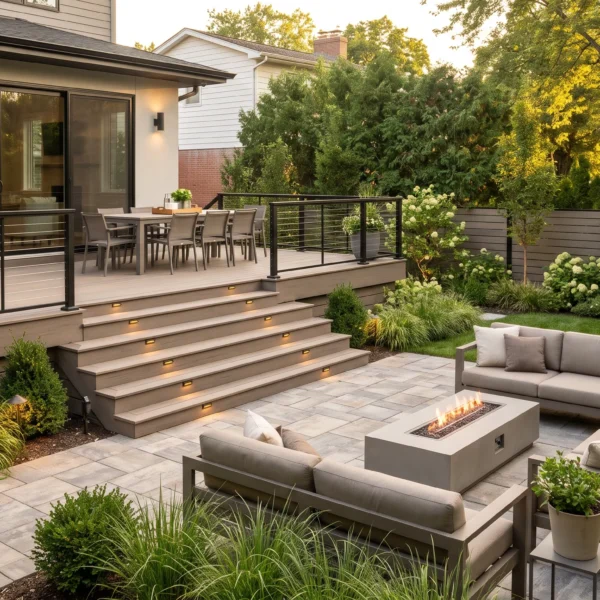
Define planting beds with edging that suits the deck and surrounding hardscape. For example, a simple stone border can connect a planted edge with an existing patio, while discreet metal edging can separate a bed from the lawn.
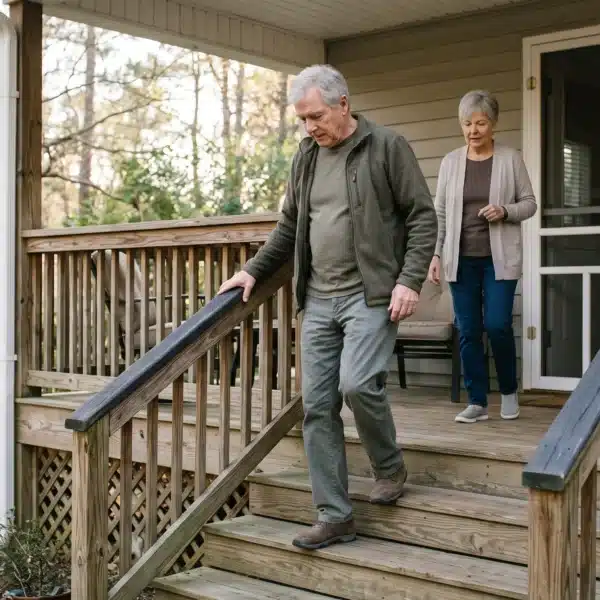
Plan the route from the deck stairs to the garden before placing plants. Keep the landing clear and choose a stable walking surface for frequently used paths. On a multi-level deck, repeat a plant variety or border material near each transition to help the different areas feel connected.
Adapt the Layout to Your Deck Height
For a ground-level deck, use lower planting near the perimeter where you want to preserve open views into the backyard. Keep soil and mulch clear of deck boards and wood components, and retain access to the edges of the structure.
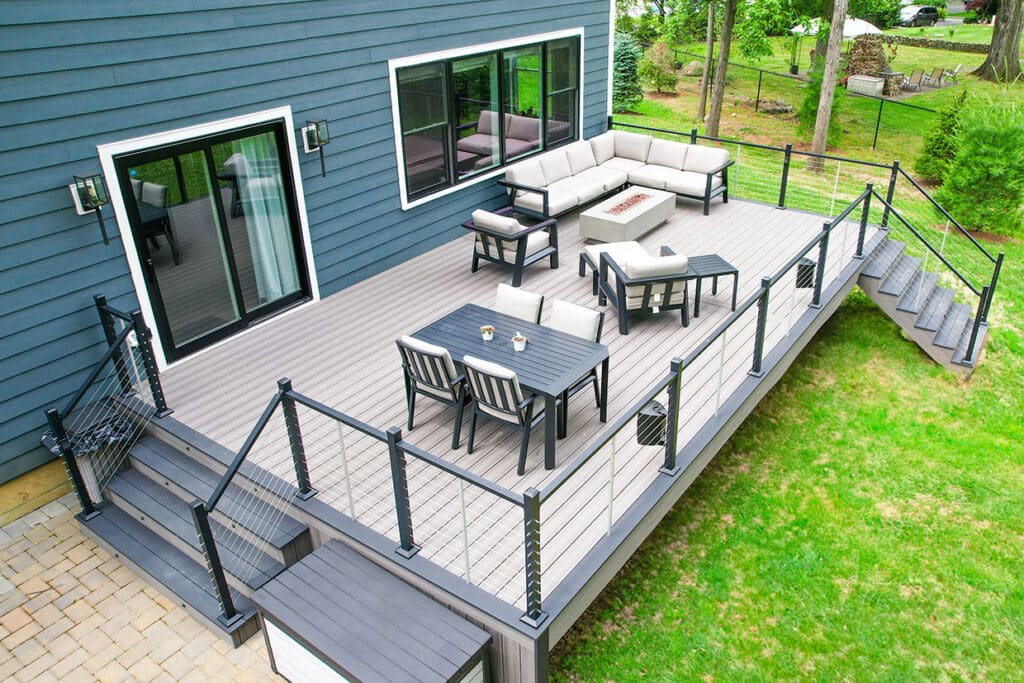
Around a raised deck, use layered planting to soften the view of the supports without hiding every post or closing off inspection access. Position taller shrubs where their mature growth will not crowd the stairs.
Under a deck, assess light, moisture, and clearance before deciding what belongs there. Deep shade and limited rainfall may make planting difficult. Where plants are unsuitable, a properly prepared gravel surface may be more practical, but it still needs a drainage plan. Do not bury post bases, obstruct ventilation, or change the ground level around structural supports without checking the implications for the deck.
4. Adding Decorative Elements to Your Outdoor Space
Choose a few decorative elements that suit how you use the deck. Include their locations in your layout before planting, especially where lighting, furniture, or a water feature will need space or access.
- Outdoor Lighting: Plan lighting around stair treads, landings, and the route into the backyard before adding decorative accents. Position fixtures so plants will not obscure them as they grow, and avoid glare toward seating areas. Our deck lighting guide explores lighting options for the deck and its surroundings.
- Garden Art: Add sculptures, birdbaths, or wind chimes to give your garden character. These pieces can serve as focal points and conversation starters, adding a unique touch to your landscape.
- Furniture: Choose weather-resistant seating and a table that fit the available space without blocking circulation. Leave enough room to serve food and share a meal with family. A separate pair of chairs can provide a quieter place to sit with a glass of wine and settle in for the evening.
- Water Features: A small fountain or birdbath in an adjacent garden bed can create a focal point visible from the deck. Choose a location with convenient access for cleaning and keep splash or overflow away from walking surfaces and deck components.
Use Planters and Vertical Gardens in Small Spaces
Containers and vertical gardens can add planting where there is little room for a bed beside the deck. Group a few containers near a seating area, or use a purpose-built freestanding planter with a trellis to introduce height without covering the entire deck perimeter.
Choose plants for the available light and the amount of watering you can realistically provide. Use containers with drainage holes and a potting mix intended for container growing. Position them so runoff does not collect against the house or keep the decking continuously wet.
Account for the combined weight of containers, saturated growing media, and mature plants. Before installing large planters or attaching a vertical garden to a railing, wall, or pergola, have the support and attachment method checked. Keep stairs, walkways, and handrails clear.

5. Simplifying Regular Maintenance Around Your Deck
Low-maintenance deck landscaping starts with a manageable layout. A few well-chosen plant varieties, accessible beds, and clear edges are easier to look after than crowded borders that need frequent cutting back.
- Group plants by watering needs. Check soil moisture and adjust watering for rainfall and plant establishment rather than following a fixed schedule throughout the year.
- Use mulch thoughtfully. Maintain an appropriate layer in planting beds without piling it against plant stems, deck components, or siding. Check the existing depth before adding more.
- Allow for mature growth. Choose plants that fit the available space so routine care does not become constant pruning to keep the stairs open.
- Keep the structure accessible. Remove fallen leaves and debris from around the deck, and trim growth that blocks inspection or maintenance.
- Fertilize only when needed. Base applications on the plants’ requirements and soil-test recommendations rather than treating every bed on the same schedule.
- Plan seasonal care. In spring, inspect beds for winter damage and check container plants for crowded roots before deciding whether they need repotting. Plan winter protection for sensitive container plants, and follow species-appropriate timing for pruning and dividing perennials.
For low-maintenance landscaping around a raised deck, concentrate planting in accessible beds around the perimeter. Keep the harder-to-reach area beneath the deck simple, and address drainage or persistent weeds before adding decorative ground cover.

Plan a Deck That Works with Your Landscape
The most useful deck landscaping ideas fit the way you move through and use your backyard. Start with clear access, suitable plants, and a layout that leaves room for both everyday activities and maintenance.
If you are planning a new deck or replacing an existing one, Deck Guardian brings deck-building expertise to decisions about layout, stairs, and the connection to your landscape. Schedule a free consultation to discuss a deck that suits your daily routine and gives you more ways to enjoy your outdoor space.