PA & NJ Soil Types: Why Your Deck Foundation Is Doomed in 10 Years (Or Not)
Understand composite deck costs with our budget-friendly guide, offering insights into materials, installation expenses, and money-saving tips for a stunning deck.
Your deck foundation determines whether your outdoor investment lasts 25 years or starts failing within the first decade. Most homeowners spend weeks choosing between composite brands and wood species while barely glancing at what holds the structure up. The difference between a deck that remains stable through decades of Pennsylvania winters and one that tilts, cracks, and separates often comes down to how deck footings transfer weight, support the structure, and interact with the soil beneath them during building.Deck Guardian sees this pattern repeatedly: Bucks County clay behaves nothing like Jersey Shore sand, yet contractors often apply identical foundation approaches to both.
Soil type dictates footing design, depth requirements, and long-term stability more than any surface material you select.
This guide explains:
Why clay soil in eastern PA destroys shallow footings through frost heave
How sandy coastal soil creates different but equally serious structural risks
What questions to ask contractors before they pour concrete
How foundation quality affects warranty coverage and financing options
What Sits Under Your Concrete Deck Matters More Than What Sits On Top
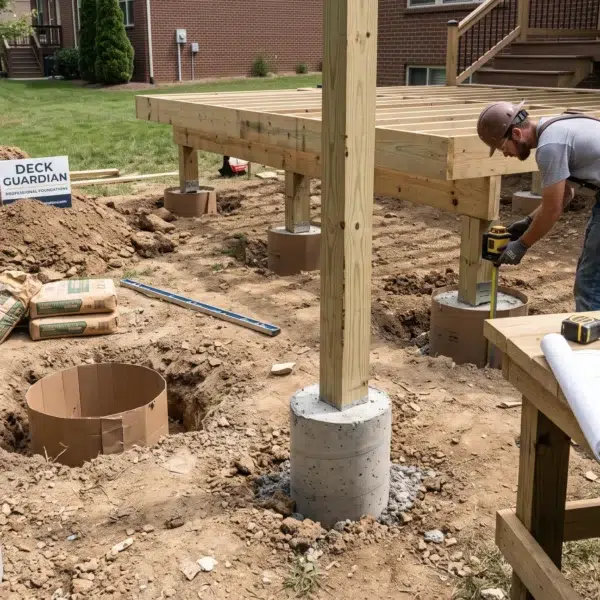
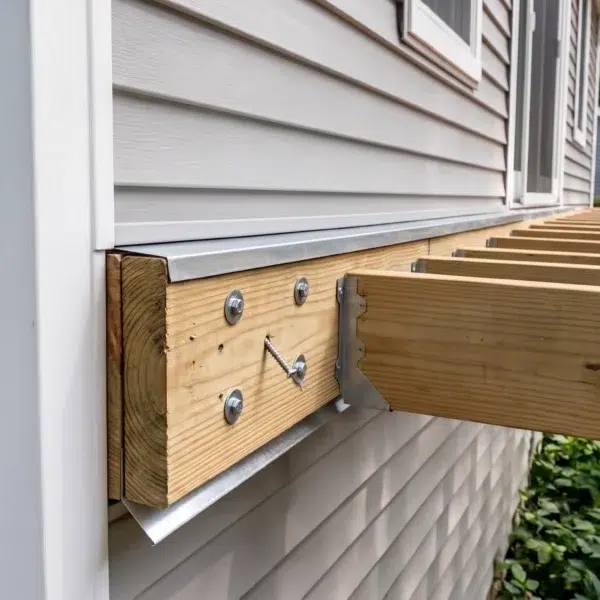
Deck construction follows a strict hierarchy that most homeowners get backwards. Decking boards attract attention. Social media features gorgeous composite surfaces. Meanwhile, deck footings, deck posts, and joists quietly perform the structural work that supports the entire frame and allows the deck to be installed safely.
A $20,000composite deck installation means nothing if the foundation system shifts beneath it, the entire structure responds. Concrete footings, typically poured in place, transfer every pound of dead load and live load from the frame through deck posts and piers into the ground, distributing weight safely below grade. When soil conditions change seasonally, when frost heave pushes from below, when erosion undermines support, the entire structure responds.
Your deck piers and footings must match your specific soil type. Clay demands different treatment than sand. Unstable soil requires solutions that stable ground does not. The surface material remains irrelevant until the foundation is right.
Clay Soil in Bucks County – Frost Heave and Long-Term Deck Damage
Clay soil expands when wet and contracts when dry. Buried post footings are designed to support deck posts and require digging a hole and pouring concrete, which makes them especially vulnerable if digging depth, installation method, and nearby tree roots are not properly accounted for. This constant movement creates lateral pressure against footings that accumulates over years. Bucks County and much of eastern Pennsylvania sits on heavy, plastic clay with moisture sensitivity that destroys improperly designed foundations.
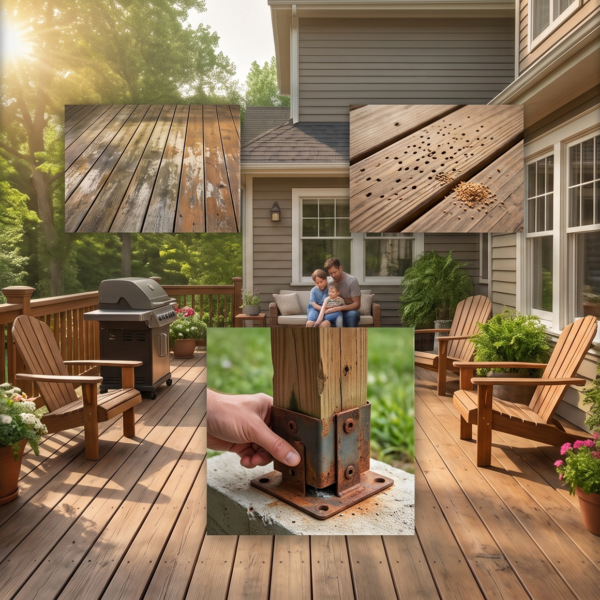
Frost heave compounds the problem. Water saturates clay during fall rains, then freezes when temperatures drop. When water freezes, it expands by roughly 9%, and in clay soil this expansion exerts upward pressure on footings. After 5–10 winters, the cumulative damage becomes visible: deck slope exceeding an inch, railing gaps that violate building codes, stress cracks where the ledger board meets your house.
In most parts of Pennsylvania, the frost line typically ranges from 36 to 42 inches below grade. Traditional footings and deck posts must extend deeper into the ground than this threshold to meet local building codes, making footing options and depth an important consideration during design.¹
Concrete selection matters too, whether footings are poured on site or use precast concrete elements specifically designed for structural deck support and proper installation. Precast concrete deck post footings are poured and cured off-site and then transported to the deck build location. Footings need 3,000-4,000 PSI concrete with proper air entrainment to survive 300+ freeze-thaw cycles without cracking. Poured concrete footings should have a diameter of at least 12 inches.²
Sandy Soil Along the Jersey Shore – Deck Piers, Erosion, and Load Risks
Sandy soil drains fast and avoids frost heave entirely. Coastal properties in Monmouth and Ocean County enjoy weather conditions that seem ideal for deck construction. The reality is more complicated.
Sand offers lower load-bearing capacity, typically 1,500-3,000 psf compared to stable clay’s 2,000-4,000 psf. Deck footing options in soft soil require wider bases or deeper piers to distribute weight effectively, often increasing digging depth compared to clay sites. Precast concrete deck blocks are sometimes used for ground level or floating deck installations. Floating decks are a viable option for decks that are 6 feet or less in height, allowing for simpler foundation solutions, but deck blocks often fail in sand because they concentrate weight on limited bearing surfaces. Deck blocks are precast concrete piers that can support the weight of a deck and are easy to install, but they may not provide as much strength as other footing types, especially in sandy or shifting soil.
Coastal erosion adds another challenge. Post-storm conditions can undermine footings that seemed secure during installation. Helical piers offer reliable support by anchoring into stable strata below shifting sand, making them one of the most effective pier-based solutions compared to other options.³
Building a deck near the water demands specific engineering. Footing size calculations must account for reduced bearing capacity and potential erosion over the structure’s lifespan.
Why Concrete Deck Blocks and Deck Blocks Fail (And Expensive Decking Cannot Save Them)
Deck blocks are typically less than $10 apiece and are one of the cheapest deck foundation options. Common shortcuts create predictable failures:
Buried post footings poured too shallow to clear the frost line
Undersized concrete tubes that save time but cannot handle live loads
Skipped soil assessment before design begins
Low PSI concrete mix that cracks within five winters
When contractors prioritize speed and low cost, the foundation is usually where corners are cut. That bouncy feeling underfoot, those leaning deck posts, the ledger board pulling away from your house, these visible problems trace back to footing failure that started years earlier.
Factor
Proper Installation
Shortcut Approach
Footing Depth
36-42” (PA) / 24-36” (NJ)
24” or less
Concrete PSI
3,000-4,000
2,000 or unspecified
Soil Assessment
Before design
Skipped
Long-term Cost
Initial investment
Repairs at 5-10 years
Understanding why experienced contractors matter and reviewing our company background helps homeowners identify builders who prioritize foundation quality over speed. Concrete footings come with higher upfront costs due to the need for digging, pouring concrete, and potentially hiring professionals. Using deck blocks can save significantly on labor, materials, and installation time compared to concrete footings.
How to Protect Your Deck Foundation Under PA and NJ Building Codes
Protecting your investment starts before the first shovel hits dirt, regardless of the types of deck you are building, whether it’s attached to the house, floating in the yard, or installed near a shed. It is important to visit www.call811.com to request all underground public utilities be marked before you begin to dig.⁴
Request a soil assessment before finalizing design, not after digging begins
Insist on frost-line-depth footings for any PA project
Consider helical piers for sandy, sloped, or unstable soil conditions
Ask about drainage planning around footings to manage moisture
Check with your local building inspector about depth requirements
For existing decks showing foundation stress,deck resurfacing options may address surface issues.
This knowledge empowers better contractor conversations. A builder who dismisses foundation questions is telling you something important about their priorities.
Financing and Warranty – Why Foundation Quality Affects Both
Foundation quality connects directly to long-term value. A properly engineered deck foundation system provides long-term structural support, manages weight correctly, and is installed to standards that qualify for stronger warranty coverage. Our warranty coverage reflects this philosophy: build correctly from the ground up, and coverage protects your investment for decades.
Deck financing options are more practical when the structure is designed to perform for 25+ years rather than requiring major repairs at year 10.
Contractors interested in ouraffiliate program for contractors understand that durability creates satisfied customers and referral business.
Conclusion and Next Steps
Soil type and foundation quality determine your deck’s lifespan more than surface materials ever will. Bucks County clay demands frost-line-depth footings and proper concrete specifications. Jersey Shore sand requires load distribution solutions that account for reduced bearing capacity and erosion risk.
Before discussing decking brands or color options, ask your contractor three questions: What is the soil type on my property? How deep will footings go? What concrete specification will you use? Those answers quickly reveal whether the structure is designed to last or destined for early repairs.
How deep should deck footings be in Pennsylvania? In Pennsylvania, deck footings should reach at least 36 to 42 inches below grade to clear the frost line. This prevents frost heave from pushing the foundation upward during winter freeze cycles.
Does soil type affect how long a deck lasts? Yes. Clay soil expands and contracts with moisture, stressing footings over time. Sandy soil drains well but offers less load support. Both require specific footing designs to ensure a stable, long-lasting deck foundation.
What is frost heave and why does it damage decks? Frost heave occurs when water in soil freezes and expands, pushing structures upward. In clay-heavy areas like Bucks County, PA, this repeated motion can tilt footings, crack concrete, and destabilize the entire deck frame.
Are helical piers better than concrete footings for decks? Helical piers work well in sandy, loose, or unstable soils where traditional concrete footings may shift. They screw into stable ground below the problem layer, providing reliable support for elevated or waterfront decks.
Why do expensive deck boards still fail on some projects? Premium decking cannot compensate for a weak foundation. If footings are too shallow or undersized, the frame will shift over time, causing boards to warp, gaps to open, and railings to loosen regardless of material quality.
What questions should I ask a contractor about deck foundations? Ask about footing depth, concrete PSI rating, soil assessment, and how they handle drainage. A contractor who skips these topics may be cutting corners that will cost you later.
Is sandy soil easier to build a deck on than clay? Not necessarily. Sandy soil drains faster and avoids frost heave, but it offers less bearing capacity. Footings in sand often need wider bases or alternative support systems like helical piers.
How can I tell if my existing deck has foundation problems? Warning signs include a sloping or bouncy deck surface, gaps between the ledger board and house, leaning posts, and railings that wobble. These often indicate footing movement or failure below the frame.
Does foundation quality affect deck warranty coverage? Many warranties require proper installation to remain valid. If an inspection reveals substandard footings, claims for structural damage may be denied. Building to code from the start protects both your deck and your coverage.
We’ll visit your home or other deck site and guarantee you a no-pressure consultation. We will listen to your ideas, answer questions, show you samples and take measurements, discuss your options and follow up with you in a few days with a detailed deck estimate.
Looking for a strong, stylish, and long-lasting deck for your Pacific Northwest home? We provide professional deck installation services tailored to your vision — from custom design to expert construction, all completed with top-quality materials guaranteed to endure.

 What Sits Under Your Concrete Deck Matters More Than What Sits On Top
 What Sits Under Your Concrete Deck Matters More Than What Sits On Top