Table of Contents
ToggleBefore bringing out the furniture or inviting people onto a deck regularly, take time to look for changes that may have developed during months of weather exposure. Cracked deck boards, a loose deck railing, soft wood, rusted hardware, and movement beneath the deck surface deserve attention before foot traffic increases. If the deck shifts underfoot, a railing moves noticeably, stairs feel unstable, or decay is visible around structural connections, keep people away from the affected area until it has been evaluated by a qualified professional.
Some visible wear is cosmetic. Other conditions may point to moisture damage, wood rot, loose connections, or changes in the supporting structure. In this deck inspection guide, our team at Deck Guardian explains seven warning signs you can identify and when a professional deck inspection may be the safer next step.
1. Cracked Deck Boards That Go Beyond Surface Checking
Hairline cracks can develop in wood decking as boards repeatedly absorb and release moisture. Some remain limited to the surface, but their depth, location, and progression still matter.
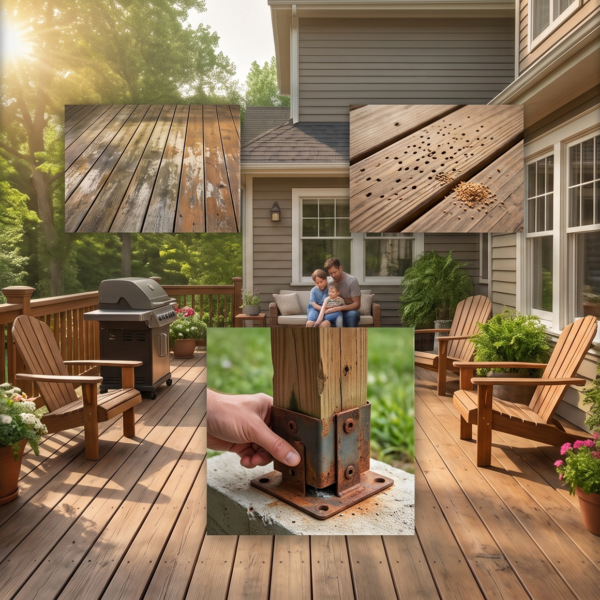
A shallow surface check may be cosmetic, but a deep crack or split extending through the board’s thickness may require replacement rather than an attempt to fill it.
Inspect the full length of affected deck boards. Pay particular attention to cracks near fasteners, board ends, stairs, and areas supporting heavy furniture. Improper installation, incorrect fasteners, or inadequate spacing can also contribute to splitting.
Keeping the gaps between boards clear helps prevent standing water and trapped moisture. The end grain of wooden boards should also remain protected so that existing cracks do not worsen.
2. A Loose Deck Railing or Wobbly Deck Railings
A wobbly deck railing is a serious safety risk, especially when the outdoor living space will be used by multiple people. NADRA’s Deck Evaluation Guide includes railings, stairs, supports, beams, joists, the ledger, and deck boards in its annual inspection checklist. Check the deck railing at several points rather than testing only one post.
Common causes of wobbly deck railings include loose fasteners and wood rot. Check railing posts, balusters, screws, carriage bolts, and other visible hardware. Wood railings may also become unstable when moisture weakens the material surrounding the connection.
Tightening loose hardware can sometimes fix a loose railing. However, tightening screws or bolts will not address rotting wood, stripped connections, damaged railing posts, or improper installation. If the railing remains loose, have the root cause evaluated before allowing people to lean against it.
Wooden railings should feel secure at the posts, stairs, and transitions. Look for cracks, corrosion, missing hardware, and movement where the railing connects to the rim joist or deck frame.
3. Soft Wood and Visible Wood Rot
Rotting wood cannot be restored with a new finish, paint, or crack filler. Wood that has lost strength should be evaluated and replaced as part of the appropriate repair.
Probe suspicious areas gently with a screwdriver. Wood that feels soft, spongy, or easy to pry may have rot beneath the visible surface. Inspect deck boards, wood posts, joists, railing posts, stairs, and accessible parts of the ledger board.
Moisture allows rot to develop and can also cause metal hardware to rust. The USDA Forest Service guidance on moisture and wood deterioration explains how moisture contributes to weathering, mold, decay, fastener corrosion, checks, and splits. Look more closely at areas where leaves, dirt, furniture, or limited drainage keep the wood wet.
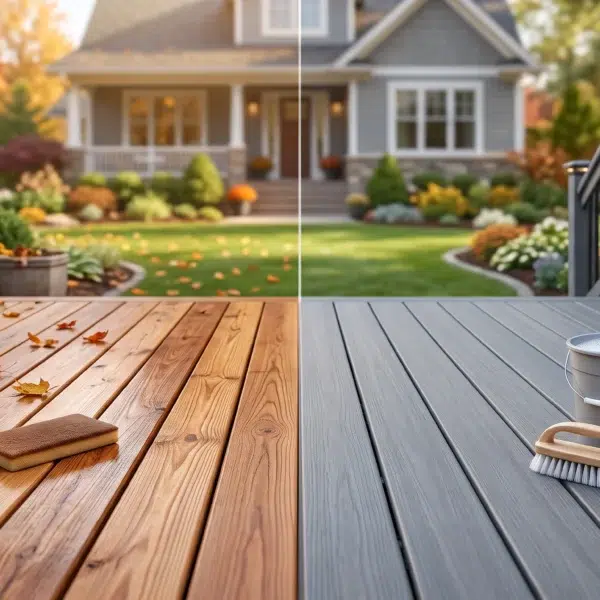
Many composite decking products combine wood fibers with plastic and may include a protective plastic cap. This added durability can reduce some maintenance demands, but composite boards still need inspection for damage, movement, and loose fasteners.
4. Loose Fasteners or Corroded Metal Hardware
Fasteners hold the boards, railing, frame, and connections together. Loose screws, raised nails, missing bolts, and visible corrosion should not be treated as cosmetic defects.
Inspect the metal hardware around the ledger board, joists, rim joist, railing posts, and stairs. Moisture exposure can rust metal and weaken the hardware holding individual components in place.
Stainless steel or galvanized hardware provides better resistance to corrosion. Any replacement fastener must also suit the material and connection where it will be installed.
Loose fasteners should be tightened or replaced as appropriate. If screws no longer achieve a snug fit, bolts continue to loosen, or the surrounding wood is damaged, a professional should determine whether the connection or wood needs repair.
5. Moisture Damage Across the Deck Surface
Leaves, dirt, and standing water can trap moisture against the deck surface. Regular cleaning keeps board gaps open and helps the material dry after rain.
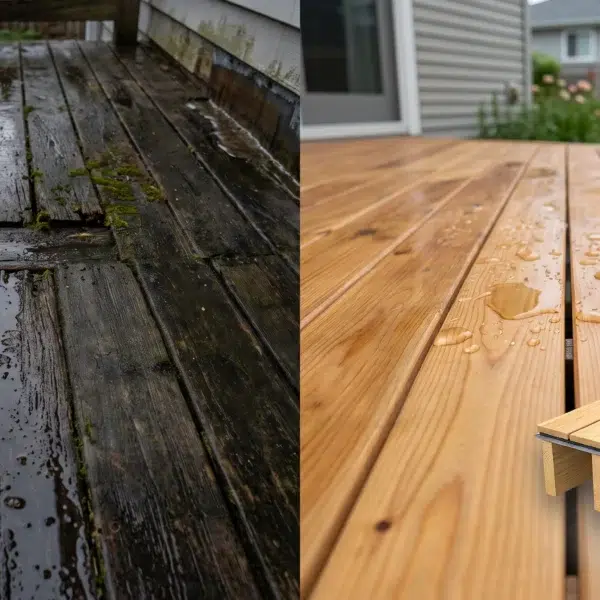
Look for damp areas, staining, mold, mildew, soft spots, or boards that remain wet longer than the surrounding surface. Check beneath furniture, planters, and other items that limit airflow.
Aggressive pressure washing can damage wood fibers and worsen cracking. Cleaning methods and tools should match the deck material and its current condition.
A protective stain or water-repellent sealant can provide wooden decks with moisture and UV protection. Apply a finish only after necessary repairs have been completed and according to the product instructions.
6. Movement at the Ledger Board, Deck Frame, or Posts
The visible boards and railing are only part of the deck. The ledger board, joists, rim joist, wood posts, and concrete footings also contribute to the deck’s structural integrity and overall stability. These structural elements work together, so movement in one area may indicate a problem elsewhere.
Watch for new gaps where the deck connects to the house, movement in the frame, leaning posts, or unexpected changes in the deck surface. A deck that moves, slopes, or feels different under normal use needs closer evaluation.
Foundation concerns cannot always be diagnosed from the surface. Homeowners across our New Jersey and Pennsylvania service area can learn more about how soil conditions can affect a deck foundation before deciding whether a repair should focus on boards, framing, posts, or footings.
7. Weather Damage That Continues to Spread
Even a well-built deck can develop wear after years of exposure to sunlight, moisture, temperature changes, strong winds, and regular use. The USDA Forest Service overview of wood weathering identifies moisture, sunlight, heat and cold, chemicals, abrasion from windblown materials, and biological agents as contributing factors. Small surface cracks may remain cosmetic, but spreading cracks, brittle wood, repeated moisture problems, and failing fasteners require attention.
Inspect both exposed and shaded areas. Sunlight can dry wood fibers and make them more prone to cracking, while shaded sections may retain moisture longer.
Document changes during annual deck inspections. Comparing the same boards, posts, and railing connections over time can help identify developing damage before the next heavy-use season.
Basic Tools to Use Before a Professional Deck Inspection
A flashlight can help illuminate the underside of the deck and visible metal connections. A screwdriver can be used to probe wood for softness or rot.
These basic deck inspection tools support a homeowner inspection, but they do not replace an inspector’s assessment. Elevated decks, balconies, widespread movement, deep rot, damaged ledger connections, or unstable railings require professional judgment.
If you are checking your deck after colder weather, you can also follow our detailed checklist for inspecting a deck after winter.
Frequently Asked Questions
Are small cracks in deck boards dangerous?
Small surface checks may be cosmetic, but their depth, location, and progression matter. A crack that deepens, spreads around a fastener, or extends through the board’s thickness requires closer evaluation and may require replacement.
What commonly causes a loose deck railing?
Loose fasteners and wood rot are common causes. Tightening hardware may help, but damaged wood or railing posts require further evaluation.
How can regular deck inspections help prevent future issues?
Regular inspections can reveal changes before they develop into larger repair or safety concerns. Inspect the deck at least once yearly and before periods of heavy use, even when it appears to be in good condition. Include railings, boards, fasteners, stairs, and accessible structural components.
Can composite decking develop safety problems?
Yes. Composite decking resists many forms of weather damage and requires less maintenance than wood, but boards, fasteners, railings, and the underlying frame still need regular inspection.
When is professional inspection necessary?
Request professional inspection for an elevated deck or when you find persistent movement, deep rot, major cracks, damaged connections, unstable railings, or concerns involving posts and footings.
Plan the Right Next Step for Your Deck
Not every warning sign means the entire deck must be replaced. When the existing frame and foundation remain structurally sound, deck resurfacing may be an option for replacing worn deck boards, railings, or stairs. Conditions involving the ledger, frame, posts, or footings should be evaluated before the project scope is selected. Once the structure is confirmed safe, homeowners seeking greater weather protection can also explore when a deck enclosure in NJ makes sense for an existing or new deck.