Post-Winter Deck Inspection Checklist for NJ & PA Homeowners (2026 Guide)
Understand composite deck costs with our budget-friendly guide, offering insights into materials, installation expenses, and money-saving tips for a stunning deck.
A post-winter deck inspection checklist is the first deck safety step standing between your family and a preventable accident this spring. After months of freeze-thaw cycles, snow load, and de-icing salt runoff, your deck’s frame and connections have taken a structural beating you cannot see from the surface. AtDeck Guardian, we see the same patterns every year: homeowners in New Jersey and Pennsylvania pull furniture out of storage, fire up the grill, and host their first backyard gathering without checking whether the structure underneath can still handle the load.
This guide is for homeowners ages 32 to 65 who use their outdoor living space for family time, entertaining, and relaxation. You will learn how to inspect the most important areas of your deck, spot warning signs of structural failure, and know exactly when to stop DIY and call a professional deck safety inspector.
The short answer: start at the house connection (ledger board), work through deck posts, support posts, and joists, check railings and stairs for safety, then examine the deck surface and fasteners, including any exposed nails. If anything moves, wobbles, or feels soft, stop using the deck until a pro evaluates it.
By following this checklist, you will be able to catch hidden rot and corrosion, prevent accidents before they happen, protect your investment, and make confident decisions about whether to repair or replace components so the deck structure and its foundation stay in good condition.
Rusted Fasteners Can Quietly Undermine Your Deck’S Structural Integrity Over Time.
Why Post-Winter Deck Inspection Matters in NJ and PA
The Northeast freeze-thaw cycle is the primary enemy of deck structural integrity and long-term safety. Water enters cracks and fastener holes during warmer winter days, then freezes solid overnight. That expansion forces wood apart, loosens nails and screws, and widens gaps at critical connection points. This happens dozens of times each winter and quietly undermines the foundation of deck support over time.
De-icing salts make the problem worse. Runoff from driveways and walkways carries salt to your deck’s framing, accelerating corrosion on metal connectors, joist hangers, and fasteners, especially where older materials were not designed for constant exposure. The damage concentrates where you cannot see it: at post bases near ground level, behind the ledger board, and inside joist pockets.
Moisture trapped at these connection points creates ideal conditions for rot, mold, and mildew growth. By the time you notice staining or soft wood on the surface, the damage underneath may already compromise the structure and lead to sudden deck safety failures. That is why a thorough inspection following the load path is essential before spring use.
The Post-Winter Deck Inspection Checklist for Wood Decking
Work through this checklist in order. The sequence follows how weight transfers from your deck to the ground, so you inspect the most important areas first. A typical deck substructure relies on concrete footings, wood posts, and joists working together as a supportive frame, so any weakness in that system affects overall safety.
Ledger board connection: Check for gaps between ledger and house, staining or water marks, soft wood when probed, rusted or loose bolts, and flashing or sealing that has pulled away or shows gaps.
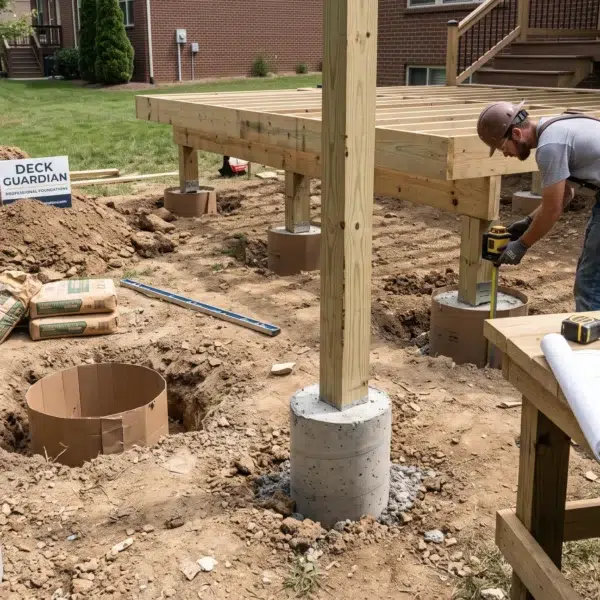
Posts, beams, and joists: Inspect deck posts and post bases for darkening, insect damage, or soft spots, verify footings and the surrounding foundation soil have not shifted, check all joist hangers for rust or missing fasteners, and look for cracks or warping in beams.
Railings and stairs: Push firmly on railings to test for movement, check baluster spacing (no more than 4 inches), inspect stair stringers for rot at attachment points, and verify handrails are secure so railings provide reliable safety and security on every level.
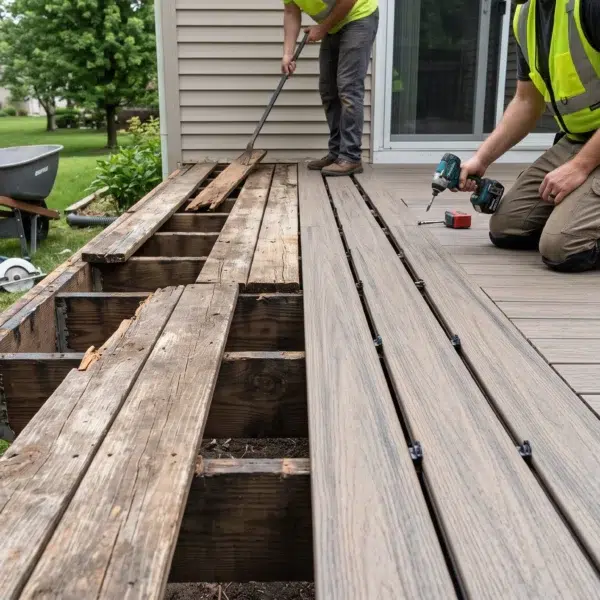
Deck surface and fasteners: Look for splitting, cupping, or rotting boards, note any raised fastener heads, check for dirt and debris buildup that traps moisture, and test composite decking for loose fasteners, early mold spots, or surface mildew.
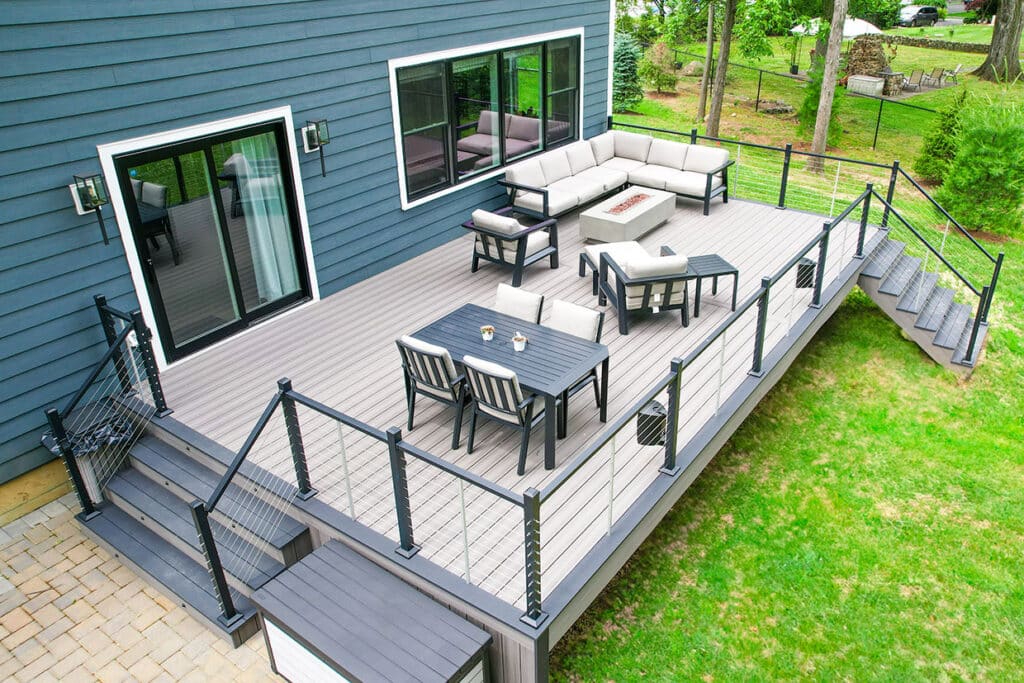
Test Your Railings For Any Wobble Or Flex; They Should Feel Like A Rigid Green Shield For Your Family.
How to Do a Fast Movement Test Using Basic Deck Inspection Tools
Before you inspect individual components, do a quick movement test to detect obvious problems and create a baseline for deck safety. Push firmly on the top rail or guardrails at several points around the deck. The railing should not flex, wobble, or creak; it must support your weight without visible movement. Any play indicates loose fasteners or compromised post connections.
Walk slowly across the entire deck surface in a grid pattern. Listen for new creaking sounds and feel for excessive bounce. A slight spring in wood decking is normal, but significant flexing suggests loose joists or inadequate support, especially on an elevated deck.
Stand on opposite corners and shift your weight side to side. The deck should feel rigid. Any racking motion (one corner dipping lower) indicates post settling or connection failure that undermines the structural security of the frame.
If you detect new movement compared to last fall, stop using the deck immediately and schedule a professional inspection.1
Ledger Board and Rusted Fasteners: Warning Signs and Why They Are Urgent
The ledger board is a vital connection where your deck transfers its entire load to your house and, effectively, its structural foundation.2According to the North American Deck and Railing Association, ledger failure is the most common cause of deck collapse.3This is an important part of the structure, not something you can fix later.
Warning signs include: visible gaps or daylight between the ledger and house framing, water stains or discoloration on the ledger or adjacent wood, soft or spongy wood when probed with a screwdriver, rusted or missing bolts, and any sense that the ledger is pulling away from the structure because it was not properly installed or maintained.
If you find any of these issues, do not use the deck. The ledger attaches to the house rim board, and damage often extends inside, where you cannot see it or easily inspect it. A professional inspector can assess whether the connection is still safe and recommend whether to repair or replace the affected area.
Deck Surface Problems That Look Minor But Turn Expensive
Deck boards take visible damage from freeze-thaw stress and repeated exposure to the elements. Splitting along the grain, cupping (edges higher than the center), and raised fastener heads are common after winter. These issues look cosmetic but often signal moisture problems affecting the framing underneath and can be early warnings of mold or insect activity, especially on older decks that were never treated with insect-repellent products.
Poor drainage around the deck surface keeps joists and beams wet, accelerating rot and mildew. Check that water flows away from post bases and that debris is not blocking airflow between boards and framing. Remove leaves and dirt that trap moisture against wood so the surface can dry and stay in good condition.
If you find widespread board damage, considerdeck board resurfacing after winter damage before problems spread to the structural framing. Addressing surface issues early prevents expensive repairs to the deck’s frame and helps protect the overall foundation of your outdoor living space.
What to Document If Your Deck Fails Inspection
Write down what you find during your inspection. Clear documentation helps a professional inspector or deck safety inspection service focus on your specific concerns and gives you a record for future reference.
Symptom Found
Likely Cause
Next Action
Railing flex or wobble
Loose fasteners, corroded bolts
Tighten connections; if movement persists, professional inspection
Stair tread feels spongy
Rot in stringers or treads
Stop use immediately; professional inspection required
Rusted joist hangers or straps
Salt corrosion, moisture exposure
Professional inspection if corrosion is deep
Ledger staining or gaps
Water intrusion, freeze-thaw loosening
Stop use; professional inspection required
Post base darkening or soft spots
Moisture entrapment, ground contact
Professional inspection to assess rot depth
New slope or gaps in structure
Settlement, connection failure
Stop use; professional inspection required
When DIY Stops and Professional Inspection Starts
Some problems exceed what any homeowner should attempt to evaluate alone. Call a professional inspector when you find any structural movement or new wobble, ledger separation or soft wood at the house connection, deep corrosion on joist hangers or critical fasteners, soft wood at post bases that may extend upward, or stair or railing instability that does not resolve after tightening connections, especially on an elevated deck.
Safety comes first. A deck that fails inspection needs expert evaluation before anyone uses it if you want to truly protect the people who rely on it. If you are unsure whether damage is serious, err on the side of caution and get a professional assessment of the ledger and connections.
Conclusion and Next Steps: Turn This Checklist Into a Green Shield for Your Deck
An annual deck inspection after winter is the simplest way to protect your family and your investment, turning the checklist into a practical green shield for your outdoor space. Walk through the checklist above every spring before heavy use begins. Document what you find, address minor issues promptly, and call a pro when you see warning signs in critical areas.
If you also have a patio surface, considerspring patio surface inspection and maintenance as your next step. Regular inspections keep your entire outdoor living space safe, secure, and ready for the season.
Frequently Asked Questions
What should a post-winter deck inspection checklist include for NJ & PA homes?
A thorough checklist covers the ledger board connection to your house, posts and footings, joists and metal connectors, railings and stairs, and the deck surface, including fasteners.4In the Northeast, pay extra attention to salt corrosion on metal hardware and moisture damage at post bases near ground level. Work through components in load path order, starting where the deck attaches to the house.
How do you perform a deck safety inspection to catch loose railings, wobble, and stair hazards after winter?
Start with a movement test. Push firmly on railings at multiple points to check for flex. Walk the entire surface listening for creaks and feeling for bounce. Test stairs by shaking handrails and checking tread firmness. Any new wobbles, racking motions, or soft spots should stop use until a professional evaluates the structure.
How can you tell if the deck ledger board is unsafe, and what are the warning signs of a failing house connection?
Warning signs include visible gaps between the ledger and house framing, water stains or discoloration, soft wood when probed with a screwdriver, rusted or missing bolts, and flashing that has pulled away. The ledger is the most common deck failure point. Any of these signs warrants immediate professional inspection.
What deck maintenance checklist items prevent water damage, especially around flashing, joists, and the ledger area?
Inspect flashing for gaps or deterioration and ensure it directs water away from the ledger. Check that water drains away from post bases and footings. Remove debris that traps moisture against framing. Verify adequate airflow between deck boards and joists. Address raised fasteners that allow water penetration into wood.
What are the most common post-winter issues to look for (rot, corrosion, fastener failure, shifting posts, cracking)?
The most common issues include corroded fasteners and joist hangers from salt exposure, rot at post bases and ledger connections from trapped moisture, loose fasteners backed out by freeze-thaw cycling, cracks in deck boards from seasonal wood movement, and post settling or shifting from footing heave.
How do you check deck posts near grade for hidden rot or insect damage after snow and freeze-thaw cycles?
Inspect the transition zone where posts meet the ground. Look for darkening, soft spots, or visible decay. Probe with a screwdriver to check wood firmness. Posts should sit on concrete piers or adjustable bases that elevate them above soil, not directly on the ground. Moisture wicks up through the end grain, causing rot that may extend upward inside the post.
When is it time to call a professional for a deck safety inspection instead of doing a DIY checklist?
Call a professional when you detect structural movement, wobble, or racking. Ledger concerns (gaps, staining, soft wood) always require professional evaluation. Deep corrosion on joist hangers or critical fasteners, soft wood at post bases, and stair or railing instability that persists after tightening connections all warrant expert assessment.
How often should homeowners do a deck inspection checklist, and why is a post-winter inspection recommended annually?
Annual inspection after winter is the industry standard. Winter delivers the most structural stress through freeze-thaw cycles, snow loads, and salt exposure. Damage accumulates over the season and becomes apparent in spring. Catching problems before summer use prevents accidents and allows time for repairs before heavy entertaining season.
We’ll visit your home or other deck site and guarantee you a no-pressure consultation. We will listen to your ideas, answer questions, show you samples and take measurements, discuss your options and follow up with you in a few days with a detailed deck estimate.
Looking for a strong, stylish, and long-lasting deck for your Pacific Northwest home? We provide professional deck installation services tailored to your vision — from custom design to expert construction, all completed with top-quality materials guaranteed to endure.