Stunning Two-Tone Deck Color Schemes for a Unique Design
Your home reflects your unique style, and the decks and porches that extend from it should mirror that individuality. As essential elements of your home’s exterior, they provide the perfect canvas to showcase your aesthetic preferences with flair.
Opting for a two-tone deck color scheme is a superb way to add visual interest and elegance to your outdoor living space. In this guide, Deck Guardian highlights some of the most striking two-tone deck color combinations that enhance the natural beauty of your home while crafting a stylish and inviting outdoor setting.
Whether you prefer a bold statement or a subtle update, these deck color ideas can help you plan a two-tone deck design that suits your home. Consider the overall look from both the house and the yard to create an inviting outdoor space with a clear focal point.

Why Choose a Two-Tone Deck Color Scheme?
A two-tone color scheme uses two different colors across the deck boards, railings, borders, or trim. You might choose one color for the deck floor throughout the main deck area and another for the surrounding details. Pair lighter tones with charcoal for sharp contrast, or combine tan and deeper brown for a softer transition.
A contrasting color can highlight architectural features, such as railings and stair edges, and add depth to a simple layout. A border outlines the deck, while the railing can repeat a shade found in the home’s windows, doors, or trim. Using those accents consistently creates a cohesive look across the exterior.

Two-Tone Deck Color Combinations for Modern Homes
The following combinations offer different levels of warmth and contrast. When comparing them, consider which color will cover the main deck surface and which will highlight the railings, border, or trim.
Gray and White Deck Design
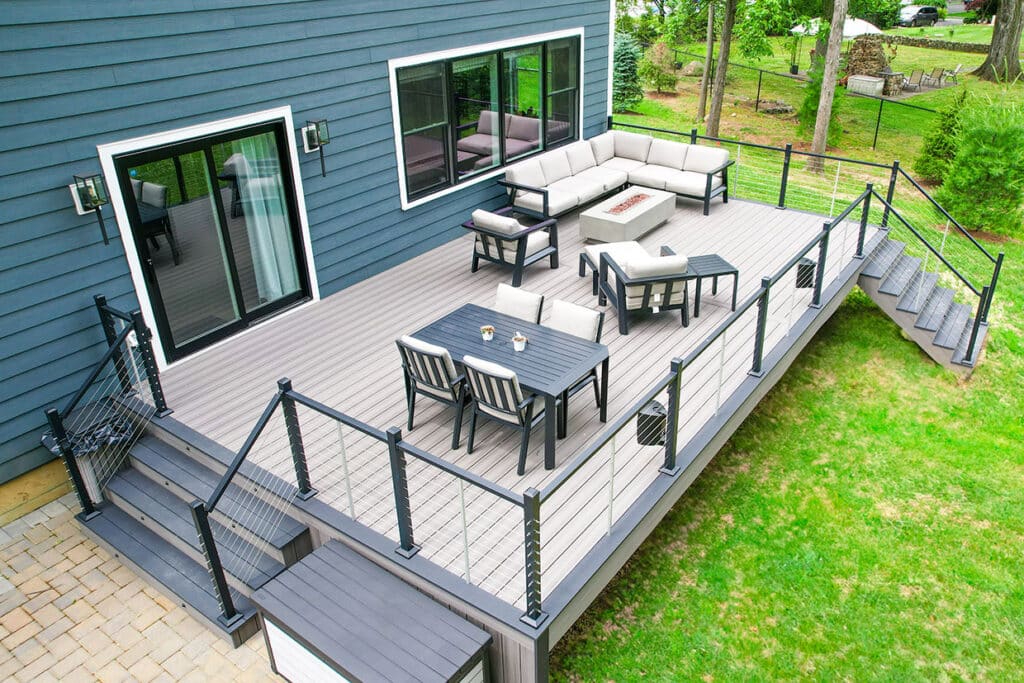
Gray decking provides a neutral backdrop for bright white railings, posts, or fascia. The combination has a restrained style with timeless appeal, while the white accents give the perimeter an airy feel. Repeating the home’s white trim helps create a welcoming outdoor space. Keeping white on vertical elements also avoids using it across the main walking surface, where dirt and shoe marks can be more noticeable.
Brown and Tan Deck Board Color Combinations
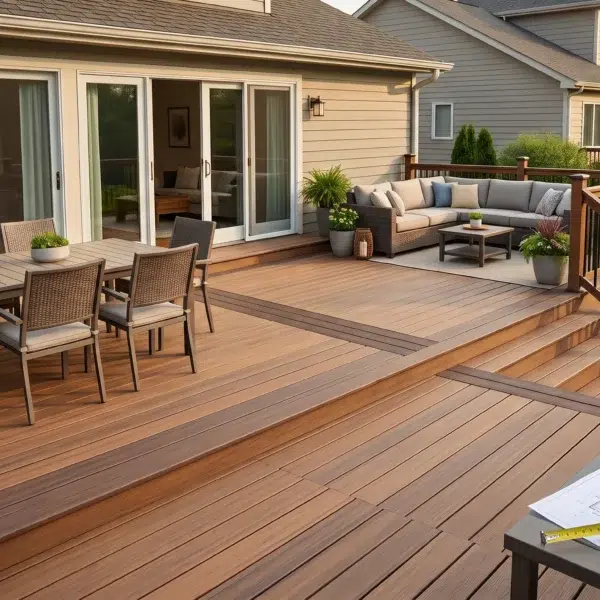
Brown and tan bring earthy tones and a natural feel to decks beside greenery, brick, or warm-toned siding. Use tan for the main surface and dark brown for the border or railings. Alternatively, pair darker deck boards with lighter accents. Choose samples with similar undertones so the colors work together without needing to match exactly. For wood decks, test both stain colors on the actual boards; for composite decking, compare samples of the selected factory colors.
Black and Natural Wood Deck Design
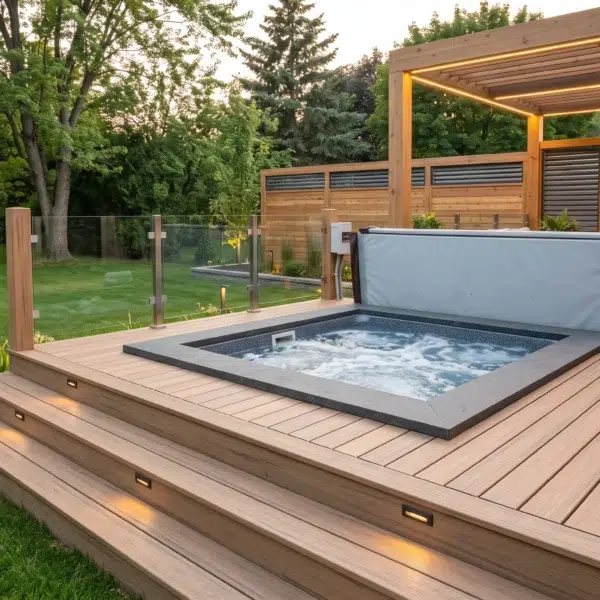
A natural wood deck surface paired with black railings creates a clear contrast between the warm wood tones and the darker outline. Black posts or fascia can repeat the color of window frames and exterior hardware, helping the deck connect visually with the house. This combination keeps the wood grain as a central feature while giving the edges a more defined appearance.

Tips for Choosing Deck Color Schemes
Use the following guidelines when selecting colors for your deck:
- Coordinate with your home’s exterior. Look at the undertones in the siding, brickwork, doors, and trim. Choose a main deck color that works with those finishes, then repeat an existing accent color in the railing or border.
- Consider the surroundings. Warm browns and tans sit naturally alongside greenery, while gray tones can complement stone patios and contemporary exteriors.
- Match the color approach to the material. For wood, compare compatible stain or paint systems. For composite decking, select factory-finished board colors and check that the products are suitable for the planned layout.
- Account for visible dirt and wear. Pale dust and pollen can stand out on dark boards, while mud and shoe marks may be more noticeable on light surfaces. Neither color choice eliminates routine cleaning.
- Test before committing. View actual decking samples outdoors in sun and shade. For wood finishes, test a small area because the wood species, condition, and previous coating can affect the final color.
Choosing Two-Tone Deck Colors for Full Sun
For a deck exposed to direct sunlight, consider surface temperature as well as appearance. Darker colors generally absorb more solar energy, but the material and product technology also affect how hot the boards become. A light-colored deck can still get hot, so color alone should not be treated as a guarantee of barefoot comfort.
A lighter main surface with darker railings is one way to create contrast without covering the entire walking area in a dark shade. A contrasting border can work too, although those perimeter boards will still receive sunlight and foot traffic.
Compare samples from the actual decking products you are considering, and review the manufacturer’s guidance on heat performance. Trex explains how color and decking technology affect heat buildup, including why even products designed to reduce heat absorption can become hot in direct sun. Shade should be part of the design discussion for heavily exposed decks.

Deck Colors That Make Pollen and Everyday Wear Less Noticeable
No deck color hides every type of dirt. Pale pollen may be obvious on charcoal boards, while darker soil and muddy footprints can stand out on a light gray or cream surface. The most practical choice depends on the trees around the deck, nearby landscaping, and how people use the space.
Muted browns, taupes, and medium grays are worth comparing when you want a less pronounced contrast between the surface and everyday debris. Variegated boards may also make small marks less noticeable than a uniform finish, although they still need cleaning.
Plan the two-tone layout around actual use. The route from the back door to the stairs may show more wear than a sheltered seating area. Choose suitable materials and finishes for those walking surfaces rather than relying on a darker color to conceal damage.
Using Stain Versus Paint for Two-Tone Decks
On a wood deck, a two-tone design can combine two stain colors or use different compatible finishes on the floor and railings. The right choice depends on how much grain you want to see, the condition of the wood, and whether the product is approved for horizontal walking surfaces or vertical elements.
| Finish | Appearance | What to consider |
|---|---|---|
| Semi-transparent stain | Adds color while allowing wood grain to remain visible | The existing wood color and surface condition influence the result |
| Solid-color stain | Creates a more opaque finish that conceals grain color while retaining some texture | Check suitability for deck boards, railings, and any existing coating |
| Deck or porch-and-floor paint | Produces an opaque painted finish | Walking surfaces need a product specifically rated for that use and the required preparation |
Two-Tone Deck Stain and Paint Ideas
For a natural-looking combination, consider a lighter brown stain on the deck boards with a deeper brown on the railings. Another option is a wood-toned floor with white or charcoal vertical accents, using a compatible solid stain or paint system.
If you prefer a painted deck, a gray floor with white railings can create a clear two-color scheme. Keep the distinction between surfaces in mind: a coating suitable for railing posts is not automatically suitable for stair treads or deck boards.
Do not assume that every stain penetrates in the same way or that stain cannot peel. Performance depends on the formulation, the existing finish, surface preparation, and application.
Preparing an Existing Wood Deck for a Two-Tone Finish
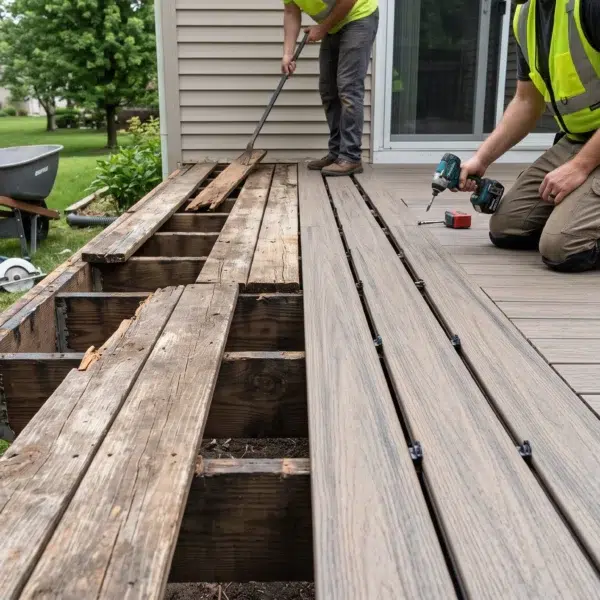
Check the condition of the boards and the previous coating before choosing colors. Clean the surface, address loose or failing finishes, and allow the wood to dry as directed by the product manufacturer. Damaged boards need assessment before refinishing.
Changing from an opaque painted finish to a semi-transparent stain generally requires removing the paint to expose suitable wood. Follow the selected coating system’s instructions for stripping, sanding, and any primer requirements. Sherwin-Williams’ deck preparation guidance explains why a clean, dry surface matters for adhesion.

Two-Tone Wood vs. Composite Decking
Wood and composite decking achieve a two-tone appearance in different ways. With wood, the final color depends on the species, grain, weathering, and applied finish. Testing both colors on the actual wood helps reveal whether the contrast will look balanced across the floor, stairs, and railings.
With composite decking, the design typically combines factory-finished board colors. A lighter main field with a darker picture-frame border can define the perimeter, while a contrasting railing introduces a second color without changing the deck board layout.
Compare full-size samples where possible, including any grain patterns or color variation. Check board dimensions, fastening requirements, and installation compatibility before combining products. Do not assume that composite boards can be painted or stained to create the second color; follow the decking manufacturer’s guidance.
Wood finishes require periodic assessment and renewal. Composite decking generally avoids routine staining or painting, but it still needs cleaning and care appropriate to the product. For a seasonal breakdown of these tasks, see our guide to wood deck care and composite deck maintenance.
Creating Two-Tone Deck Railings, Borders, and Stairs
Give each color a clear role. One shade can form the main deck surface, while the second defines the railing, perimeter, or stair details. Repeating the same accent color helps the design feel connected without adding unnecessary color changes.
Two-Color Deck Ideas for Different Layouts
Plan color changes around furniture, walking routes, and the deck’s shape. A contrasting board can mark the transition between dining and seating areas, including spaces beside an outdoor kitchen or beneath a pergola. On one open platform, a consistent main color with a perimeter accent may be enough.
Contrasting Deck Railings
A light gray or warm brown floor can pair with black railings for a defined outline. White railings create a brighter effect and can repeat the home’s exterior trim. Consider how the railing color looks from inside the house as well as from the yard.
Picture-Frame Borders and Fascia
A contrasting picture-frame border outlines the main deck boards. Brown and tan can create a subtle frame, while light gray and charcoal produce a stronger contrast. Carrying an accent color into the fascia can connect the horizontal surface with the visible deck edge.
Keep the border proportional to the deck: a broad band can visually dominate a small surface. Preview its width and contrast before installation. The decorative border is separate from the structural framing beneath it, so plan the necessary board support and fastening details too.
Two-Tone Deck Stairs
Stair treads can match the main deck surface, while the risers repeat the railing or fascia color. This keeps the stairs visually connected to the rest of the design.
Separate the practical requirements of treads and risers. Treads are walking surfaces and need suitable decking or a finish rated for foot traffic. Color contrast can help distinguish parts of the staircase, but it does not replace appropriate lighting, slip resistance, or properly designed stairs.
Planning a Two-Tone Look for a New or Existing Deck
A new deck allows board direction, borders, stairs, and color transitions to be planned together. Updating an existing deck means working with its dimensions, elevations, and framing condition. Before replacing boards, have the supporting structure assessed. If the layout limits a contrasting border, a different railing or fascia color may provide the desired effect. A sketch or design preview can help compare these options.
Related Article — Why Your Dream Deck Starts with a Great Deck Plan

Maintaining a Two-Tone Deck Over Time
Different parts of a deck do not weather at the same rate. Floorboards and stair treads receive foot traffic, while railings and fascia experience different exposure to sun and moisture. Check each surface rather than assuming the entire deck will need refinishing at once.
For wood decks, follow the coating manufacturer’s maintenance guidance and look for worn areas, peeling, or other signs that the finish needs attention. Reapplication intervals vary with the product, preparation, exposure, and use; one fixed schedule will not suit every deck. Our guide to how often to stain a wood deck explains the signs that the existing finish may need attention.
For composite decking, follow the manufacturer’s cleaning instructions and restrictions on cleaning products or pressure washing. Keep a record of the board collection and colors, or the wood finish names and formulas, to make future maintenance easier to plan.
Frequently Asked Questions About Two-Tone Deck Colors
Do Two-Color Deck Ideas Work on Small Decks?
Yes. Keep one dominant surface color and use the second for a narrow border or railing. Multiple contrasting sections can make a compact deck look fragmented.
Do Darker Deck Colors Get Hotter in the Sun?
Generally, darker colors absorb more solar energy. However, the decking material, product technology, and exposure also influence surface temperature. Compare specific products and consider shade rather than relying on color alone.
Can You Use Different Stain Colors on Deck Boards and Railings?
Yes. Two compatible stain colors can create contrast while retaining a wood finish. Test both colors first, and make sure each product is suitable for its intended surface and any previous coating.
Should Deck Stairs Match the Floor or the Border?
Either can work. Matching the treads to the main floor and repeating an accent color on the risers is one way to keep the design consistent. Choose materials and finishes appropriate for each stair component.
Can a Painted Deck Be Changed to a Stained Two-Tone Finish?
It may be possible if the wood is sound and can be prepared for the selected stain. Moving to a semi-transparent finish generally requires removing the old paint so the wood can accept the stain. Test the prepared surface before committing to the full project.
Do Two-Tone Decks Require More Maintenance?
Two colors do not automatically mean more frequent maintenance. Materials, finishes, and exposure matter more. However, a two-tone wood deck may require extra care when masking edges, matching colors, or refinishing surfaces that wear at different rates.
Upgrade Your Outdoor Living Space with Two-Tone Deck Colors
Choosing a two-tone deck color scheme is about expressing style while improving your outdoor space’s curb appeal. Whether you prefer subtle combinations like gray and white or bold choices like black and natural wood, the right two-tone deck color will create a cohesive and beautiful look for your home.
At Deck Guardian, we help homeowners bring deck colors, materials, and layout together in a coordinated design. Whether you are planning a new deck or exploring deck resurfacing options, we can help you compare board colors, railing finishes, and contrasting details that suit your home. Explore our deck project showcase for inspiration, or schedule a free consultation to discuss your project.