Table of Contents
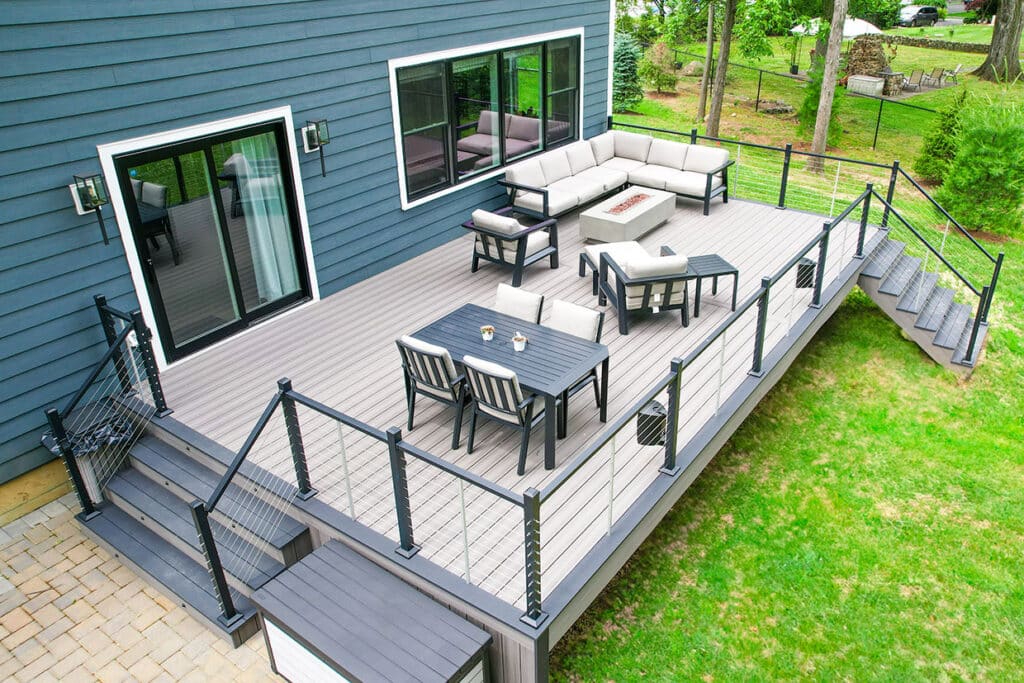
ToggleWood and composite decks face many of the same outdoor conditions, but they do not require the same maintenance routine. Both surfaces need cleaning, debris removal, and regular inspections. The difference is that a wood deck also needs periodic sealing or staining, while composite decking does not require sanding or staining.
Seasonal care helps prevent dirt, standing water, mold, loose boards, and damaged fasteners from becoming larger concerns. In this guide, our team at Deck Guardian explains what homeowners across our New Jersey and Pennsylvania service areas should check in spring, summer, fall, and winter, along with the tasks that change based on the decking material.

Annual Deck Maintenance for Wood and Composite Surfaces
Both materials benefit from a consistent maintenance schedule. Homeowners should remove debris, clean the deck surface, inspect the railing and boards, and check accessible structural components.
The main difference concerns surface protection:
Maintenance task | Wood deck | Composite deck |
Routine cleaning | Required | Required |
Structural inspection | Required | Required |
Sanding | May be needed before refinishing | Not required |
Staining | Needed periodically when maintaining a stained finish | Not required |
Sealing | Depends on the finish, exposure, and condition of the wood | Generally not required; follow the manufacturer’s instructions |
Mold prevention | Requires cleaning and moisture control | Requires cleaning and moisture control |
Composite decking is engineered for lower maintenance and generally resists staining and fading better than real wood. However, lower maintenance does not mean that the deck can be left without cleaning or inspection. Maintenance instructions can also differ between composite products and PVC decking. Some composite boards contain recycled materials, but their composition varies, so homeowners should follow the care instructions for the specific product installed.
Homeowners still deciding between materials can review this wood and composite decking comparison for a broader look at their differences.
Spring Cleaning and Deck Inspection
Spring or early summer is an appropriate time for thorough deck maintenance. For homes in our New Jersey and Pennsylvania service areas, the inspection should pay particular attention to places where winter moisture, snowmelt, and trapped debris may have remained. Start by removing furniture, outdoor rugs, and planters so that the entire deck surface is visible.
Clear loose dirt, leaves, and other debris with a leaf blower or brush. Remove debris from between the deck boards because blocked spaces can trap moisture and interfere with airflow and drainage.
Inspect the following areas:
- Deck boards for cracks, soft spots, or splintering
- Railings for looseness or movement
- Fasteners for rust or displacement
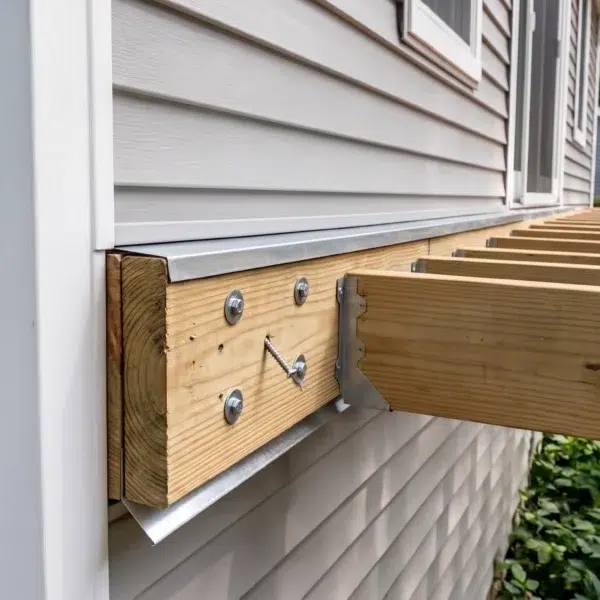
- The ledger board, support posts, and joists for moisture damage
- The deck surface for mold, mildew, oil, or rust stains
- Areas where standing water remains after rain
Regular inspections can identify loose railings, cracked boards, rusted fasteners, rot, or insect damage before the structural integrity of the deck is affected.
How to Clean Composite Decking
To clean composite decking, begin with a garden hose and a soft scrub brush, then use soapy water to remove dirt. Mild soap and warm water are usually sufficient; hot water is unnecessary unless the board manufacturer specifically recommends it. A composite deck cleaner may be used for more persistent dirt, mold, or stains.
Safe pressure-washing limits vary by product and manufacturer. For example, the official Trex care and cleaning instructions allow pressure washing at no more than 3,100 PSI for Trex Transcend, Enhance, and Select boards when a fan tip is kept at least eight inches from the surface. Trex does not recommend pressure washing its early-generation products. Homeowners should always follow the instructions for the specific boards installed.
Test any cleaning product in an inconspicuous area first. This helps confirm that it will not alter the color or appearance of the boards.
How Wood Deck Cleaning Differs
A wood deck also needs loose dirt and debris removed before washing. Use a deck cleaner labeled biodegradable and non-toxic that is intended for exterior wood, along with a utility brush to scrub affected areas.
The correct cleaner depends on the wood species, existing finish, and type of staining. Do not assume that oxygen bleach or chlorine bleach is suitable for every wood deck. Follow the cleaner and finish manufacturers’ instructions, avoid mixing cleaning chemicals, and rinse the surface as directed.
After washing, allow the wood to dry completely before applying stain or sealant. Drying time varies with temperature, humidity, airflow, and the condition of the boards. As the Oregon State University Extension guide to wood and moisture explains, changes in wood moisture can interfere with finish adhesion and increase susceptibility to staining and decay. Follow the finish manufacturer’s application requirements rather than relying only on a fixed waiting period.
Summer Wood Deck Care and Surface Protection
Warm, dry weather provides an opportunity to protect a clean wood deck. An appropriate finish can help protect exposed wood from moisture and the sun. The USDA Forest Service guidance on finishes for wood decks explains that penetrating deck finishes can reduce cracking, raised grain, and mildew growth caused by outdoor exposure.
Wood decks need more recurring surface maintenance than composite decks. Cleaning and refinishing can help protect the boards, while a deteriorated finish can leave the wood more exposed to moisture and weathering.
Composite decking does not need sanding or staining. Before applying any sealer or coating, check the board manufacturer’s care instructions. Some composite products are not designed to accept an additional finish, and applying an unapproved product may alter their appearance or affect warranty coverage.
Fall Deck Maintenance and Moisture Control
Fallen leaves, dirt, and food residue can provide a food source for mold. Remove this debris regularly rather than allowing it to collect between boards or beneath furniture.
Trim nearby trees and shrubs where necessary to improve airflow and reduce moisture retention around the deck. Move planters, rugs, and furniture periodically so that the covered surface can dry.
Address oil, food, and rust stains promptly. The correct deck cleaner depends on the material and the type of stain, so avoid using an aggressive brush or cleaning product without testing it first.
Winter Care for Snow and Ice
Removing snow protects access to the deck and prevents prolonged moisture from remaining on the surface. Use a plastic shovel rather than a sharp metal tool that could scratch the boards.
Approved ice-melt products vary by manufacturer. For example, the official Trex care and cleaning instructions permit calcium chloride or rock salt on specified Trex products and recommend removing the residue when practical. Before using any deicer or abrasive traction material, follow the instructions for the exact decking installed. After the snow and ice are gone, remove any remaining residue as directed.
Winter maintenance should also include checking that drainage paths remain open. Snowmelt should not collect as standing water or become trapped around the boards, railing posts, or structural supports.
How to Reduce Mold and Mildew Growth
Mold and mildew thrive in damp conditions. Cleaning frequency depends on the decking material, manufacturer’s instructions, shade, surrounding vegetation, and exposure to moisture. Leaves and other debris should be removed whenever they accumulate.
To reduce mildew growth:
- Keep the deck surface and board gaps clean.
- Avoid standing water.
- Improve airflow around and beneath the deck.
- Move furniture and planters periodically.
- Use only a cleaner suitable for the wood species and existing finish.
- Remove mold as soon as it appears.
- Inspect areas that remain shaded or damp.
Cleaning removes visible growth, but the moisture source must also be addressed. Poor drainage, trapped debris, or limited airflow can allow the problem to return.
When Routine Deck Maintenance Is No Longer Enough
Routine care can reveal worn boards, loose railings, damaged fasteners, or movement that cleaning cannot correct. A wood deck with soft spots or extensive decay needs a structural assessment rather than another coat of stain. Composite boards should also be checked for damage, loose fasteners, and drainage problems.
Our team evaluates the existing frame and foundation before recommending deck resurfacing. If they remain structurally sound, the deck boards, railings, and stairs can be replaced with new materials without rebuilding the entire structure. When the framing or foundation is no longer suitable, a custom new deck may be the appropriate next step.
Homeowners interested in using their outdoor space during more of the year may also consider planning a deck enclosure in New Jersey. An enclosure is a separate improvement and does not replace cleaning, inspections, or structural maintenance.
Frequently Asked Questions
Does composite decking require less maintenance than wood?
Yes. Composite decking does not require sanding or staining, but it still needs cleaning, debris removal, and regular inspection.
How often should a deck be cleaned?
Cleaning frequency depends on the decking material, surrounding conditions, and manufacturer’s instructions. Spring and fall are practical times for a thorough check, while leaves, dirt, and other debris should be removed whenever they accumulate.
Can a pressure washer be used on composite decking?
It depends on the decking product. Some manufacturers permit pressure washing when specific limits for pressure, nozzle type, and distance are followed, while others prohibit it for certain product lines. Check the instructions for the exact boards installed and test the method in an inconspicuous area first.
How long should wood dry before sealing?
The wood must be completely dry before stain or sealant is applied. Drying time varies with temperature, humidity, airflow, wood moisture, and the finish manufacturer’s application instructions.