Patio trends New Jersey 2026 look nothing like what you see on national design blogs. Most ‘trend’ pieces recycle ideas built for drought-prone climates — not freeze-thaw cycles, nor’easters, and saturated soil. Those concepts break down fast once they hit a real New Jersey yard.
At Deck Guardian, we build patios across New Jersey year round, and what we are seeing in 2026 looks nothing like what the design blogs are pushing. Many New Jersey homeowners are making decisions based on how they actually live, not how a Pinterest board suggests they should. These outdoor living spaces are being designed around real use and everyday outdoor living: remote-work spillover, weeknight family time, and three-season hosting that can handle New Jersey weather conditions.
This article breaks down the outdoor spaces and landscape design choices NJ homeowners are actually requesting and building right now. You will learn:
- Why patios are no longer summer-only spaces in New Jersey
- How multi-zone layouts maximize small NJ lot sizes
- Which materials hold up through freeze-thaw cycles
- What smart features are worth the investment (and which are not)
- How these trends reflect deeper shifts in how we use outdoor areas

The Patio Is No Longer a Summer-Only Space: Covered Patios and Outdoor Fireplaces in New Jersey
In 2026, many NJ homeowners design patios and outdoor spaces for at least April-through-November use — and plenty are pushing toward year-round function with the right upgrades. The old model of dragging furniture out in June and storing it by September is dead.
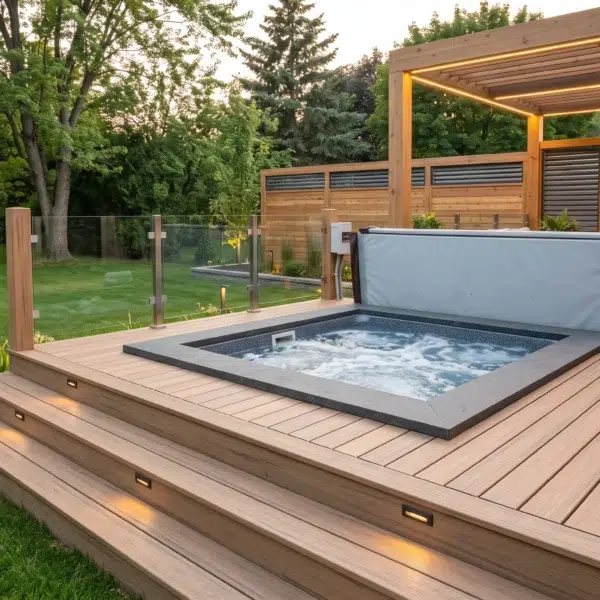
Fire pits, gas fire tables, and outdoor fireplaces are standard requests now. Built-in heaters now show up in many higher-end installations. These features transform outdoor living areas into evening gathering spots that work from early spring through late fall.
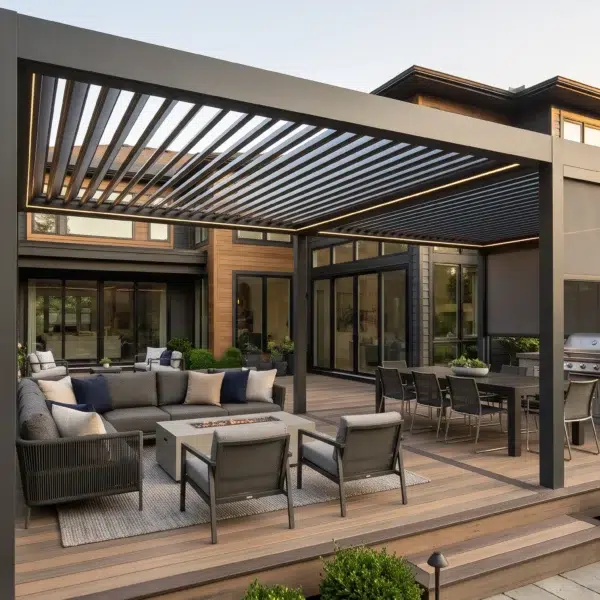
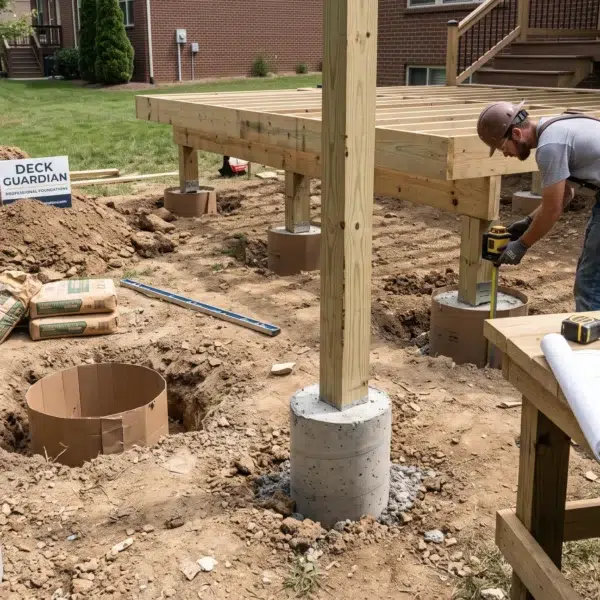
Covered patios dominate the conversation. Pergolas with solid roofs or polycarbonate panels let families use their space during light rain. Louvered pergolas are one of the fastest-growing requests because they adapt to both sun exposure and sudden rain. These structural elements only work when the base is built for wet conditions — proper base preparation, grading, compaction, and drainage solutions aren’t optional in New Jersey. Motorized louvered pergolas, like Renson systems, are increasingly used for bioclimatic shading, allowing for four-season patio usability.
New Jersey’s climate shapes every decision. Freeze-thaw cycles cause material failures that Southern homeowners never consider. Nor’easters dump snow weekly in winter. https://www.weather.gov/safety/winter-noreaster Humid summers create mold risks on the wrong surfaces. These weather conditions force a different approach to outdoor living and backyard landscaping.
The shift is clear: patios and outdoor spaces are planned like interior rooms with weather in mind. Homeowners treat their backyard as an extension of living space, not a decorative afterthought. Function drives the design. Beauty follows naturally.
Zones, Not Just Square Footage: Hardscaping Trends for Smaller NJ Yards
NJ lot sizes average 0.25 acres compared to the national 0.5-acre average. Many homeowners cannot sprawl out like Texas ranches. Usable space is at a premium in backyard landscaping here.
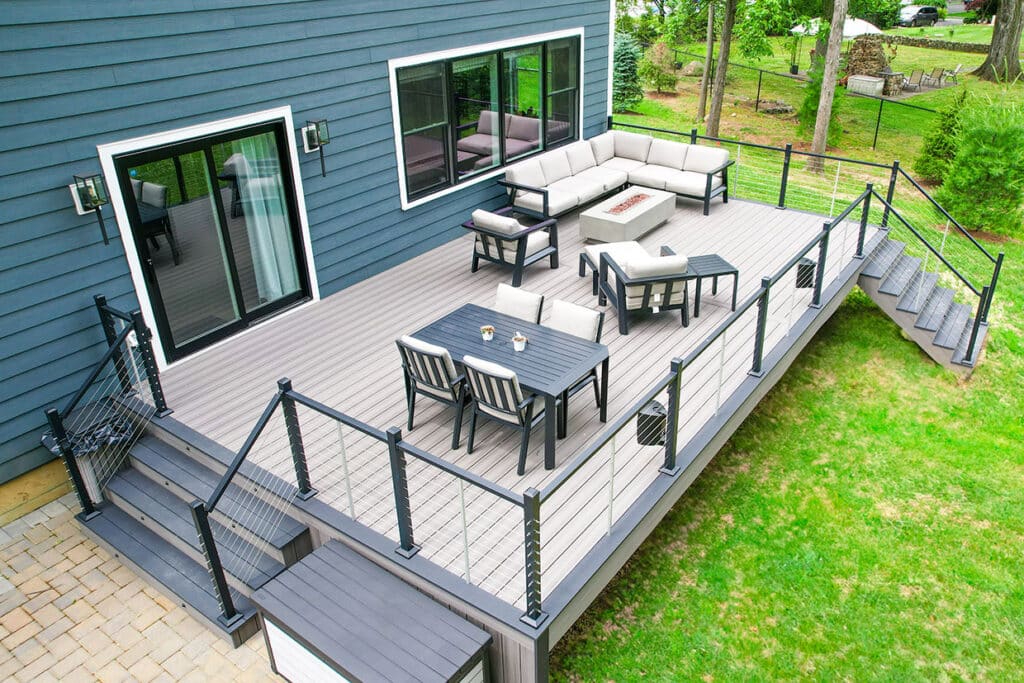
The 2026 response is multi-zone patios that carve distinct purposes into compact outdoor living spaces — outdoor spaces that actually get used, not just looked at. Instead of one flat slab, homeowners create layers of function within 200-400 square feet.
Zone examples include:
- A dining area with overhead coverage positioned near the house
- A lounge zone with deep seating areas around a fire feature
- A quiet corner for morning coffee or container gardening with native plants and ornamental grasses
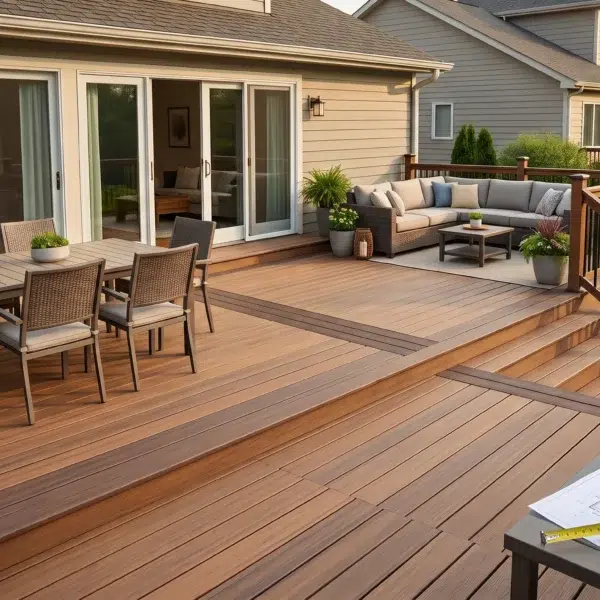
Multi-level stamped concrete steps, low seating and retaining walls, or even stone walkways can define these zones naturally as part of the landscaping. They solve grading issues, support terraced gardens on slopes, and create visual interest. The transitions guide movement between purposes without tall privacy walls or solid barriers.
Even a 300 sq ft patio can have two well-defined outdoor living zones if the layout is intentional. One successful project in Paramus combined built-in seating walls and low retaining walls with a fire feature, creating seamless day-to-night flow in under 350 square feet.
This mirrors the indoor-outdoor transition trend but adapted for real NJ properties. The goal is maximizing usability per square foot of outdoor space, not simply maximizing square footage.
Materials That Actually Hold Up Here
Trend blogs push stamped concrete and tropical hardwoods as ‘durable materials.’ In NJ, those choices age poorly. https://orf.od.nih.gov/TechnicalResources/Documents/Technical%20Bulletins/19TB/The%20Freeze-Thaw%20Cycle%20in%20Concrete%20and%20Brick%20Assemblies%20January%202019-Technical%20Bulletin_508.pdf Stamped concrete tends to show cracking sooner under freeze-thaw cycles. Tropical hardwoods rot in humid summers. What looks great on a California property becomes a maintenance nightmare here.
What NJ builders actually recommend in 2026 for long term success:
Large-format porcelain pavers lead the market. These 24-inch-plus slabs have fewer joints, creating clean lines and a modern aesthetic. They resist frost damage, retain color without fading, and stay cool under sun exposure. Porcelain pavers require 80% less maintenance than stamped concrete.
Natural stone bluestone remains a proven choice. Locally sourced and tested over decades in Jersey’s climate, bluestone ages gracefully with textured appeal. It pairs well with porcelain for architectural features, coping details, and surrounding landscaping.
Permeable pavers manage water runoff per NJ storm regulations. https://dep.nj.gov/stormwater/bmp-manual/ They reduce flooding risks, integrate well with retaining walls on sloped sites, and handle drainage solutions naturally. For properties with grading challenges, permeable paver systems solve multiple problems at once.
Wood-grain porcelain tiles deliver the deck look without rot, splinters, or annual sealing. These low-maintenance materials satisfy homeowners who want composite decking aesthetics with paver patio durability and cleaner outdoor living areas.
For existing concrete, polyurea and polyaspartic coatings offer revival options. These UV-stable coatings handle NJ temperature swings, extend surface life by 10-20 years, and support the long term success of your outdoor spaces.
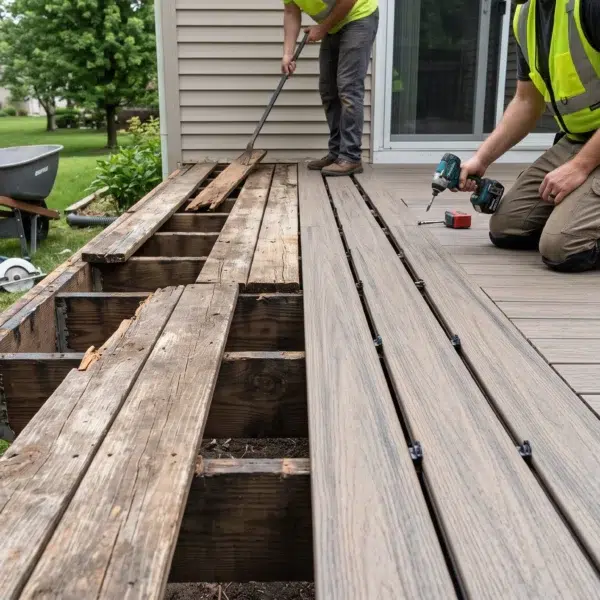
Professional patio installation in New Jersey ensures proper grading, base preparation, and material selection. The right installation prevents costly mistakes and delivers long term durability. Costs run $15-30 per square foot for quality porcelain versus $10-20 for concrete, but the long term value favors the premium choice.

Smart Features for Long-Term Performance (Without the Gimmicks)
NJ homeowners want function, not gadgets for the sake of it. The outdoor living technology that sells in 2026 is mostly invisible. It supports the outdoor living experience without becoming the experience.
What is actually getting installed:
Integrated lighting along patio edges and steps appears in 75% of new projects. Modern lighting combines safety with ambiance. Low-voltage LED systems keep energy costs minimal effort while extending usable hours into evening.
Weatherproof electrical outlets enable heaters, sound systems, and TV setups. These practical additions support how families actually use outdoor living spaces without extension cords crossing the patio.
Wi-Fi extenders for outdoor home offices remain strong in NJ suburbs. Remote work trends held steady, and many homeowners treat their patio as a functional workspace during comfortable months.
What is NOT trending in NJ: elaborate smart irrigation tied to patios, app-controlled fountains, robotic anything. These gimmicks appear in trend articles but rarely in actual installation requests.
The key insight: successful projects integrate technology that disappears. Lighting that responds to dusk. Outlets positioned where you need them. Connectivity that simply works. These features enhance daily usability without demanding attention.
What This Tells Us About NJ Homeowners in 2026
NJ homeowners are not chasing aesthetics. They are investing in daily usability and in property value that comes from outdoor spaces they truly use. The patios and outdoor living areas going in across the state reveal a practical mindset focused on long term performance.
These outdoor areas serve multiple roles. Wellness spaces for morning stretches. Work extensions for remote professionals. Family gathering zones for weeknight dinners. Entertaining hubs for weekend guests, sometimes anchored by outdoor kitchens or a simple built-in grill. One space, many functions, all designed around how people actually live.
The homeowners who get the most value plan patios the way they plan kitchens. Function drives every decision. Curb appeal and visual interest follow naturally when the fundamentals work.
Property value can increase 15-25% with well-designed outdoor living additions, stronger curb appeal, and year round interest from buyers. But the daily ROI matters more: three extra months of usable outdoor space, a cozy retreat steps from the kitchen, and a place where first impressions happen during gatherings.
Hardscaping trends in 2026 are evolving quickly. Eco-conscious, durable materials, multi-zone flexibility for smaller lots, and low-maintenance landscaping all play a major role in the long term success of outdoor spaces. The landscape design conversation has shifted permanently.
If you are thinking about a patio project in New Jersey, start with how you actually want to live outside. Not with a trend list.
FAQ
What are the biggest patio trends in New Jersey for 2026?
Multi-zone layouts, three-season usability with fire features and covered structures, large-format porcelain pavers, and integrated smart lighting are leading NJ patio design in 2026. Homeowners are prioritizing function and durability over purely decorative trends.
What is the best patio material for New Jersey weather?
Natural bluestone and large-format porcelain pavers perform best in NJ’s freeze-thaw climate. Both resist cracking, handle moisture well, and require minimal maintenance compared to stamped concrete or tropical hardwoods.
How much does a patio cost in New Jersey in 2026?
Patio costs in NJ range from $15 to $50+ per square foot depending on materials, complexity, and features like fire pits or built-in seating. A professionally installed 400 sq ft paver patio typically falls between $8,000 and $20,000.
Do I need a permit to build a patio in New Jersey?
Many at-grade patios can be built without a full construction permit, but rules change by municipality — and anything involving structures, electrical, or gas lines usually triggers permits. https://www.andoverboroughnj.org/construction-inspections/page/construction-permits However, if you are adding a roof structure, electrical work, gas lines, or building a raised patio, permits are typically required by your local municipality.
Can I use my patio year-round in New Jersey?
With the right design, yes. Adding a gas fire pit, a covered structure for rain and snow protection, and built-in heaters extends NJ patio season from early spring through late fall. Some covered patios with heating are usable even in winter.
What patio size works best for a small New Jersey yard?
A 200 to 400 square foot patio works well for most NJ lots. Multi-zone design techniques allow even compact patios to include separate dining and lounging areas without feeling cramped.
Are outdoor kitchens worth it in New Jersey, or is it better to keep just a grill?
Outdoor kitchens are a strong investment for NJ homeowners who entertain regularly. They increase property value and extend usable living space. Built-in grills, prep counters, and storage are the most requested features in 2026. Going beyond just a grill adds real functionality.
What is the difference between a paver patio and a concrete patio in NJ?
Paver patios use individual interlocking units that flex with ground movement, making them more resistant to NJ freeze-thaw cracking. Concrete patios are less expensive upfront but can crack over time and are harder to repair in sections.
How long does it take to build a patio in New Jersey?
A standard paver patio takes 3 to 7 days for professional installation, depending on size, site prep, and features. Projects with retaining walls, fire pits, or electrical work may take 2 to 3 weeks from start to finish.