Table of Contents
ToggleThe way New Jersey homeowners think about their decks has changed dramatically. Where a simple umbrella or fixed awning once satisfied most needs, today’s outdoor living trends point toward adaptable systems that work across seasons, weather conditions, and different times of day. Louvered roof systems for NJ decks have emerged as a practical response to this shift, offering the kind of flexibility that lets a deck function as a true extension of the home. Companies like Deck Guardian have seen growing demand for these systems as homeowners look beyond traditional patio covers toward solutions that balance sun control, rain protection, and natural ventilation.
This guide explains how louvered roofs work in practice, how they compare with traditional solid covers, what is driving prices up or down in 2026, and whether either option is the better fit for your deck. It also reflects the latest trends in outdoor living, where homeowners want outdoor spaces that feel more welcoming, more functional, and better connected to everyday life. Compared with a year ago, there is noticeably more interest in outdoor design ideas that make a deck feel like a more complete living space. Those trends have clearly evolved, shaped by homeowner demand for comfort, flexibility, and inspiration drawn from the wider world of outdoor living. In New Jersey, that shift is increasingly defined by year-round functionality, smart technology integration, and sustainable comfort rather than simple seasonal shade. By the time you finish, the choice should feel a lot less abstract and a lot more tied to how you actually want to use the space.
Here is the main tradeoff. Louvered roofs are built for control: you can adjust them to manage sun, shade, ventilation, and rain coverage as conditions change. Solid covers are simpler. They give you dependable shade and weather protection all the time, but they cannot adapt once installed.
How louvered roof systems work in outdoor spaces
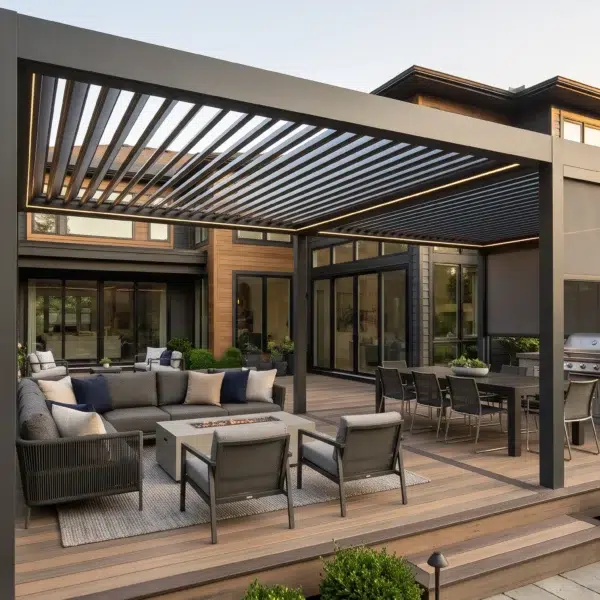
Modern louvered roof systems for NJ decks use extruded aluminum slats that rotate to open or close. Open the louvers and the roof lets the deck breathe. Sunlight gets through, heat escapes more easily, and the space feels less boxed in. Close them, and the overlapping blades create a rain-shedding surface that sends water into an integrated drainage channel.
Adjustable mechanics
The louvers rotate using either motorized hardware or a manual crank, depending on the system. They usually move across a full range, from completely open to completely closed. That gives you more control over the space than a fixed cover ever can. Partial shade in the morning, stronger airflow in the afternoon, full closure when rain rolls in — it is all part of the same setup.
Drainage and water management
Instead of letting water run straight off the roof edge, the system collects it inside the frame. Internal guttering takes runoff from the closed louvers and carries it away from the deck surface. That is especially useful in a New Jersey climate, where heavy rain is not unusual. A well-installed system should handle that water without ponding above or dumping it back where people are sitting, especially in outdoor spaces close to the house, the patio, surrounding landscape, or adjacent paving.
Control options
Motorized models can usually be operated by remote, wall switch, or smart home controls. Some also respond automatically to rain sensors. If the setup includes lighting or ceiling fans, those features can often be grouped into presets for different times of day or different uses. That kind of tech integration is part of a broader shift in outdoor spaces, where app-controlled LED lighting and other automated features are becoming more common. Manual systems take a simpler route and use a crank handle instead of electrical controls.
Louvered roofs vs. solid deck covers
Both can turn an exposed deck into a more usable outdoor area. The difference is in how much control they give you once the weather changes.
| Feature | Louvered Roof Systems | Solid Patio Covers |
| Sun control | Adjustable louvers allow variable shade | Fixed shade all day |
| Rain protection | Fully closed louvers channel water away | Constant rain protection |
| Airflow | Louvers open for ventilation | Limited airflow |
| Winter light | Louvers can open for sunlight | Blocks winter sun |
| Custom features | Lighting, heaters, fans often integrated | Usually added separately |
For NJ homeowners, climate implications matter. Summers here bring humidity that solid covers can trap, creating uncomfortable conditions even in shade. Louvered systems let hot air escape while still blocking direct sun. In winter, opening louvers on clear days brings warmth and natural light to spaces that solid covers keep perpetually dim. That flexibility matters in outdoor spaces designed for entertaining, quiet wellness, and more comfortable daily living. It also helps explain why these systems have become increasingly popular in backyard and patio planning, especially as outdoor trends move closer to the comfort people once expected only from indoor spaces. Features like louvered roofs, heaters, and fire elements are extending the outdoor season, which is one reason these systems fit current NJ demand so well.
Solid covers make sense when constant protection matters more than flexibility, particularly for decks with outdoor kitchens where rain exposure presents equipment concerns regardless of season. At the same time, one reason adjustable systems keep gaining attention is that covered pavilions with fireplaces and fully equipped outdoor kitchens remain some of the strongest trends shaping outdoor living in 2026.
Cost considerations in 2026
Understanding what drives pricing helps homeowners plan realistic budgets without getting surprised during the planning process. The louvered roof vs solid patio cover cost guide breaks down these factors in detail.
Material quality affects the baseline. The cost is shaped by more than just the overall size of the structure. Aluminum frame thickness, the durability of the powder coating, and the construction quality of the louvers all have a direct effect on both initial pricing and long-term performance. The choice of materials also affects how well the system works with nearby decking materials, exterior walls, and other custom elements. Adding motorization increases the investment, but it is also one of the features driving the popularity of these systems because it makes everyday use much easier.
The price can climb further once electrical features are added. Lighting, fans, and heaters all require extra wiring and supporting components, which adds labor as well as material cost. Larger systems cost more for obvious reasons, but span can also affect engineering requirements. In some cases, wider structures need stamped plans or additional reinforcement, which pushes installation costs higher. Retractable canopies, motorized screens, and other four-season upgrades can increase that number further when homeowners want a more enclosed setup.
That is one reason louvered roofs usually cost more upfront than a comparable solid cover. However, they tend to deliver better long-term value through energy savings from passive ventilation, extended usability across seasons, and the property value gains that outdoor living upgrades typically provide. For homeowners with a growing interest in sustainability, that long-term value often matters just as much as the initial price, especially when the project is meant to support a more durable outdoor environment built around low-maintenance materials rather than exposed wood. That same preference is helping low-maintenance composite and PVC decking boards gain ground in current design trends because they hold up well and reduce upkeep.
Can louvered roofs handle New Jersey weather?
New Jersey weather can be rough on any outdoor structure. Snow loads in winter, nor’easter winds, sticky summer air, and downpours that dump inches of rain at once all create real demands on a roof system. Modern aluminum louvered systems are built with those conditions in mind, but that only means something when the product is chosen carefully and installed properly. Real-world performance depends on product quality, installation expertise, and how well the system fits local conditions.
The technical side is what determines whether the system actually holds up. Snow load ratings tell you how much weight it can carry. Wind performance depends on frame strength and louver design. Drainage capacity matters just as much, because in a heavy storm the system needs to move water fast and cleanly without backing up. That is also why drainage-related upgrades such as permeable pavers keep coming up in hardscaping discussions across New Jersey, where heavier rainfall has made water management a bigger concern.
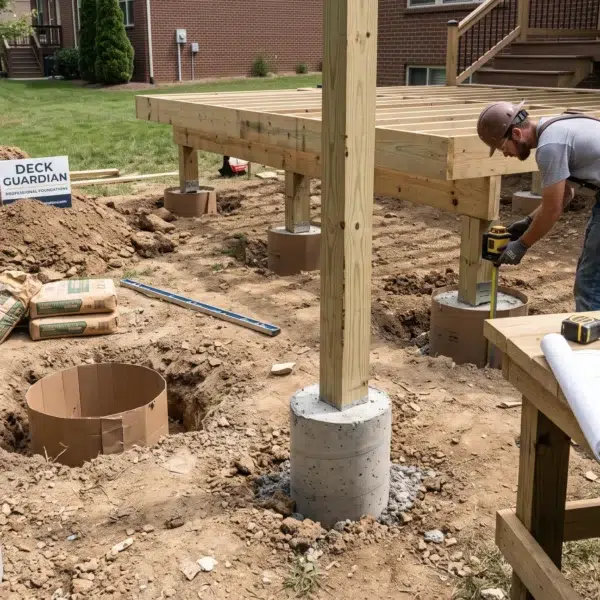
Local code adds another layer. In Bergen, Monmouth, Ocean, and many other counties across New Jersey, louvered roofs are typically classified as permanent structures. That usually means permits, inspections, and often engineering stamps once the installation gets larger or more complex.1 Footings generally need to extend below the frost line too, otherwise freeze-thaw movement can start causing trouble later.
The system itself is only half the equation. Installation quality matters just as much. Accurate louver alignment helps water move where it is supposed to go. Secure motor mounting reduces the risk of failure when strong winds hit. And a contractor who understands local code requirements can keep the project from getting stuck in avoidable permit issues while making sure the structure performs the way it should.
When a louvered roof makes the most sense for year round use
Louvered roofs make more sense in some deck setups than in others.
Decks with southern or western exposure are a good example because they take the hardest hit from afternoon sun. Adjustable louvers give homeowners a way to respond as conditions change, rather than being stuck with one shade pattern from morning to night. That can help transform an exposed backyard into an outdoor space that feels like the right place to spend time, especially when the deck connects visually to the garden, surrounding plants, and the broader landscape.2 It also works especially well when homeowners want a smoother transition from indoor rooms to the backyard rather than a deck that feels visually separate from the house.
They also work well over outdoor kitchens. That kind of space needs ventilation when someone is cooking, but it also benefits from quick overhead coverage when rain moves in. Keeping the louvers open helps heat and smoke escape. Closing them protects grills, countertops, and appliances when the weather turns. That makes these systems especially useful in outdoor living areas built for cooking, gathering, and daily use, particularly when the wider backyard plan also includes a garden, outdoor showers, fire features, or other practical upgrades. Homeowners focused on wellness are also adding adjacent features like saunas, cold plunges, and outdoor shower zones to make the deck area more functional than a standard entertaining space.
Entertainment areas benefit for a similar reason. A deck that has to work for daytime use, evening meals, and relaxed nights outside tends to gain more from a roof system that can shift with the moment. Open during sunset for the view, then adjust lighting and close louvers as evening arrives. That flexibility also supports better outdoor furniture placement, a more polished overall style, layered accessories, and design ideas that tie the deck more naturally to the garden and surrounding plants. In 2026, that look is also leaning toward warm minimalism outdoors, with softer fabrics, quieter lighting, and a more restrained mix of finishes.
Decks where homeowners want year round use rather than seasonal furniture storage get the most from these systems. Combined with heaters or fire features, a louvered roof creates functional outdoor living space even in shoulder seasons. In the right setup, it can also support a smoother connection between indoor and outdoor living. That approach is especially effective when the surrounding garden, native plants, and material palette are planned together from the start, whether the home leans more contemporary or uses natural materials and visible wood accents.3 Done well, it creates a space that feels closer to nature without sacrificing comfort or control.
FAQ
Are louvered roofs worth it in New Jersey?
They can be a strong upgrade for NJ decks because they allow homeowners to control sun, shade, and ventilation throughout the day while still closing fully for rain protection. For many homeowners, that level of flexibility now feels less like a luxury and more like a must-have, especially as outdoor living trends continue to move toward more adaptable spaces.
What’s the cost of a louvered roof system in 2026?
Costs vary depending on size, motorization, electrical features, and structural requirements. Many homeowners compare them with traditional patio covers before deciding, especially as budgets and project priorities have evolved from where they were a year ago.
Louvered roof vs solid cover: which blocks rain better?
A fully closed louvered roof channels rain through internal drainage, while a solid cover blocks rain continuously. The difference is that louvered systems can open for light and airflow when weather allows.
Do louvered roof systems handle NJ snow and wind loads?
Most modern aluminum systems are engineered to meet regional structural requirements, but the final performance depends on proper design, installation, and local building code compliance.
Do you need permits for a louvered roof over a deck in NJ?
Often yes. Many municipalities treat a louvered roof as a permanent deck structure that requires building permits and inspections.4
Manual vs motorized louvers: what’s the real difference?
Manual systems adjust with a crank or lever, while motorized louvers operate with switches or remotes and often integrate with lighting, rain sensors, or smart controls.
How much maintenance do louvered roofs need?
Maintenance is typically limited to periodic cleaning, checking drainage channels, and ensuring moving parts operate smoothly.
Can lighting, fans, or heaters be added to louvered roofs?
Yes. Many systems are designed to integrate lighting strips, ceiling fans, heaters, and speakers to create a more functional outdoor living space.