The front porch is having a moment again. Across New Jersey, homeowners are taking a fresh look at their entries and realizing that faded railings, soft decking, and wobbly steps are doing their homes no favors. If you are exploring front porch remodel services in New Jersey, the team at Deck Guardian can help you navigate what a refresh actually involves. The reasons are usually practical, not cosmetic for the sake of it. A few hard Northeast winters leave damage behind. Moisture gets into the porch floor. Handrails start to feel loose. And sometimes the front of the house just looks tired before anyone even makes it to the door.
This guide covers what New Jersey homeowners should know before moving ahead with a porch makeover in 2026. It looks at where permits and code requirements tend to show up, which changes have the biggest impact on curb appeal, and how to update the space without accidentally turning the job into a full rebuild. Whether you are doing it for your own use or because the house may be going on the market, understanding scope comes first.
The short answer on permits: if your project goes beyond surface repairs, most NJ municipalities will want to know about it. https://www.nj.gov/dca/codes/publications/pdf_ucc/UCC_gen_info.pdf Structural changes, railing replacements on elevated surfaces, and step modifications often require review. The rest of this guide explains where the lines are and how to stay on the right side of them, especially if a front porch makeover starts with simple ideas and ends up affecting more of the exterior than expected.
What Counts as a Makeover: String Lights, an Outdoor Rug, or a Rebuild?
What separates a porch makeover from a rebuild is usually pretty practical: what exactly is being changed. A cosmetic refresh stays at the surface. That might mean fresh paint, changing out the light fixture, touching up the railings, updating the house numbers, and adding smaller details like a welcome mat, an outdoor rug, or a new mat with more texture. It is also where the porch starts feeling more intentional again — maybe with string lights, a few planters, extra plants, or seating that looks welcoming instead of worn out. For many homeowners, these are the most budget friendly ways to decorate the space for spring without turning the job into something structural. A second paint color, a simple pattern, or small ideas borrowed from nearby homes can add charm and style without making the entry feel overdone. Even one bright planter or a few bright flowers can shift the whole mood faster than people expect.
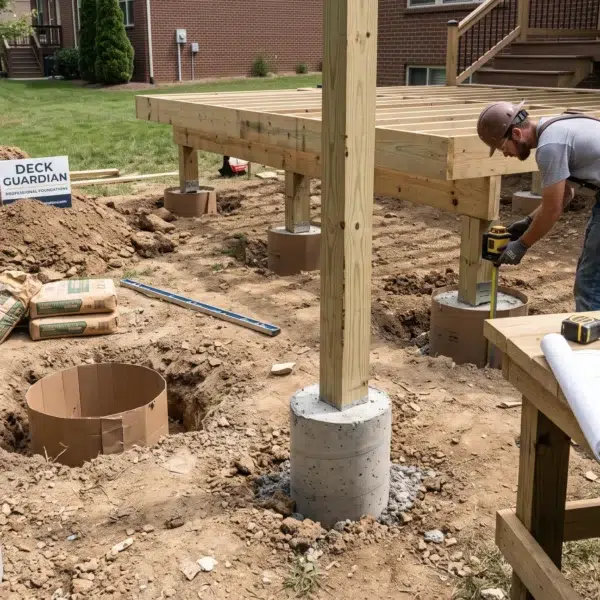
A rebuild involves framing, footings, or resizing the porch footprint. If you are changing the shape of the space, adjusting step geometry, or adding square footage, you are in different territory. When exploring front porch remodel services in New Jersey, understanding this distinction helps you plan scope and budget realistically.
Permits depend on what the town considers “ordinary repair” versus “alteration.” Swapping out rotted boards with identical materials often qualifies as ordinary repair. But once you start modifying dimensions, adding electrical, or changing how the porch connects to the house, most municipalities will expect a permit application. https://www.nj.gov/dca/codes/resources/constructionpermitforms.shtml The safest approach is confirming scope with your local construction office before demo day.
Permits in NJ: When the Town Starts Caring
New Jersey permit requirements vary by municipality, and that is the reality homeowners need to accept upfront. What passes in one town may trigger a full review in another. The general pattern is that ordinary repairs, meaning like-for-like replacements without structural changes, often proceed without permits. Alterations activate the process. That is the point where many front porch ideas stop being purely cosmetic and start carrying real code implications.
Zoning considerations emerge when your porch footprint expands or your landing geometry changes. Setback rules, typically five to ten feet from property lines in residential zones, can become relevant if you are adding square footage. Encroachment issues are more common than homeowners expect, especially on older properties where original construction pushed boundaries. That is also where a large porch can create more design pressure than expected if the existing layout already sits close to the property line.
The calm, practical advice is simple: call your local construction office before starting. https://www.nj.gov/dca/codes/offices/localcode.shtml Ask whether your planned scope qualifies as ordinary repair or triggers review. This conversation costs nothing and can save weeks of delay if an inspector stops work mid-project. It is an easy way to protect your budget before you purchase materials, paint, replacement parts, or decorative items you plan to hang near the door. It also helps narrow down which ideas still make sense once the real scope is clear.
Railings, Stairs, and Entry Safety: Where “Code” Shows Up Mid-Remodel

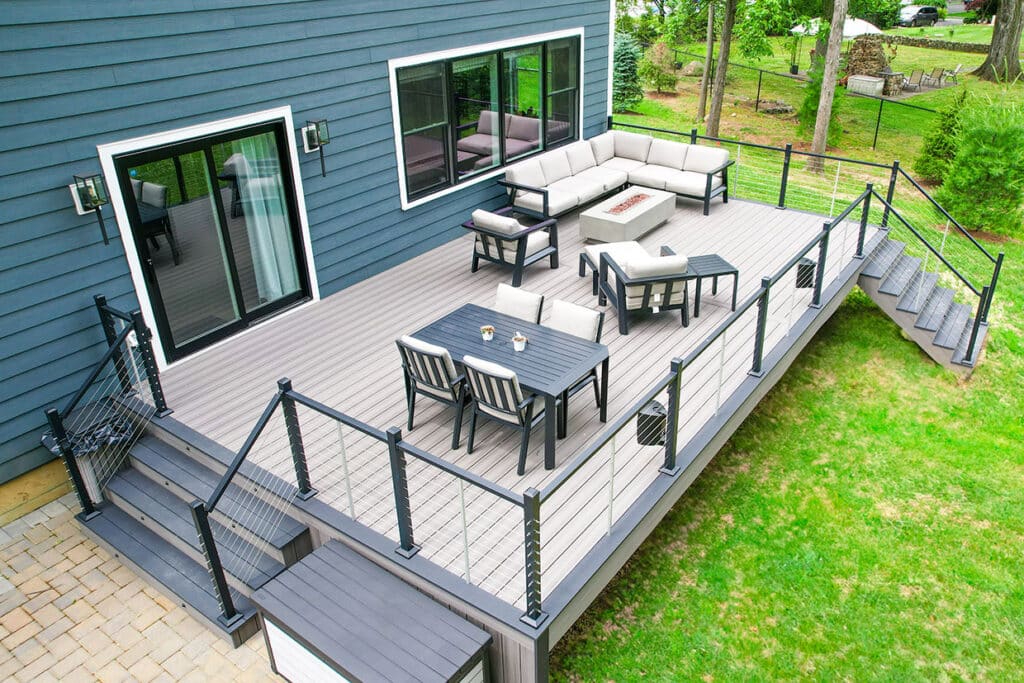
Code requirements tend to surface during remodels when railings, stairs, or elevated surfaces are involved. If your front porch walking surface sits above grade, guardrail requirements apply. Common municipal patterns in New Jersey follow IRC guidelines: 36-inch minimum height for guards on surfaces over 30 inches above grade, baluster spacing no more than four inches, and graspable handrails on stairs.
When replacing railings during a remodel, many municipalities treat the work as “bring it up to current standards.” This is where porch railing ideas for curb appeal intersect with safety requirements. Upgrading to cleaner baluster profiles or composite materials can satisfy both visual and code goals at once.
Stair rise and run become relevant if you are modifying steps. A maximum riser height of seven and three-quarter inches and a minimum tread depth of ten inches are common benchmarks. Landing size requirements can affect scope if your current configuration does not meet current standards. Inspector approaches vary, so the wisest path is to discuss your specific project with the local office before finalizing plans. That gives you a better point of reference before committing to layout changes.
The Upgrades That Actually Change Front Door Curb Appeal
Railings and posts create the biggest visual change at eye level. This is the first thing guests and neighbors see when approaching your front door. Clean railing profiles, whether metal, composite, or refreshed wood, unify the entire exterior. Posts wrapped in fiber cement or given a fresh coat of paint can transform a tired porch into something timeless. Even small front porch ideas, like a wreath on the door, a simple sign, or planters with seasonal flowers and spring plants, can add charm and style without changing the structure. A little more paint around the front door can also sharpen the whole entry and make the style feel more deliberate. Bright trim and bright contrast around the entry can help the whole facade read more clearly from the street.
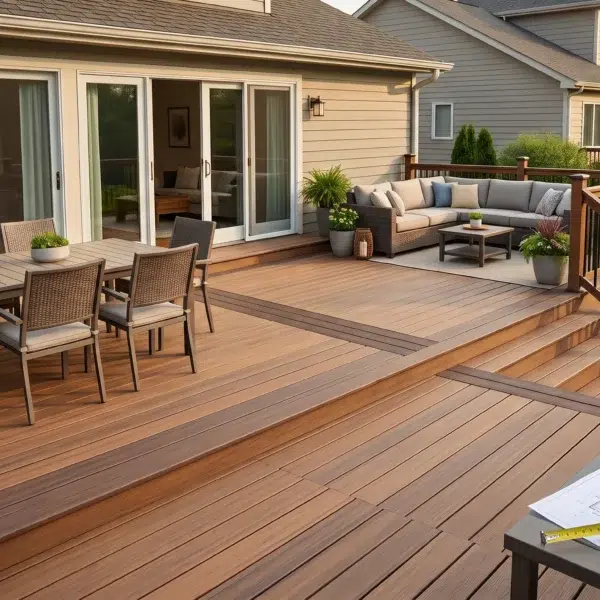
A well-finished porch usually starts with the floor. Whether the surface is wood or an older concrete floor, consistent decking lines, close joints, and a surface that looks clean tell people the space has been cared for. Skirting and trim reinforce that by giving the porch a finished look from the ground up. Lighting adds a different kind of improvement. It makes the entry feel intentional and welcoming without changing the structure, even if the electrical portion may still require permits in some towns. Warm light around the doorway and house numbers that do not disappear at night make a bigger difference than many homeowners expect. For some homes, a bright ceiling finish, a small table, a pair of chairs, and a few pillows are enough to make the space feel cozy and inviting. Even old chairs can work when the paint is fresh and the setup feels consistent rather than improvised. A small table sourced from a local thrift store can work just as well as new furniture when the proportions fit the porch.
| Upgrade | Why it changes first impressions | Hidden scope risk |
|---|---|---|
| New railings | Biggest visual change at eye level | May trigger code compliance checks during inspection |
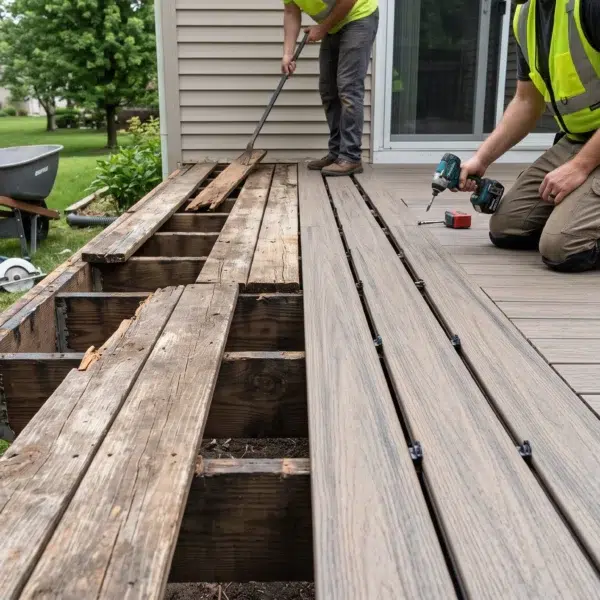
| Porch decking replacement | Fixes wear and soft spots | Could reveal framing issues once boards come off |
| Step and landing refresh | Improves safety and entry flow | Changing rise, run, or footprint may trigger zoning review |
| Lighting and house numbers | Makes entry feel intentional | Electrical work may need permits depending on town |
| Paint or wrap on posts | Cleans up the entire facade | Traps moisture if done over damaged wood |
Materials for a Porch Deck in NJ Weather

New Jersey weather tests every material choice. The climate is hard on porch materials. Summer brings heat and humidity, winter brings repeated freeze-thaw cycles, the sun does its own damage for months, and near the shore you also have salt in the air. All of that adds up faster than most homeowners expect. Pressure-treated wood is still a reasonable lower-cost option, but it needs regular sealing if you want it to hold up well. Otherwise, it starts warping, splintering, and looking tired much earlier than expected. Paint performance, surface texture, and overall style hold up better when the material choice matches the climate, especially after a long spring of rain and temperature swings. That is one reason surface ideas that look good on a screen or in design inspiration photos do not always translate well in real life.
Composite decking is popular because it avoids some of that upkeep. It usually holds its appearance more evenly over time, and capped boards tend to do a better job with mold and staining than uncapped ones. But composite is not a magic solution. If the porch traps moisture underneath or airflow is poor, problems still show up, just not always right away. That is why durable finishes and proper drainage matter just as much as the boards themselves.
That is why framing details matter more than people think. Joists are usually spaced around 16 inches, and a minimum two-inch gap below the boards helps the underside dry properly. In this climate, material matters, but installation matters just as much. A front porch makeover only performs well over time when the visible finish and the hidden support system work together.
Conclusion and Next Steps for Your Outdoor Space
A front porch makeover can change the entire first impression of a house without pushing you into the cost of a full rebuild. But that only works when the project stays clearly defined. Once the line between a refresh and a larger structural job gets blurry, budgets and timelines have a way of slipping. The best results usually come from simple ideas executed with consistency, not from forcing too many styles into one small space. A fresh front porch usually has more charm when each layer supports the next instead of competing for attention. That is often what turns a basic sitting area into a cozy spot for morning coffee.
The best place to start is with an honest assessment of what the porch actually needs. Maybe it is mostly cosmetic. Maybe there are safety concerns that should be dealt with first. Or maybe the porch already has structural issues, whether that was part of the plan or not. Once that is clear, it makes sense to check with your local construction office to see whether the work still qualifies as ordinary repair. After that, the material decision becomes a lot easier — especially if you are choosing with New Jersey weather and realistic maintenance expectations in mind. That is also the easiest way to avoid spending money on front porch ideas that look good for one spring and disappoint by the next, when the first bright weekend makes every shortcut easier to spot.
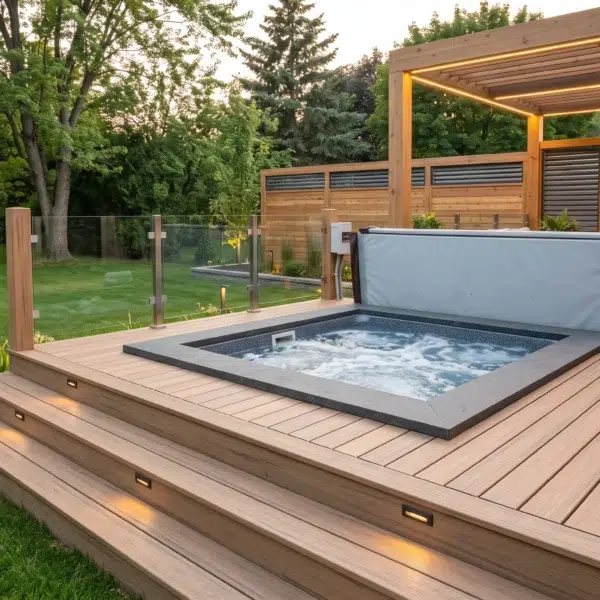
If the porch update is part of a broader exterior plan, it is also worth thinking about related spaces like decks and outdoor living areas, since many of the same questions carry over. Many of the same permit and material considerations overlap as well. Sometimes the best front porch ideas come from thinking about how the front door, windows, plants, and furniture work together rather than treating each piece on its own. A layered look often comes from mixing a welcome mat, a small sign, simple planters, and furniture that fits real daily life rather than showroom styling. A few extra plants, more flowers, and a place to hang seasonal accents can make the space feel finished without adding clutter. Picking up seasonal plants or flowers from a local nursery is often the easiest way to refresh the look without changing the structure.
FAQ
Do you need a permit for a front porch makeover in NJ?
Often, yes if the work goes beyond ordinary repair or changes structural elements. Rules vary by municipality, so the safest move is confirming scope with the local construction office before starting.
How much does a porch makeover cost in New Jersey?
It depends on whether the project is cosmetic or structural, plus materials and how much gets uncovered once demolition starts. A railing-only refresh is typically very different from a rebuild.
Can I replace porch decking without replacing the structure?
Sometimes. If the framing is sound, surface boards can be replaced as a targeted refresh. If there is bounce, rot, or settlement, structural repair may be unavoidable once boards come off.
Do porch railings have to meet code during a remodel?
If railings are being replaced, many municipalities expect safety features to meet current requirements, especially for elevated porches and stairs. The exact expectations depend on scope and the local inspector.
What upgrades add the most curb appeal on a front porch?
Railings and posts usually create the biggest visual upgrade fast. Clean decking lines, updated lighting, tidy steps, well-placed plants or flowers near the door, and large planters with evergreens all make a strong difference quickly.
Is composite a good choice for a porch deck in NJ weather?
It can be. Composite is often chosen for consistent appearance and low-maintenance goals, but performance depends on proper installation, ventilation, and drainage.
How long does a typical porch makeover take?
Timelines vary widely based on scope, inspections, and material lead times. Cosmetic updates move faster than projects that involve structural work or permit review, especially when homeowners already have clear ideas and are not waiting to purchase paint, furniture, or new chairs. Delays also happen when people decide late in the process to repaint, add more chairs, or hang decorative pieces after ordering materials. Prep work matters too: cleaning the surface before painting usually reduces rework and helps the finish hold up better.
Will a porch makeover affect steps, landings, or entry height?
It can. If you change framing height, step layout, or landing dimensions, you may trigger additional design, zoning, and inspection requirements beyond a basic refresh. That matters even more if you plan to hang a porch swing or decorate the area with heavier furniture.