Discover proven resurfacing techniques that protect aging wood decks from New Jersey’s harsh weather and learn how Deck Guardian’s professional restoration services can add decades to your outdoor living space.
Wood decks are a staple of New Jersey homes, offering a comfortable place to gather, relax, and enjoy the outdoors. But in a state known for hot, humid summers and long winters with repeated freeze-thaw cycles, even the best-built decks show their age. Boards crack, finishes fade, and moisture starts to creep into vulnerable areas. Full replacement is often costly, yet letting damage accumulate shortens your deck’s lifespan dramatically.
This is where deck resurfacing comes in. Decks and patios are key outdoor features in most New Jersey homes, creating space for family gatherings and entertainment. Rather than tearing out and rebuilding, resurfacing provides a cost-effective way to restore strength, improve appearance, and add another 10–15 years of use to many wood decks. With 95% of single-family homes in the U.S. featuring some type of outdoor structure like a deck, patio, or porch (U.S. Census Bureau), investing in maintenance is both practical and necessary.
In this article, Deck Guardian explains how resurfacing works and why it’s the smarter option for aging outdoor structures in New Jersey.

The natural aging process of wood decking
Every material has a life cycle, and wood decks in New Jersey are no exception. While natural wood is strong and beautiful, it is also vulnerable to the state’s four-season climate. During the summer, temperatures often rise into the 90s with high humidity. This combination accelerates UV damage, causing wood decking to dry out, lose its rich color, and turn gray. By contrast, harsh winters bring repeated freeze-thaw cycles. As moisture penetrates the grain, it expands and contracts, leading to splitting and microfractures in the deck wood.
Spring and fall add further stress. Heavy rains, coupled with coastal moisture that reaches far inland, infiltrate unprotected boards and promote early signs of rot in high-contact or shaded areas. Even when a deck is built properly, these elements work together to weaken its structure.
The timeline of deterioration is fairly predictable in the Garden State. Within the first five years, homeowners often notice surface-level weathering and color changes. By the 10- to 15-year mark, unsealed or poorly maintained decks may show deeper cracking, loose boards, or areas of softening that suggest rot beneath the surface.
This natural aging process is unavoidable, but it is more aggressive in New Jersey than in milder regions. That’s why timely intervention through resurfacing is not just a cosmetic upgrade — it’s a vital step in preserving the longevity of your outdoor investment.
How rotting wood compromises deck integrity
Rotting wood is one of the most serious issues a homeowner can face with an outdoor structure. Moisture that lingers on deck boards after rain or from poor drainage often seeps into the fibers, creating soft spots that spread over time. Early indicators include spongy textures and darker patches that contrast against healthy lumber. In advanced stages, boards may crumble at the edges, undermining both safety and stability. While a contractor can replace individual planks and fill large cracks, severely compromised boards usually demand full replacement. Timely resurfacing and sealing provide long lasting protection against future decay.
What deck resurfacing actually involves
Many homeowners assume that deck resurfacing is simply painting over worn boards, but the process is far more comprehensive. At Deck Guardian, we approach resurfacing as a complete deck renewal, focusing on both appearance and structural longevity. According to Bob Vila, regular maintenance — including cleaning, sealing, and resurfacing — prevents minor wear from developing into costly repairs.
The process begins with a thorough inspection to identify areas of minor damage, loose boards, or signs of early rot. Next, the deck is carefully cleaned — typically with power washing and brightening treatments — to remove dirt, mildew, and old finish. Any minor structural issues, such as slightly warped boards or loose fasteners, are repaired to ensure the deck is sound before surface treatments are applied.
Once the surface is prepped, protective coatings, stains, or deck restoration products are applied. These treatments penetrate the wood, sealing it against moisture while maintaining breathability, which is essential for preventing warping and cracking.
It’s important to note the difference between deck resurfacing and full replacement. Resurfacing works with the existing boards, preserving the original deck while adding years of life. Replacement, on the other hand, involves tearing out all boards and starting from scratch — a costlier and more disruptive option. Resurfacing addresses most wear issues and minor damage, but it cannot fix deep structural rot or severely compromised framing.
By investing in a professional deck rejuvenation, New Jersey homeowners can extend the life of aging decks and avoid expensive replacement sooner than expected.
⭐⭐⭐⭐⭐
“The sales and delivery team were easy to work with. The team came when discussed and finished within a given window. Did a basic resurfacing. The outcome was nice. When issues did arise (I was missing some post caps), the team ordered and delivered quickly.”
– Yang L.
How resurfacing protects your deck board structure
The true value of deck resurfacing lies in protecting the core deck board structure from the elements. In New Jersey, where a wood decking board faces hot, humid summers and harsh, wet winters, a properly applied sealer or stain acts as a barrier against moisture, UV rays, and mildew. Without protection, each deck board absorbs water through its grain and end cuts, leading to swelling, cracking, and eventually deep rot that necessitates full board replacement.
Sealing both the surface and end grains is essential. Water tends to penetrate faster at the ends of boards, so applying high-quality, breathable sealers allows moisture to escape while preventing new water from entering. This “breathing” wood concept is critical for maintaining structural integrity, especially in areas prone to pooling water, shaded zones, or decks exposed to full sun.
For example, with proper resurfacing, that same deck could easily last 20+ years. In contrast, an untreated deck of the same age may only last 10–12 years before significant replacements are needed.
For homeowners in Somerset, Bergen, Monmouth, or other New Jersey counties, investing in a professional deck restore ensures each deck board continues to perform and look its best. This preventative approach reduces long-term costs and protects the home’s outdoor living space.
Thinking your deck might need more than just cleaning? Deck Guardian can help you determine whether resurfacing is the right move.

The paint restoration approach for severely weathered decks
Some decks have endured years of New Jersey’s demanding climate and now appear gray, faded, or uneven in color, even though the underlying structure remains sound. In these cases, deck paint restoration offers a practical solution. Rather than replacing boards, specialized deck restoration coatings can revitalize the surface, fill minor cracks, and provide a uniform appearance that enhances both longevity and aesthetics.
Preparation is key. It begins with a thorough cleaning process: power washing removes dirt and mildew, while brightening treatments and neutralizing cleaners restore the wood’s pH balance, ensuring optimal adhesion for the restoration coatings. Only after this prep does deck recovery paint, which penetrates the surface, seals small imperfections, and creates a protective barrier against moisture and UV damage, is applied.
Timing matters. Deck paint restoration works best when boards are weathered but not structurally compromised. With proper restoration coatings, the deck regains a refreshed look and receives 3–5 years of reliable protection before another maintenance cycle is required.
Beyond aesthetics, restoration preserves each deck board, preventing the need for more costly replacements down the line. For homeowners, this approach is both efficient and budget-friendly.
Deck restoration for weather-damaged surfaces
Effective deck restoration goes far beyond applying a fresh coat of stain. A professional process starts with inspecting the deck boards, railings, and stairs for damage, then replacing weakened sections or tightening loose screws. Contractors may use a pressure washer with the right soap solution to prepare the surface, ensuring stains and dirt don’t interfere with adhesion. Next comes sanding, sealing, and coating to provide long protection against rain, sun, and heavy foot traffic. Even a deck that looks past its prime can often be saved if the substructure and deck posts remain solid, turning what seems like a failing project into a durable upgrade.

Maintenance coatings that stop deterioration
Even after a successful deck renewal or deck paint restoration, ongoing maintenance is essential to prolong the life of New Jersey decks. Regular application of protective coatings prevents minor wear from becoming major damage, keeping your deck safe and visually appealing for years.
Homeowners should plan to renew deck paint or stain every 2–3 years in the Garden State’s climate. Simple tests can indicate when it’s time to repair deck paint – water should bead on the surface, and boards should remain smooth and free from peeling. If water soaks in quickly or cracks are widening, it’s a signal to apply a new coat of deck restoration coatings.
The compounding benefit of regular maintenance is significant. Each layer adds a protective barrier against moisture, UV rays, and mildew, meaning even older decks can remain structurally sound.
Cost-wise, consistent maintenance is far more economical than replacement. Applying protective coatings every few years typically costs $500 – $800, compared to $8,000 – $15,000 for a full deck rebuild. For New Jersey homeowners, a proactive maintenance plan is not only a financial decision, but also a way to safeguard outdoor living spaces year-round.
Preventing rust oleum staining on deck surfaces
Even after resurfacing, deck boards can develop discoloration if exposed to moisture and metal contact. Patio furniture with steel legs, planters with unprotected bottoms, or corroded fasteners may leave rust oleum stains that penetrate protective coatings. Once set, these marks can be difficult to remove and diminish the overall results of your maintenance. Preventive steps include selecting stainless steel fasteners, adding pads under outdoor furniture, and inspecting your deck regularly for early rust spots. If stains do appear, prompt cleaning with the right products helps preserve the fresh look of your surface while ensuring lasting protection.
Contact Deck Guardian today for a free resurfacing consultation in New Jersey and see how your deck can be brought back to life without full replacement.
Combining resurfacing with strategic repairs
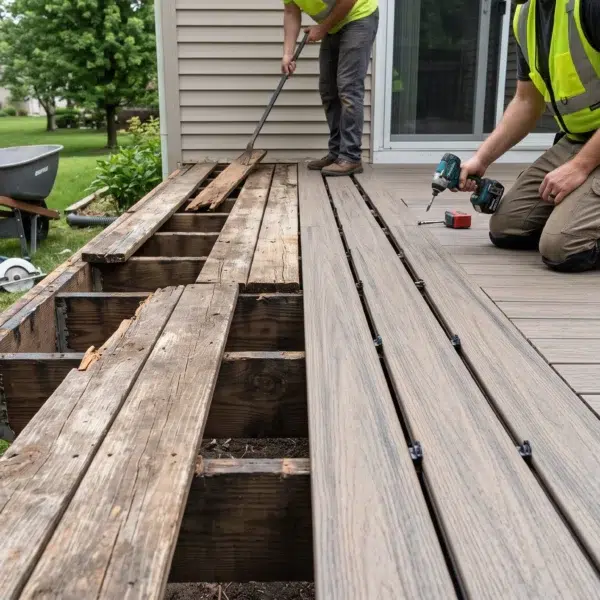
Effective deck restore often involves a hybrid approach – resurfacing most boards while selectively replacing a smaller portion that shows deeper structural damage. Typically, 10–20% of boards may require replacement due to rot, splitting, or compromised support, while the remaining boards benefit from thorough resurfacing. This strategy maximizes lifespan while keeping costs manageable.
Identifying which boards need replacement versus resurfacing is straightforward for professionals. Boards with significant damage should be replaced, while surface-weathered boards can be resurfaced for extended life. Replacing the few damaged deck boards while resurfacing the rest ensures uniform performance across the entire deck. Check railings and stairs as part of the inspection to confirm they are secure before resurfacing the rest of the deck. Inspecting both the deck and adjacent patio areas ensures water drains properly and protects all outdoor surfaces.
In New Jersey, common problem areas include boards near ground contact, sections with poor drainage, or spots where leaves and debris accumulate — areas that benefit most from timely resurfacing and maintenance to prevent long-term damage.
By combining resurfacing with strategic repairs, homeowners in Bergen, Monmouth, Morris, and other counties can achieve the dual benefits of durability and cost efficiency, ensuring their outdoor living space remains safe and visually appealing for years to come.

Getting access to professional assessment
While DIY maintenance can handle minor cleaning and sealing, a professional evaluation ensures that a deck receives the right treatment. Deck Guardian offers comprehensive assessments to determine whether painting a deck with restore products is appropriate, or if more extensive interventions are necessary.
During a professional assessment, our team examines structural integrity, tests for moisture penetration, and inspects boards for hidden damage. This step is especially important in New Jersey, where freeze-thaw cycles, humidity, and coastal moisture can create unseen issues. The evaluation also helps homeowners prioritize repairs, whether it involves selective board replacement, resurfacing, or paint restoration.
Finding qualified contractors is key. Look for companies familiar with local climate challenges, with clear experience in both deck restore and resurfacing processes. Avoid providers who push full replacement without proper evaluation, as unnecessary rebuilding increases costs without addressing the underlying problem.
Proper preparation and expert application of coatings make a measurable difference – professionally applied restoration products can last 3–7 years longer than DIY attempts, ensuring your deck stays protected and functional for years.
Real lifespan extensions from proper resurfacing
Proper maintenance can dramatically extend the life of wood decks in New Jersey. Untreated decks typically last 10–15 years due to harsh winters, humid summers, and seasonal storms. However, with timely wood decking resurfacing, homeowners can realistically expect 25–30 years of use.
Consider the math: investing in resurfacing early — around 3–5 years — spreads costs over decades, reducing the annual expense compared to full replacement cycles. Beyond finances, extending a deck’s lifespan has environmental benefits, minimizing wood waste in densely populated areas like New Jersey.
Contact Deck Guardian today to schedule a professional assessment and discover how resurfacing can protect and extend the life of your deck.