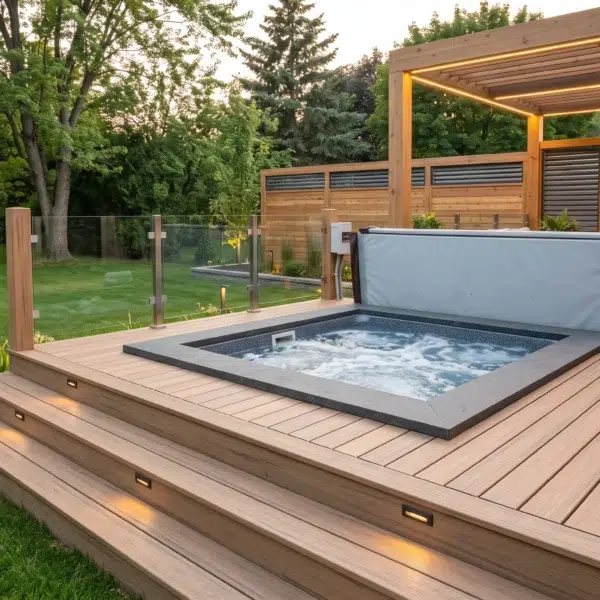
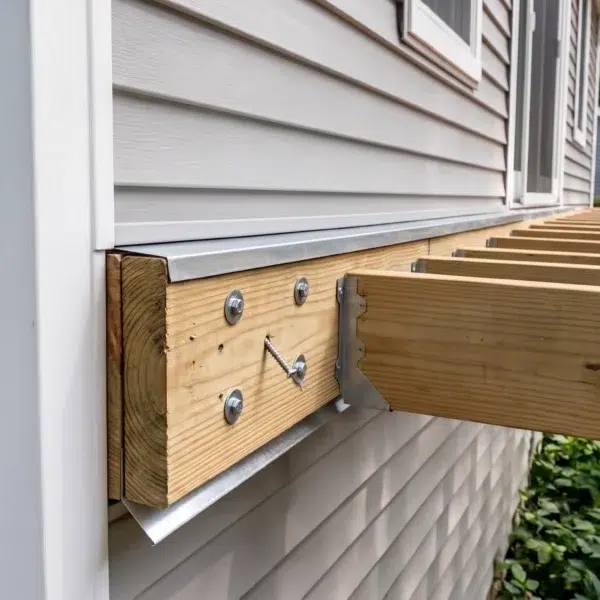
How “value engineering” helps us maximize your deck resurfacing project.
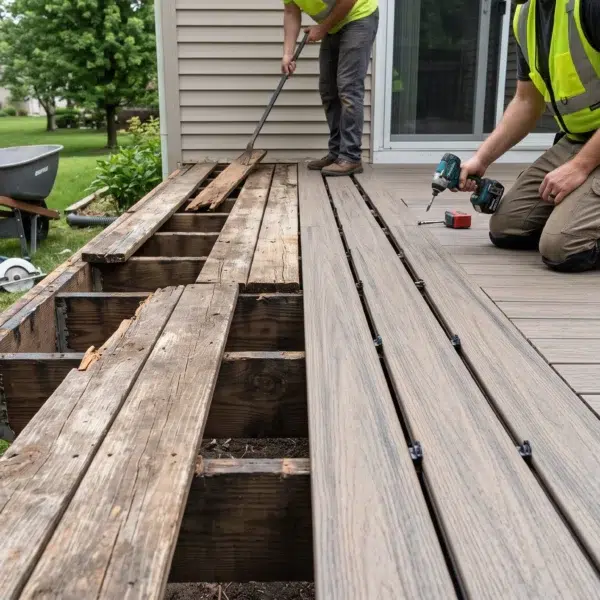
If your deck frame is sound, resurfacing is the ultimate upgrade. It gives you a brand-new look for a fraction of the cost of a rebuild. But to maximize those savings, planning your deck resurfacing budget requires precision.
The honest truth about budgets
At Deck Guardian, we view your budget as a technical specification, not a target to hit. It is the data point that allows us to “value engineer” the work.
By understanding your financial limit upfront, we can filter materials and layouts to find the configuration that delivers the highest quality without waste. Here is how sharing that number makes your money go further.
1. Optimizing for material lengths
Deck boards come in standard lengths of 12′, 16′, and 20′.
- The waste factor: A 17′ wide deck requires buying 20′ boards and cutting off 3 feet of expensive material as trash.
- The fix: If we know your budget, we design to exactly 16′ or 20′. This ensures every dollar you spend stays on your deck, not in the dumpster.

2. The “16-foot” structural rule
The size of your deck dictates the support required underneath.
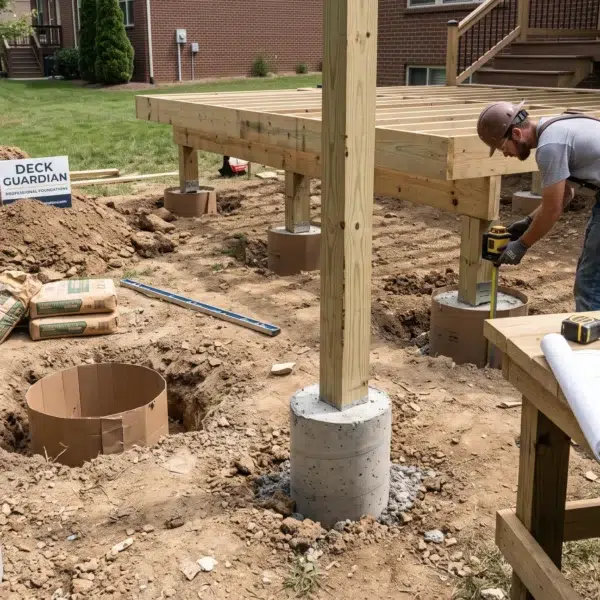
- The waste factor: Extending a deck more than 16′ from the house usually triggers the need for a new row of concrete footings and beams, spiking labor costs.
- The fix: By keeping the extension within that 16-foot threshold, we can often reuse existing infrastructure. This frees up thousands of dollars for premium finishes like lighting or high-end railings.
3. Cost-effective shapes
Complex shapes drive labor costs; rectangular footprints maximize value.
- The waste factor: Curves and odd angles require intricate cuts and significant material waste.
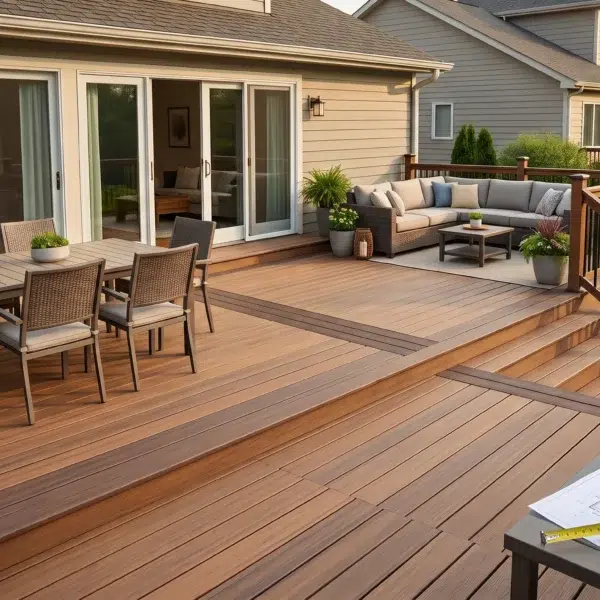
- The fix: We stick to a cost-effective rectangular footprint but use the savings to add visual flair — like “picture frame” borders or mixed colors — to upgrade the look without inflating the structural cost.

4. Smart railing logic
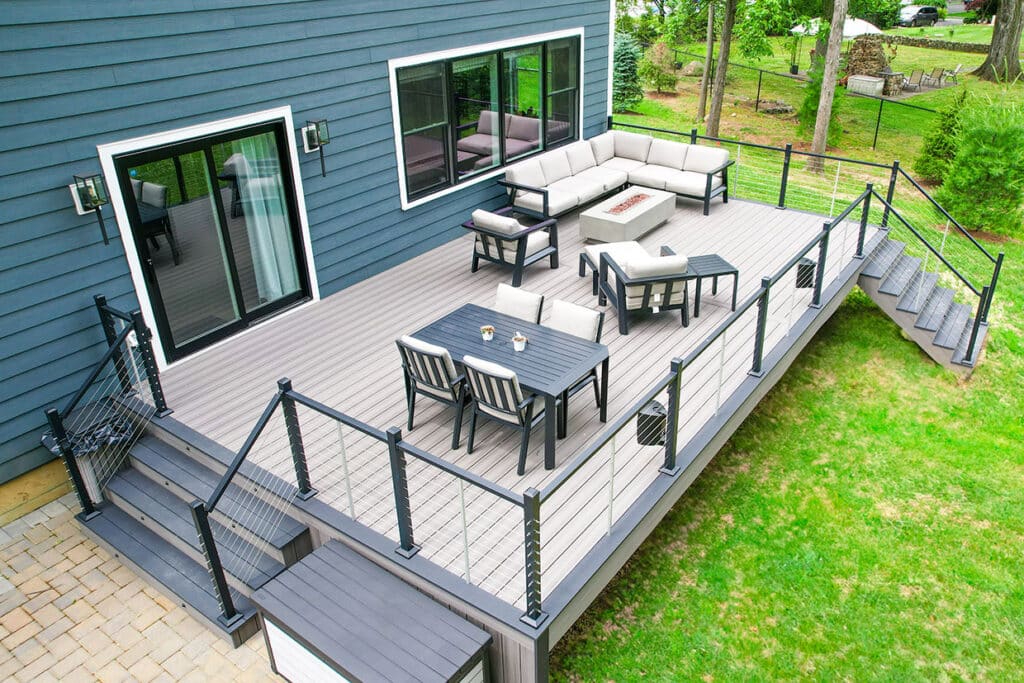
Railing systems are sold in 6-foot and 8-foot kits.
- The waste factor: Placing stairs in a random spot often creates a “dead zone” (e.g., a 4-foot gap) that forces you to buy a full 6-foot kit to fill.
- The fix: We align your steps perfectly with standard kit sizes. This ensures you buy exactly what you need — no more, no less.
5. Efficient board layouts
The direction of the floorboards impacts the price.
- The waste factor: Diagonal patterns increase waste due to the angle cuts required at every edge.
- The fix: A perpendicular layout is the most efficient. Knowing your budget helps us decide: spend extra on a diagonal layout, or save that money to upgrade the railing material?

6. Prioritizing the “core”
It is easy to over-design a project with accessories like skirting or extensive lighting.
- The fix: We act as advisors. We might suggest skipping cosmetic upgrades (like skirting) to invest in higher-quality composite decking that lasts 25 years. We ensure the core of the build is bulletproof first; accessories can always be added later.
7. Strategic payment plans
Sometimes the right project is slightly outside your cash on hand.
- The fix: We offer financing and split-payment options. This allows you to lock in the project you want without the stress of a single lump-sum payment.
The bottom line
Think of your budget as a technical tool. It empowers us to select the precise materials and layouts that maximize value while strictly eliminating waste. Let’s ensure every dollar counts toward a deck you’ll love.
Ready to see what your budget can build? Reply to this email with your thoughts, or contact us to discuss your project parameters.