Table of Contents
ToggleA cable deck railing and a glass railing system usually show up in the same conversation for one reason: the homeowner wants the view to stay open. Nobody spends money on a deck, balcony, porch, or staircase upgrade just to lose unobstructed views behind heavy posts and bulky rails.
At Deck Guardian, railing choices start with how the space will actually be used. A lake view, a wooded backyard, a second-story deck, and a covered porch all create different priorities. Cable railings and glass deck railings can both look sleek, modern, and clean. They can both enhance the outdoor space. They can both go wrong if the system is chosen only because it looked good in a photo.
The better question is not “Which one looks more expensive?” It is: which railing will still make sense after rain, pollen, kids, pets, furniture, code checks, and a few seasons of real weather?
Cable Deck Railing Keeps the View Open Without Making the Deck Feel Fragile
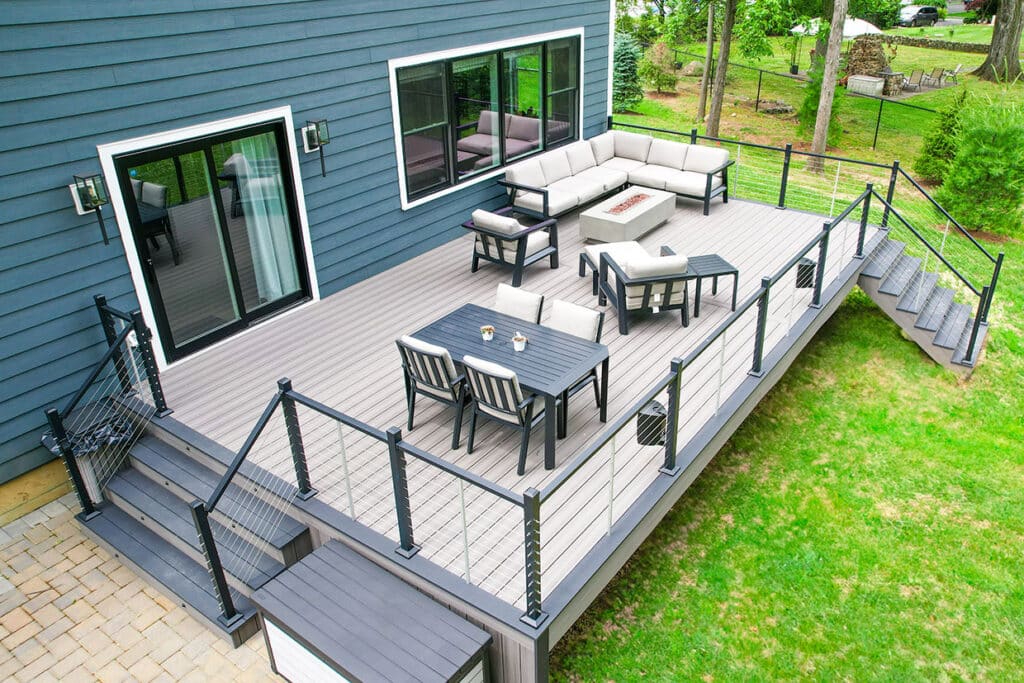
Cable deck railing works well when a homeowner wants to protect the view without making the deck feel too exposed. The horizontal cable infill keeps the railing visually open, and there are no glass panels sitting between the seating area and the yard. On wooded lots and larger backyards, that can feel more relaxed and less formal.
Most cable systems use stainless steel cable stretched between posts. Marine-grade stainless steel is often chosen because it performs better against moisture, humidity, and corrosion. In New Jersey and Pennsylvania, outdoor hardware has to face rain, freeze-thaw cycles, coastal air, and damp shade. Those conditions matter.
Cable railings are fairly easy to maintain, but they still need regular attention. Mild soap and water can handle basic cleaning, while abrasive tools or cleaners should be avoided because they can damage the protective layer on stainless steel. The system also needs checks for loose cable, fittings, fasteners, and hardware. Annual tension checks support long-term durability while maintaining safety because stainless steel cable can respond to temperature changes through the seasons. With durable materials, proper installation, and regular care, cable railings can last over 25 years, making them cost-effective over time. A cable that starts to sag may still look okay at first glance, but it means the system is not working as intended.
That is the maintenance reality behind the clean look. Cable is minimal. It is not casual. It depends on tension, spacing, strong posts, and correct installation.
Stainless Steel Cable and Wood Posts Need More Than a Nice Kit
A cable railing kit can look simple in stock photos: posts, cables, fittings, tools, accessories, and a few clean diagrams. That can create the impression that easy installation is guaranteed.
In practice, cable railing systems need careful planning. Stainless steel cable puts constant force on posts and rails. Aluminum posts, powder coated aluminum frames, or properly prepared wood posts must be able to support that tension without leaning, twisting, or letting the cable deflect too far.
For many systems, posts are commonly spaced around 4 feet apart to help control cable movement. Cable rows are often spaced close together, usually near 3 to 3⅛ inches on center, so the finished railing can meet the 4-inch sphere rule when properly tensioned.1? A typical 36-inch railing height may require roughly 9 to 11 cable rows, depending on the system, top rail, bottom rail, and local codes.
That is why building codes and local codes should be checked early. Most building codes care about safety, not aesthetic appeal.2 They do not care that the cable looks sleek if the openings are too wide or the posts are not engineered to handle tension.
Detail to check | Common planning number | Why it matters |
Residential guard height | 36 in. | Common minimum for residential deck railing |
Commercial applications | 42 in. | Often required for commercial guardrail systems |
Guard opening limit | 4 in. sphere | Helps maintain child safety and code compliance |
Cable post spacing | About 4 ft. | Helps limit cable deflection and sagging |
Cable spacing | About 3 to 3⅛ in. | Helps the system stay within opening limits |
The kit matters. The install matters more.
Glass Railing System Puts the View Center Stage, But Maintenance Comes With It
Glass railing has a different personality. It gives the cleanest open view because there are no horizontal lines running through the sightline. Glass panels can make a deck, balcony, or porch feel more expensive, more polished, and more architectural. When the view is the main feature, glass railing can put it center stage.
A glass railing system usually uses tempered glass with aluminum posts, stainless steel components, or other engineered support. It can be framed, semi-frameless, or frameless depending on the project. The aesthetic appeal is obvious. The maintenance is also obvious once the first storm passes.
Glass shows water spots. It shows fingerprints. It shows pollen. It shows streaks after cleaning if the wrong tools are used. In a shaded yard, around trees, or near coastal moisture, glass panels may need more frequent cleaning than cable railings. That does not make glass a bad solution. It just means the homeowner should not call it “minimal upkeep” without understanding what upkeep actually looks like.
Glass deck railings can be excellent for modern homes, rooftop spaces, pool-adjacent decks, and outdoor space where wind protection matters. They can also feel too formal on a casual backyard deck. In some cases, ways to balance privacy with open railing designs matter more than a fully transparent barrier. That is where the decision becomes less about glass versus cable and more about how exposed the homeowner wants to feel.
Cable Railings Feel Lighter, Glass Railings Feel Cleaner
Cable railings and glass railing systems both keep views open, but they do it differently. Cable railings create lines. The view stays visible, but the horizontal cable still gives the deck a defined edge. That can be useful. It gives the space structure without making it feel closed. It also works well with wood, composite, aluminum, and mixed materials, which gives homeowners more railing ideas when they want style, functionality, and practical benefits in the same upgrade.
Glass railing removes more visual interruption. It can make the deck feel larger and more seamless. It also reflects light, adds shine, and can make the railing feel like a design feature instead of a background element. That is good on some homes and too much on others.
A modern home with large windows may look natural with glass. A wooded property may feel better with cable. A porch connected to traditional architecture may need a softer deck railing approach, especially on porch projects where railing choice affects the whole look.
The regular price can also push the decision. The regular price of glass systems is often affected by panel size, post type, mounting method, and tempered glass requirements. The regular price of cable systems depends on cable length, stainless steel grade, fittings, posts, and whether the system is sold as a complete kit. The regular price may look close online, then change once staircase runs, corners, gates, and custom cuts are included. The regular price also varies when premium hardware or powder coated aluminum posts are selected. So yes, budget matters. But the cheapest regular price rarely tells the full story.
Drink Rail Details Can Change How Deck Railing Feels
A drink rail sounds like a small feature until the deck is used every weekend. It gives the top rail a flat, practical surface for a glass, a phone, a small plate, or simply a place to rest a hand.
Cable railing works especially well with a drink rail because the cable keeps the view open while the top cap makes the system feel more finished. A wood or composite drink rail over aluminum posts can create a warm contrast without losing the modern look. Some railing systems, including certain cable railing kit options, are designed to support this kind of detail.
Glass railing can also use a top rail, but many homeowners choose glass because they want less visible structure. Adding a larger drink rail may soften the sleek look, which can be good or bad depending on the house.
This is why deck rail design that fits the way the space is used matters more than choosing by product name. Before comparing glass, cable, composite, or aluminum systems, it helps to understand how different deck railing materials affect maintenance, visibility, comfort, and daily use. A deck used for dinners, kids, pets, and casual weekends may need a different railing solution than a balcony designed mainly for views.
DIY Cable Railing Systems Are Possible, But Not Always Wise
Some cable railing kits are made to attract DIY buyers, and experienced homeowners can install certain systems if they have the right tools. But even then, the work is detailed. Measuring, drilling, mounting posts, cutting cable, attaching fittings, tensioning, and spacing checks all have to be done carefully.
On a straight run, that can feel doable. Add stairs, corners, uneven framing, an older deck, or posts that do not land cleanly, and the project gets harder. Stair sections are especially demanding because they combine code requirements with angle cuts, spacing, and alignment.
Glass railing is usually not the best place to experiment. The panels are heavy and precise. If the post layout or engineered mounting is off, a small mistake can turn into a larger installation problem.
The real concern is the finished result. A railing system should meet code, stay safe, feel stable, and hold its alignment. If it keeps needing adjustment, the installation has not done its job.
Which Railing System Should You Choose?
Choose cable railing when the deck needs to keep the view open, but still feel grounded. It gives the space modern lines, a lighter look, and lower maintenance than many traditional options. Cable can work with aluminum, wood, composite, or mixed-material designs, making it flexible without feeling too polished.
Choose glass railing when the goal is the clearest possible view. The tradeoff is cleaning. Glass suits modern homes, balconies, protected views, and decks where the railing should almost disappear.
Choose another option when the project needs privacy, tighter cost control, or a durable railing that can handle daily wear without making the view the main priority. A traditional deck railing with balusters may be better for some residential homes, especially when the porch design depends on warmer aesthetics, wood texture, or a specific paint color. A privacy wall may be more useful than transparent glass. A porch may need warmth instead of sleekness.
The best railing systems do not just look good on installation day. They hold tension, resist corrosion, meet local codes, fit the home, and make the outdoor space easier to enjoy. That is the upgrade worth paying for.
FAQ
Is cable deck railing better than glass railing?
Cable deck railing is better when the homeowner wants open views with less visible cleaning than glass. Glass railing is better when the clearest possible view is the main priority.
Are cable railings low maintenance?
Cable railings are generally low maintenance. They need cleaning with mild soap and water, periodic hardware checks, and occasional cable tension adjustments.
Does glass railing need a lot of cleaning?
Glass railing usually needs more cleaning than cable, aluminum, or traditional baluster systems because glass panels show water spots, pollen, fingerprints, and streaks.
What kind of cable is used for deck railing?
Many cable railing systems use stainless steel cable. Marine-grade stainless steel is often selected for better corrosion resistance in wet or coastal environments.
How far apart should cable railing posts be?
Many cable railing systems use posts spaced around 4 feet apart to control cable deflection. The final spacing depends on the product, layout, code requirements, and installation method.
Do cable railings meet building codes?
Cable railings can meet building codes when they are designed and installed correctly. Railing height, cable spacing, post strength, and tension all matter.
Can cable railing be installed as a DIY project?
Some cable railing kits can be installed by experienced DIY homeowners with the right tools. More complex decks, stairs, corners, or older framing are better handled by professionals.
Is a drink rail worth adding?
A drink rail is often worth adding because it gives the railing a practical top surface and helps the system feel more finished and usable.