Table of Contents
ToggleCreating a waterproof deck requires more than applying sealer to the visible surface. A complete approach must protect the deck boards, direct water away from the structure, and reduce moisture around the joists, posts, and fasteners.
The correct method depends on the material, the condition of the existing deck, and whether the space underneath needs to remain dry. Wood decks normally require regular cleaning, staining, and sealing. Composite decking, PVC, aluminum, and waterproof membranes provide different levels of protection, but every system still depends on proper installation and drainage.
In this guide, we explain how surface protection, drainage, ventilation, and maintenance work together to help prevent deck rot.

What Makes a Deck Waterproof?
A waterproof deck is designed to keep water from reaching the underlying structural framing. Sealing the top surface can reduce water penetration, but it may not keep the joists and substructure dry.
The appropriate method depends on what needs protection, the size of the deck, and whether waterproofing is being planned as part of a new deck build or added to an existing structure:
Goal | Approach Covered in This Guide | Important Limitation |
Reduce water absorption at exposed wood boards | Stain or sealer | Does not make the entire deck watertight |
Protect the substrate and framing | Waterproof membrane combined with proper slope and drainage | Performance depends on correct installation and edge details |
Keep the area beneath an elevated deck dry | Under-deck drainage system | Does not replace surface maintenance |
A complete system may include:
- A clean and properly prepared surface
- Stain or sealer for exposed wood
- Adequate slope and drainage
- A waterproof membrane
- Corrosion-resistant screws, fasteners, and connectors
- Ventilation beneath the surface
- Regular inspections and maintenance
At Deck Guardian we recommend considering more than the appearance of the boards when assessing an existing structure. Drainage problems, loose fasteners, trapped moisture, and hidden rot can affect the deck even when the upper surface appears solid.
Real Project: 600-Square-Foot Deck With an Outdoor Kitchen in Perkasie, PA
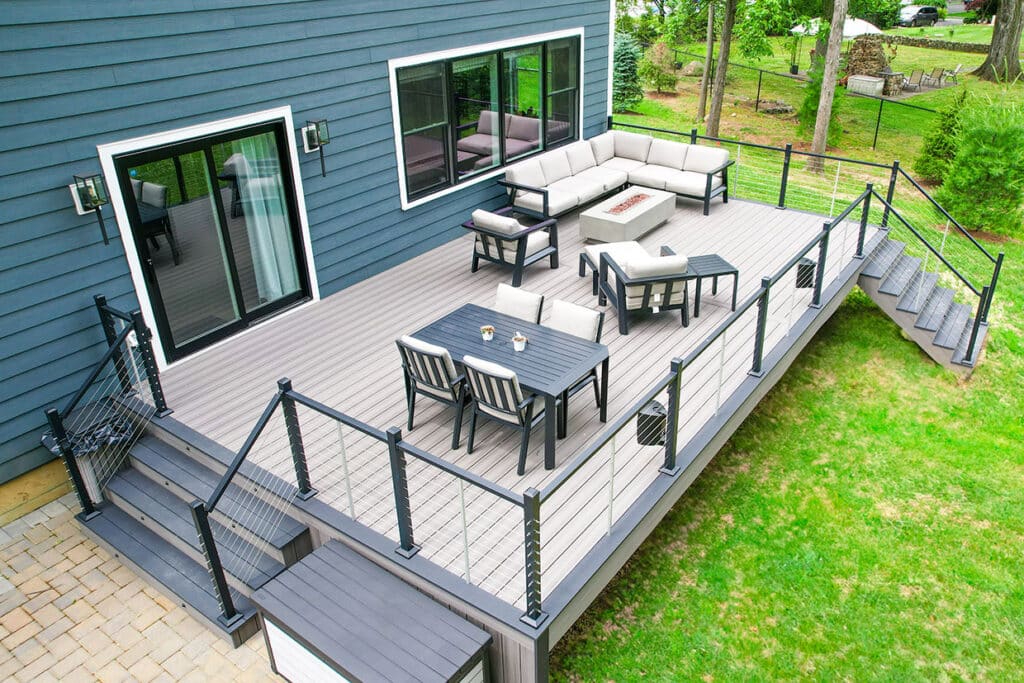
Our team completed a new 600-square-foot deck in Perkasie, PA, with a built-in outdoor kitchen, aluminum railings, and ambient LED lighting.
Project Detail | Completed Scope |
Location | Perkasie, PA |
Project type | New 600-square-foot deck |
Main feature | Built-in outdoor kitchen |
Railing | Aluminum railings |
Lighting | Ambient LED lighting |
The large footprint provides room for cooking, hosting gatherings, and using the deck after sunset. On new decks with permanent built-in features, any required drainage and waterproofing details should be coordinated during the design stage rather than treated as a surface upgrade after construction.

Surface Protection for Wood Decks
Wood decks require routine protection because the boards remain exposed to rain, moisture, and changing outdoor conditions. Cedar and redwood are naturally resistant to decay, but they still need to be cleaned, inspected, and maintained.
Maintenance intervals vary by finish type, exposure, foot traffic, and surface condition. The USDA Forest Products Laboratory’s guidance on finishes for wood decks notes that a water-repellent preservative may last about one year on exposed surfaces, while pigmented finishes can provide longer service. The deck should therefore be inspected rather than refinished on a fixed schedule alone.
Homeowners can compare deck finish options for surface protection before selecting a product. Stain, paint, and sealer serve different purposes. The appropriate option depends on the wood, the previous coating, the desired appearance, and the amount of maintenance the homeowner is prepared to complete.
A sealer helps limit water penetration. Stain provides protection while changing or enhancing the appearance of the wood. Neither product can repair rot, correct poor drainage, or secure damaged boards.
How to Prepare and Seal Wood Deck Boards
Correct preparation is essential. Applying a new stain or seal over dirt, damaged wood, or trapped moisture can conceal a problem without resolving it.
1. Inspect the Deck
Inspect the boards for cracks, movement, discoloration, and visible rot. Check for loose screws, corroded fasteners, and areas where water collects. Examine the fascia and trim, and mark any soft or discolored areas that require closer evaluation. Small holes or channels in the wood may indicate activity from wood-boring insects.
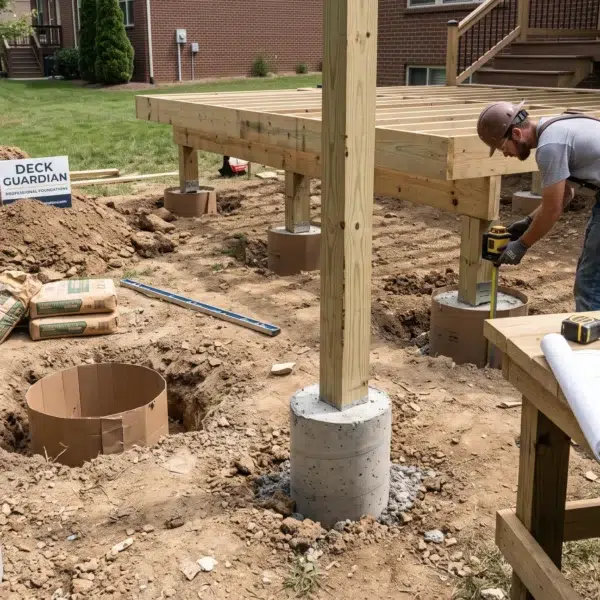
The inspection should include accessible joists, posts, and other parts of the substructure. Structural concerns should be evaluated before cosmetic surface work begins.
2. Complete Necessary Repairs
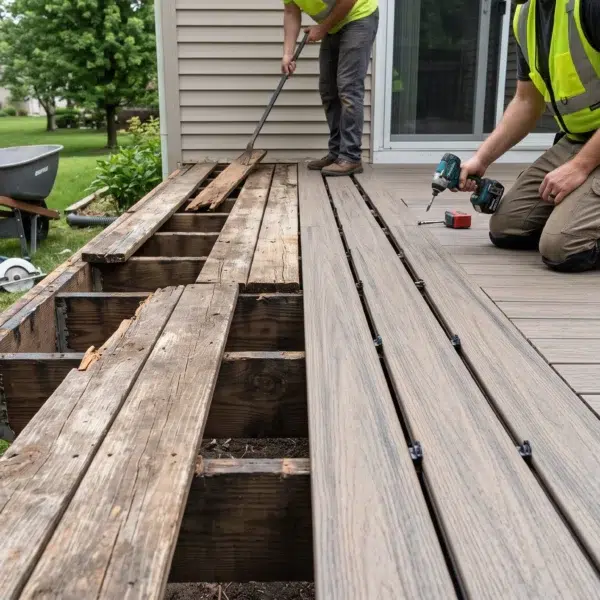
Secure loose boards and determine whether damaged areas can be repaired or require replacement. Measure and cut replacement boards so they fit correctly without blocking the drainage gaps. A new finish should not be used to cover soft wood, active rot, or movement affecting the deck’s integrity.
3. Clean the Surface
Remove furniture, planters, and debris before cleaning. Pay attention to the spaces between boards because blocked gaps can interfere with drainage.
Use a cleaning method suitable for the deck material. Once the surface is clean, inspect it again for cracks or damage that may have been hidden by dirt.
4. Let the Wood Dry
The wood is ready for stain or sealer only after it has dried completely. Applying a coating to damp boards can trap moisture beneath the finish instead of protecting the surface.
5. Apply the Finish
Apply the selected stain or sealer consistently across the clean, dry surface. Continue to inspect and maintain the deck after application because no surface finish provides permanent protection.
How Drainage Helps Prevent Water Damage
Surface protection cannot control water that remains trapped on or below the deck. Drainage must move water away from the boards, framing, posts, and surrounding ground.
The required slope depends on the deck assembly, waterproofing system, applicable code, and manufacturer’s installation instructions. It should be established during construction so the finished surface provides positive drainage. Adding more sealer cannot correct a surface that fails to direct water properly.
Under-deck drainage systems can channel water away and reduce moisture buildup below the boards. On elevated decks, this approach may also create more usable outdoor space underneath.
Drainage planning should account for standing water, blocked gaps, discharge near posts, and sprinklers that repeatedly wet the same area. Fasteners also need inspection because moisture-related corrosion can weaken connections over time. The American Wood Council’s residential wood deck construction guide specifies corrosion-resistant fasteners, joist hangers, and ledger flashing for the construction details covered by the guide.
Waterproof Membranes and Ventilation
A waterproof membrane forms a continuous barrier over the deck substrate. Unlike a surface seal, the membrane is intended to block water from reaching the structure below.
Waterproof membranes may last approximately 15 to 25 years and provide a seamless surface. EPDM rubber membranes can be used in low-slope applications, while high-density polyethylene is another waterproof and durable material.
The membrane must work with the deck’s slope, drainage paths, and edge details. Proper ventilation beneath the membrane is also necessary. Without airflow, moisture can remain trapped below the surface.
How Composite, PVC, and Aluminum Decking Handle Moisture
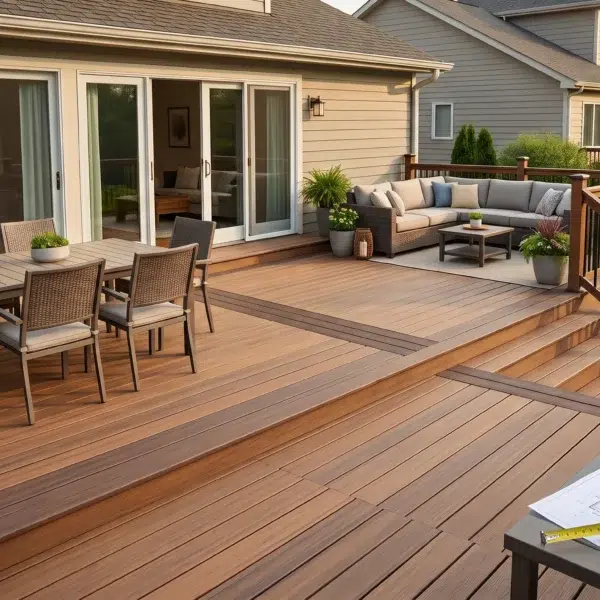
Manufactured decking includes composite, PVC, and aluminum products. These options generally require less routine surface treatment than traditional wood, while capped composite and PVC decking can also be used alongside drainage systems to improve moisture protection.
Composite decking can last more than 25 years with proper care. PVC decking is manufactured with protective polymer caps, while aluminum decking provides a waterproof and fire-resistant option.
These materials reduce some of the sealing and staining maintenance associated with wood, but they do not eliminate the need for drainage. Water must still have a controlled path away from the surface and substructure.
Deck Maintenance Tips to Prevent Rot
Annual inspections can identify maintenance and resurfacing needs before damage becomes more extensive. Homeowners should:
- Keep the deck and spaces between boards clean.
- Inspect the boards for cracks, movement, and rot.
- Check the condition of the stain or seal.
- Look for corroded or loose fasteners.
- Confirm that drainage paths remain open.
- Inspect accessible joists and posts for moisture.
- Repair minor damage before applying another finish.
- Keep sprinklers from repeatedly soaking the deck.
If the boards continue to deteriorate after regular sealing, the underlying concern may involve drainage, ventilation, or the substructure. If recurring dampness, movement, or soft wood makes you worry about a deeper problem, the next step is to contact a deck professional before applying another finish.
When to Consider Deck Resurfacing
Resurfacing may be appropriate when a deck has minor surface damage but its supporting structure remains suitable for continued use. The process can include cleaning, securing fasteners, repairing or replacing individual boards, and installing a renewed surface. Choosing resurfacing may save money compared with full replacement, but only when an inspection confirms that the existing framing can remain in service.
Professional deck resurfacing can extend the lifespan of an aging deck without replacing the entire structure. However, widespread rot, movement, or moisture damage affecting the joists and posts requires a broader professional assessment.
Frequently Asked Questions
Can sealer make a wood deck completely waterproof?
Sealer protects the wood surface, but it may not create a complete waterproof system. Drainage, slope, ventilation, or a membrane may also be required.
How often should wood decks be sealed?
There is no universal sealing interval for every wood deck. The schedule depends on the finish, exposure, foot traffic, and surface condition. Inspect the deck regularly and reapply the finish when its protective performance begins to deteriorate.
Is composite decking waterproof?
Capped composite deck boards are moisture-resistant, but a standard installation is not a watertight system because water can pass through the gaps between boards. A separate drainage or waterproofing system is required when the framing or space underneath needs to remain dry.
When should a deck be resurfaced?
Resurfacing is generally suitable for minor surface damage when the supporting structure remains usable. Structural rot requires a more extensive evaluation.