Table of Contents
ToggleReplacing deck boards with composite is possible when the existing frame is structurally sound and compatible with the selected decking. Before ordering materials, check the framing and connections, joist spacing and alignment, and requirements for fasteners, stairs, and railings. These checks determine whether the project can remain a resurfacing job or needs more extensive repairs or rebuilding.
At Deck Guardian, we offer deck resurfacing across our service areas in New Jersey and Pennsylvania. Resurfacing retains suitable framing while replacing the decking and, where included in the scope, railings or stairs. This guide explains what to review before deciding which parts of your existing deck can stay.
Can Your Existing Deck Support Composite Deck Boards?
Trex’s resurfacing guidance calls for checking the substructure and exposed hardware against its installation requirements. Assess both condition and product compatibility:
- Condition: Is the structure sound enough to retain?
- Compatibility: Does its layout provide the support required for the replacement product?
Before installing composite decking, establish which components can support the selected composite boards, which need further investigation, and which require repair or replacement.
Inspect Beneath the Wood Deck Boards: Frame and Ledger
The inspection should extend beyond the wood deck boards. TimberTech’s deck inspection guide identifies concerns such as wood rot, ledger board separation, loose or damaged fasteners, and unstable railings as reasons to examine the supporting construction carefully.
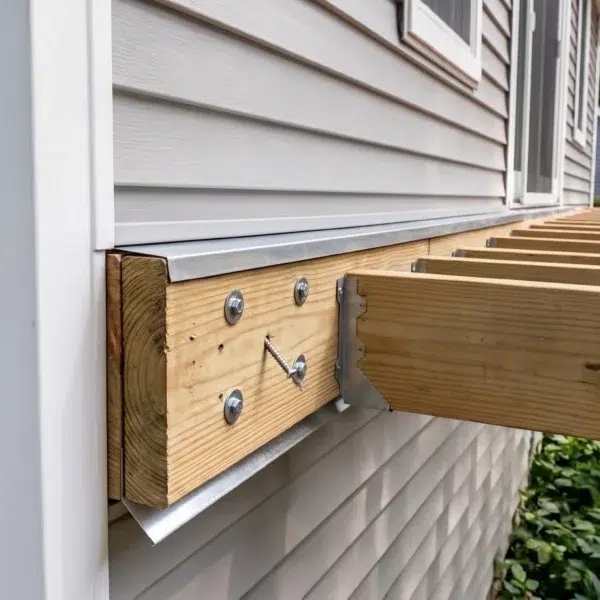
For an attached deck, include the ledger board and its connection to the house. Check the ledger board for soft spots and water damage. Ask how any damage, loose fasteners, and changes in the ground around supports will be assessed for their effect on structural integrity and safety.
Distinguish Surface Wear From Structural Problems
Surface wear and tear on real wood does not establish the condition of the frame beneath it. If boards warp or show signs of rot, ask whether damage is limited to the decking or extends to the supporting structure.
The proposal should identify signs of moisture damage or movement, inspected components, and any concealed areas that need further assessment.
Plan for a Second Inspection After Removal
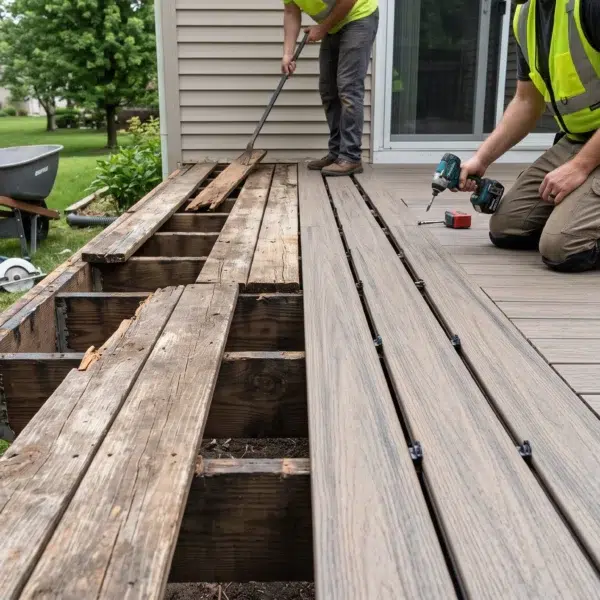
Trex’s resurfacing sequence includes checking exposed framing and hardware after removing the old surface. Ask how the crew will remove old nails and use a pry bar or other tools without damaging retained framing or leaving scratch marks on surrounding finishes. Before removal begins, agree on how newly exposed damage will be documented, how repair costs will be quoted, and how any additional work will be approved.
Match Joist Spacing to the Selected Composite Deck
Joist spacing requirements vary by product, board direction, and stair application. Use the installation guide for the exact decking selected.
Before purchasing, confirm the following details against the selected product’s installation guide:
Item | What to establish |
Product | Manufacturer, collection, and board profile |
Layout | Direction of the deck boards and any borders |
Existing support | Measured joist spacing |
Required changes | Additional support identified from the applicable guide |
Stairs | Requirements for the chosen tread product |
When replacing wood deck boards with composite, record joist spacing measurements from the center of one joist to the center of the next, then compare them with the selected product’s support requirements.
Check Your Current Deck for Uneven Joists
Support spacing and surface alignment are separate checks. TimberTech’s joist spacing and blocking guide recommends using string lines to identify alignment problems, including crowned joists, before installation.
The proposal should identify any uneven areas and explain how they will be corrected. Confirm whether that preparation is included in the resurfacing price or quoted separately before approving installation.
Confirm Fasteners, Gaps, and Edge Details
Composite decking is typically installed using hidden fasteners or color-matched screws. The board profile, fastening system, and application must work together. Follow the selected manufacturer’s instructions for compatible fasteners and installation details.
Discuss three details before work begins.
Fastening system. Composite boards require specific fasteners to avoid warranty issues. Identify the approved clips, screws, or plugs for the selected boards. Confirm how the contractor will attach the first and last rows and handle any locations where the main fastening system cannot be used.
Gaps. Ask which instructions govern spacing between boards, at board ends, and beside adjoining structures. Avoid copying the gaps from the old wood decking.
Material and perimeter finish. Composite decking offers a variety of colors and finishes. Many composite decking options use recycled materials. If recycled content matters to your selection, compare the manufacturers’ published product information. Choose edge, fascia, and border details that fit naturally with the house, and include them in the scope before work begins.
Composite deck boards can retain heat, making surfaces hot in direct sunlight. Trex’s guidance on surface heat notes that even its heat-mitigating decking can get hot in direct sun on hot days. Before choosing a product and color, consider sun exposure and how you plan to use the deck barefoot.
Review Stairs and Railings Before Replacing Wood With Composite
Check stair supports against the selected tread product’s requirements, and verify finished dimensions after replacing wood with composite. Trex’s stair guidance treats support spacing and approved fasteners separately from the main deck.
Railings need a similarly explicit decision. Will they remain, be temporarily removed, or be replaced? Ask how posts and connections will be inspected and what work is included.
For projects in our New Jersey and Pennsylvania service areas, we handle required construction permits and inspections as part of our process. Confirm which local building codes and approvals apply to your resurfacing scope, including changes to stairs, railings, or framing.
Put the Installation Process and Cost in Writing
At Deck Guardian, we provide a detailed contract and specification sheet before construction begins. For a resurfacing project, review the complete scope for:
- Removal and disposal of wood deck boards.
- Inspection of the exposed substructure.
- Included framing preparation and separately priced contingencies.
- Decking, fasteners, fascia, and finishing details.
- Work involving stairs, posts, and railings.
- Required approvals and responsibility for arranging them.
Compare quotes against that scope. A lower cost may reflect different inclusions rather than a more efficient installation process.
One of the benefits of composite materials is reduced decking maintenance compared with traditional wood. When comparing maintenance costs, account for any staining, sealing, or painting that retained wood components may need. Our guide to wood and composite deck maintenance covers seasonal care. Follow product-specific cleaning instructions for mold or mildew, and consider how retained framing affects the upgrade’s longevity.
We help homeowners plan a deck resurfacing upgrade around their existing outdoor space. Contact our team at Deck Guardian to schedule a consultation, review your property, and discuss your goals for the outdoor living space.
FAQ
Can I keep my wood deck frame?
Possibly, if the frame is in good condition and meets the selected decking’s support requirements. An assessment should establish whether resurfacing, framing repairs, or a new deck is appropriate.
Does every composite deck require 16-inch joist spacing?
No. Requirements vary by product and application. Use the installation guide for the exact board profile, layout, and stair configuration.
Should the contractor inspect before or after removing boards?
The planning assessment comes first. Exposed areas should also be checked after removal, with an agreed process for approving any newly identified work.
Can I reuse the existing screws?
Do not assume they are suitable. Confirm the approved fastening system for the replacement boards and separately assess the condition of retained structural hardware.
Will replacing the surface eliminate all maintenance?
Do not treat the whole structure as maintenance-free. Follow the selected product’s care instructions and ask what upkeep remains for retained components.