Composite vs. Wood Decks: Which Material Is Best for Your New Jersey Home?
Choosing the right decking material is one of the most critical decisions for your outdoor living space. Your choice impacts not only your home’s curb appeal and property’s value, but also ongoing maintenance and how much you’ll enjoy your deck over time. The debate between composite vs wood decks is especially relevant in New Jersey, where the climate and weather conditions can be quite harsh on outdoor surfaces.
At Deck Guardian, we’ve built and resurfaced hundreds of decks across Somerset, Middlesex, Monmouth, and Bergen Counties, allowing us to witness firsthand what materials thrive under New Jersey’s weather and which ones falter. In this comprehensive guide, we explore the pros, cons, costs, and other key factors to help you choose the best materials for your next deck project—whether that’s composite decking or natural wood.
What Is Composite Decking?
Composite decking materials are engineered from a combination of wood fibers and recycled plastic. This man made material is designed to mimic the look and feel of real wood but comes with enhanced durability and easier upkeep. The boards are resistant to moisture, rot, and insect damage, making them highly suitable for New Jersey’s mixed climate that includes humid summers, icy winters, and temperature swings.
Unlike natural wood decks, composite decks require minimal upkeep — no annual sanding, staining, or sealing, just occasional cleaning to keep the surface looking new. High-quality composite products often incorporate UV inhibitors and textures that resist slipping even in wet conditions or icy winters.
Popular brands like Trex, TimberTech, and Fiberon offer composite deck boards in a wide range of colors, grain patterns, and finishes that allow you to match your aesthetic preferences and complement your home’s architecture perfectly.
The Case for Wood Decks
For many homeowners, nothing beats the warmth and authenticity of natural wood. The unique natural grain, aroma of cedar, and the feel of natural lumber underfoot create an atmosphere many desire in their outdoor oasis. Popular woods include pressure treated pine (common in NJ), cedar, and exotic hardwoods like ipe, each with distinct characteristics and maintenance needs.
However, natural wood decks come with a commitment to regular staining, sealing, and repair. Without this ongoing care, wood decks are vulnerable to cracking, warping, mold, and deterioration caused by sun exposure, frost, and moisture. This level of maintenance is a critical decision factor for homeowners balancing budget and lifestyle.
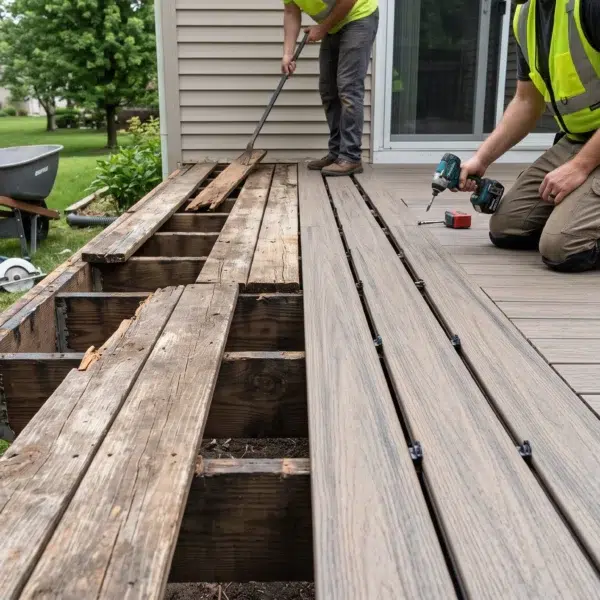
In the battle of composite vs wood decks, wood usually has a lower initial cost but higher long term costs due to upkeep, while composites tend to have a higher upfront price but less future expense.
Durability & Weather Resistance in New Jersey
New Jersey’s climate can be tough on decks, posing challenges that test the material quality and durability of decking options:
-
Composite decking materials are designed to resist UV exposure, moisture damage, and temperature changes better than wood. Their resistance to rot, fading, and insect damage means they last longer with minimal upkeep.
-
Natural wood decks look beautiful but require vigilant care to withstand NJ’s icy winters, humid summers, and frequent rainfall. Without regular sealing and refinishing, wood suffers from staining, mold growth, and surface wear.
Many homeowners near the Jersey Shore find composites’ low maintenance and durability especially advantageous in salty, humid air.

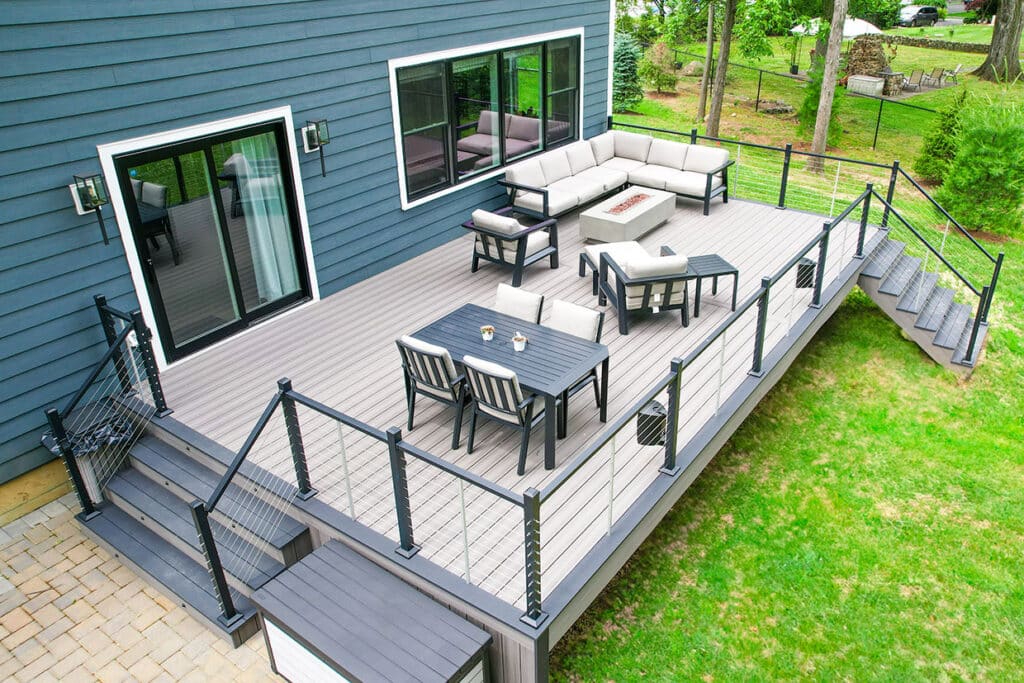
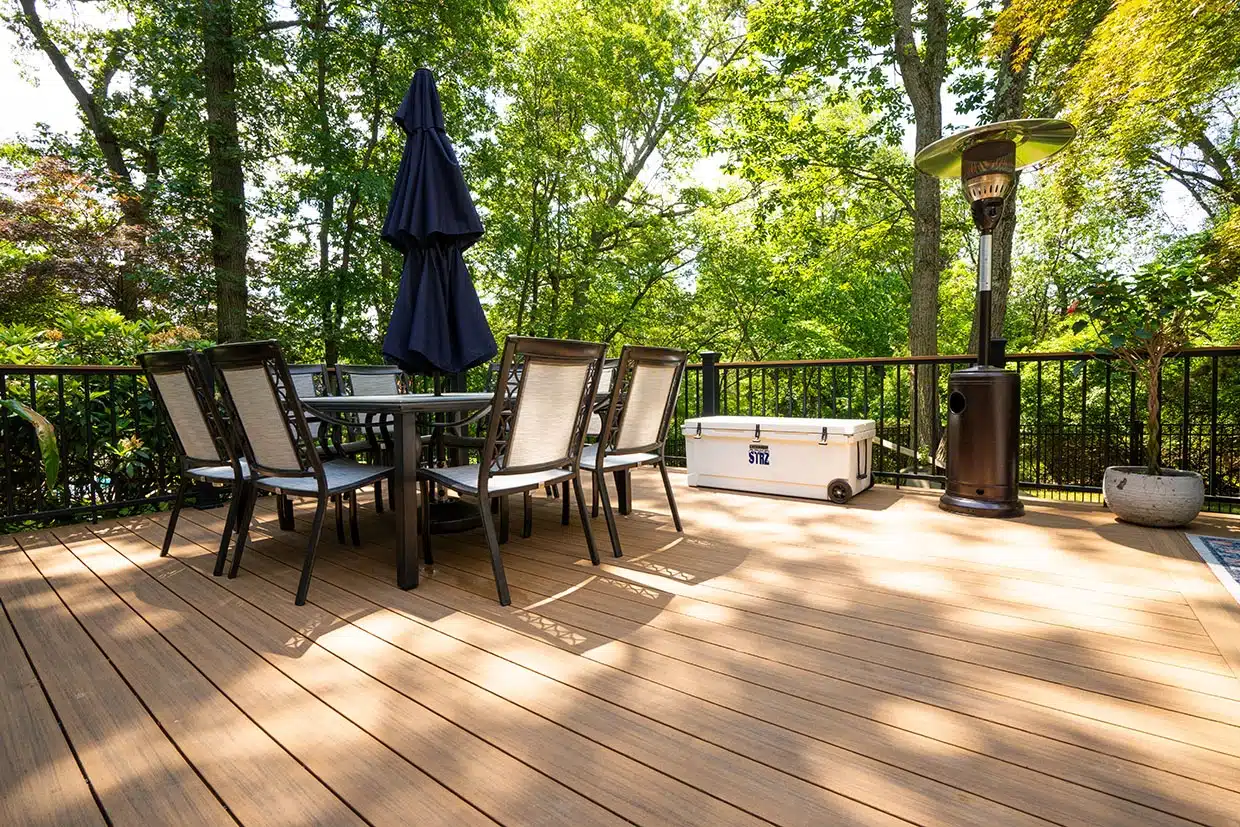
Enjoy a spacious and low-maintenance composite deck, perfect for dining, lounging, and grilling.
Cost Comparison: Composite vs Wood Decks
| Material | Initial Cost | Maintenance | Average Lifespan |
|---|---|---|---|
| Pressure Treated Wood | Lower | High (annual care) | 10–15 years |
| Composite Decking | Higher | Low (periodic cleaning) | 25–30+ years |
While wood costs less upfront, frequent expenses for sanding, staining, and board replacement add up, often exceeding savings over time. Conversely, investing in composite decking is a cost-effective decision over the deck’s lifetime due to significantly lowered maintenance and repair costs.
Want a more specific estimate? Click here to get your custom deck quote.
Aesthetics and Customization
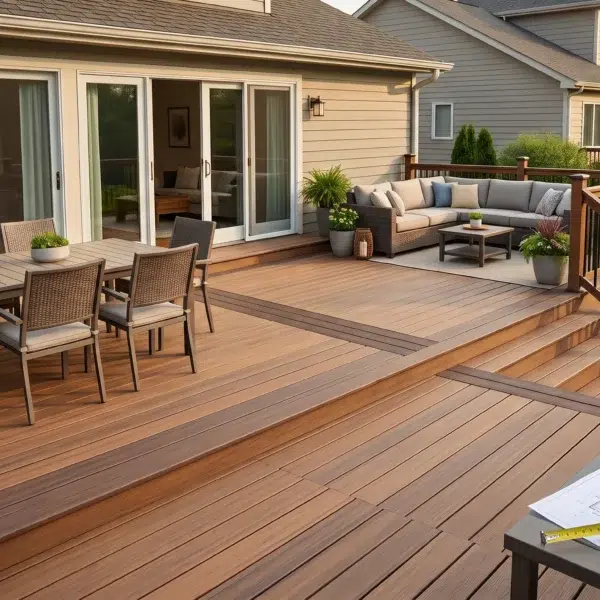
Many homeowners are drawn to the natural beauty and rustic character of wood’s natural grain and texture. Composite decking has made great strides in replicating this, offering boards with embossed grain, rich tones, and various colors that blend naturally with landscaping and home’s architecture.
If customization and a seamless look appeal to you, composite products often include hidden fasteners and compatible railing systems that enhance the finished design.
Need inspiration? Check out our completed custom deck projects showcase in real-time and find your deck inspiration.
Sustainability: Which Is More Eco-Friendly?
If sustainability is part of your decision, composite decking has a strong case:
- Made from recycled materials
- Lasts twice as long as wood
- No need for toxic stains or sealants
On the flip side, wood is biodegradable and comes from a renewable resource—as long as it’s harvested sustainably. Look for FSC-certified wood options if you go that route.
Maintenance: The Real Deciding Factor
Maintenance preferences play a pivotal role when deciding between composites and wood decks:
-
Composite deck owners enjoy low maintenance surfaces that only require occasional washing and mild cleaning products.
-
Wood decks demand continual attention with sanding, sealing, and staining to maintain their beauty and prevent damage caused by moisture and UV rays.
For homeowners who want to minimize regular upkeep and enjoy their deck year-round, composites are usually the perfect solution.
Choosing the Best Deck for Your New Jersey Home
Composite decks are generally recommended if you want durability, ease of maintenance, and longevity, especially in humid or coastal areas prone to insect damage and harsh weather conditions. On the other hand, if you cherish the authentic look and smell of natural wood, and are willing to commit to the maintenance, then wood decks may be best for you.
If budget is a major concern, wood decks may offer a lower initial cost, but composite decking offers the best financial savings in the long run due to reduced maintenance and longer lifespan.
Still unsure? Get a free estimate from Deck Guardian and let’s talk through your options together.
Why Trust Deck Guardian?
We’re not just deck builders—we’re specialists who understand the factors affecting NJ decks to deliver exceptional results. With years of experience serving homeowners across New Jersey, including the harsher coastal climates of the Jersey Shore, we’ve mastered building decks that withstand heavy foot traffic and extreme weather.
We offer transparent pricing, custom designs, and expert installation, making your project easy from start to finish. Our team works closely with homeowners to match design preferences and deck materials for durable, beautiful results.
Final Thoughts
Whether hosting a BBQ or enjoying quiet mornings, your deck should be a place you love. In the composite vs wood decks debate, the best choice depends on your lifestyle, budget, and aesthetic needs—all influenced by New Jersey’s weather.
For personalized guidance on which deck material suits your home and budget, request a free quote from Deck Guardian today. Let’s build a deck you’ll enjoy for decades to come.
That’s what we do best.
Let’s build something great together.