Protect & Prepare Your Deck for Winter: How to Winterize a Deck in New Jersey — An Easy Guide
As the warm fall air gives way to the cold temperatures and harsh winter weather of New Jersey, homeowners face the challenge of protecting their outdoor space from extreme conditions. Winterizing your deck is crucial not only for maintaining its wood’s appearance but for preserving its structural integrity throughout the winter months. Proper winter care helps your deck remain safe and beautiful for years to come.
Deck Guardian brings over a decade of expertise in seasonal deck care suited to New Jersey’s winter season. This step by step guide will walk you through how to winterize a deck in New Jersey effectively, focusing on inspection, thorough cleaning, protection, and maintenance tailored for both natural wood decks and those with composite decking.
Why Winterize Your Deck or Porch?
New Jersey winters often bring freezing temperatures, heavy snow, and ice storms that can cause serious moisture buildup and ice accumulation on your deck surface. Ignoring winter care can result in:
-
Structural Damage: Snow and ice trap moisture under loose deck boards or cracked boards, causing mold and mildew growth, rot, and weakening your deck’s structure. Moisture penetration accelerates wood decay leading to cracked boards and costly repairs.
-
Safety Hazards: Ice buildup combined with loose railings and weakened boards creates slippery, unsafe conditions that increase fall risk during winter months.
-
Deck Furniture Damage: Outdoor furniture left exposed to winter weather suffers from mildew growth and wear, reducing its lifespan.
Preparing your deck for winter prevents moisture damage and helps maintain a well maintained deck that is ready for spring enjoyment. Whether you have an existing wood deck or composite decking, winterizing ensures it can withstand cold temperatures and freezing conditions.

Step-by-Step Guide to Winterizing Your Deck
1. Inspection and Repair
Thoroughly inspect your deck to identify loose nails, loose railings, cracked boards, or other debris that could trap moisture or worsen under heavy snow:
-
Check the underside as well, using a flashlight to diagnose hidden structural issues with joists or beams.
-
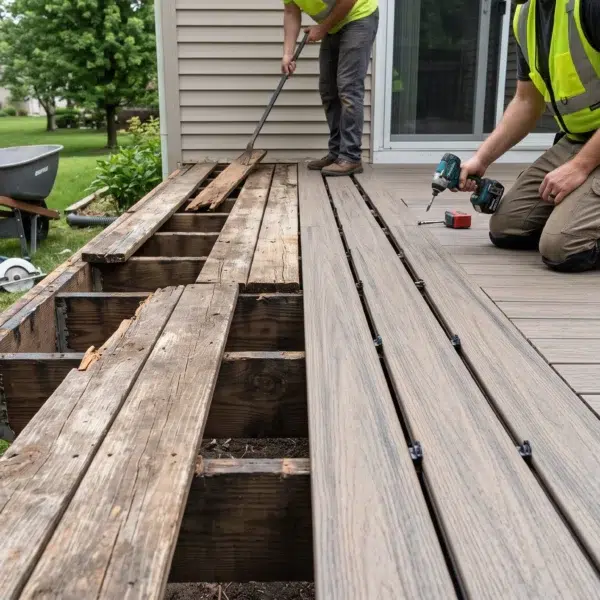
Repair or replace weakened boards to maintain the deck’s structure during winter.
-
Pay attention to deck boards showing signs of mold and mildew growth, as these areas need extra cleaning.
2. Cleaning Your Deck
Cleaning your deck before winter is critical:
-
Sweep off leaves, dirt, and other debris thoroughly.
-
Use a deck safe cleaner suited for your deck material, like a pressure treated wood cleaner or one formulated for composite decking.
-
Performing this on a cloudy day will avoid cleaner evaporation.
-
Make sure the deck surface is completely dry before proceeding.

3. Protecting the Surface
Apply a high-quality, water-repellent sealant to prevent moisture penetration during winter:
-
Choose a product designed for winter weather and extreme temperatures that also offers UV protection to maintain your wood’s appearance.
-
Seal all edges, ends, and cracks thoroughly, especially around loose boards and railings, to prevent moisture buildup under the surface.
4. Covering and Protecting the Deck
If you don’t use your deck during the winter months:
-
Use breathable weatherproof covers or deck covers to protect it from heavy snowfall and ice storms.
-
Secure the covers well to prevent blowing debris or moisture traps.
-
Elevate the decking slightly with pallets or spacers to encourage airflow, preventing mold and mildew growth under the cover.
5. Snow and Ice Removal
To protect your deck during winter conditions:
-
Remove snow promptly using a plastic snow shovel or plastic shovel to avoid scratching or damaging the deck surface.
-
Avoid metal tools or rock salt, as they can cause permanent damage to wood decks and degrade composite decking finishes.
-
Apply a thin layer of cooking oil on the shovel blade to help prevent snow from sticking.

6. Winter Care for Deck Accessories
-
Store outdoor furniture indoors or cover it with weatherproof materials.
-
Ensure any cushions or fabrics are clean and completely dry before storing in sealed boxes with moisture absorbers like silica gel.
-
Cover items that can’t be moved to prevent mildew growth caused by moisture trapped in fabrics.
7. Considering Upgrades
For long-term deck winter protection, consider installing or resurfacing with composite decking, which requires less maintenance and offers excellent durability against freezing temperatures and moisture damage.
Deck Guardian offers professional advice and resurfacing services tailored to your needs and budget. Sample different composite materials before fully committing to see which best withstands New Jersey’s winter weather.

Winterize Your Deck with Deck Guardian
Winterizing your deck in New Jersey is essential to avoid costly repairs and maintain a safe, beautiful outdoor living space. Proper deck winterization protects your investment from moisture damage, ice accumulation, and harsh winter weather effects.
Don’t wait for the snow and ice to arrive. Contact Deck Guardian today for expert inspections, repairs, and seasonal maintenance. Whether maintaining an existing deck or upgrading to low-maintenance composite decking, our team is ready to prepare your deck for winter with trusted, professional care.