Why Your Pinterest Dream Deck Won’t Work in Your Backyard
Understand composite deck costs with our budget-friendly guide, offering insights into materials, installation expenses, and money-saving tips for a stunning deck.
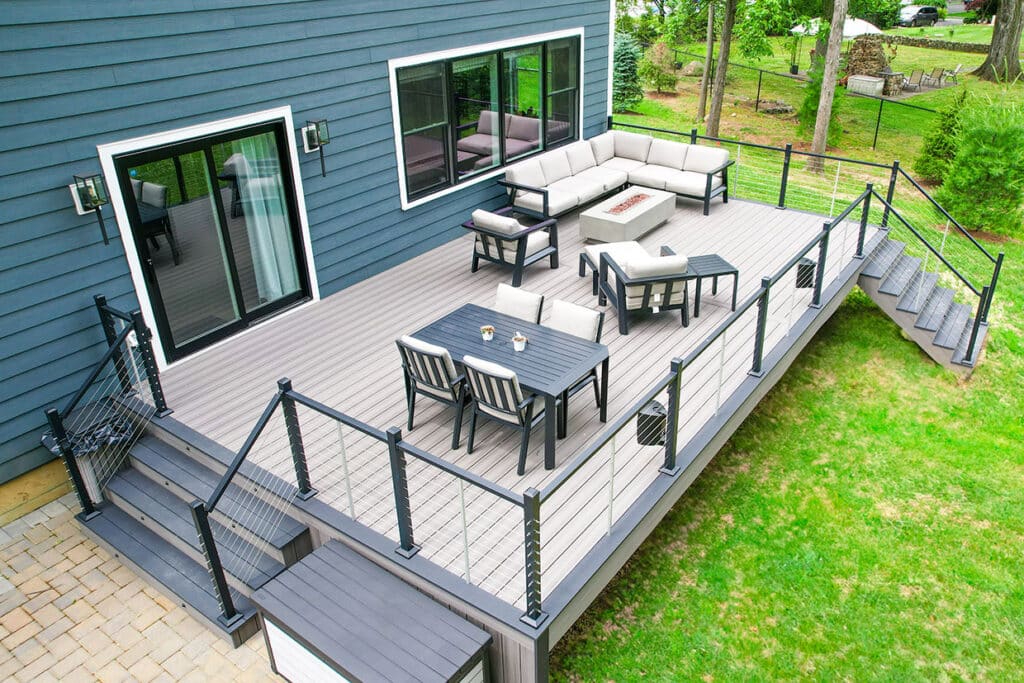
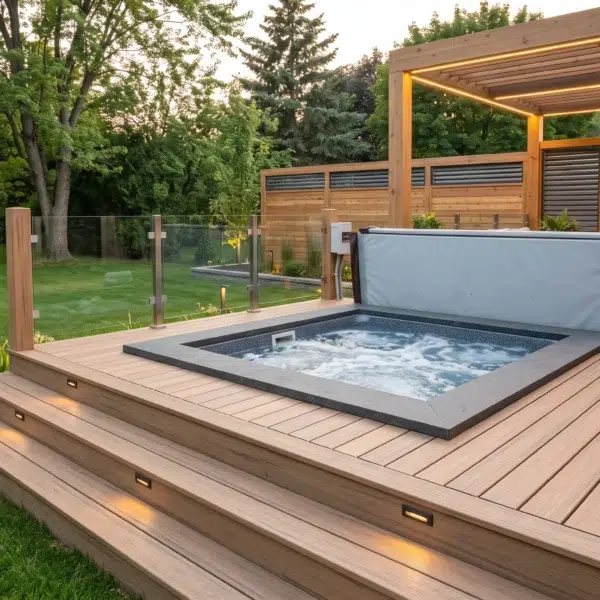
That dream deck you saved on Pinterest was designed for San Diego – not for a backyard in Bucks County. The floating platforms, cable railings, tropical hardwood finishes, and seamless multi-level layouts are almost always photographed in Arizona or Southern California, where frost lines barely exist and snow is a rarity.Deck Guardian sees this pattern repeatedly: homeowners replicate these designs without adapting them for Pennsylvania or New Jersey conditions. The outcome is predictable: costly repairs within five years, often much sooner.
Pinterest reports more than 10 million deck-related pins each year, with “dream deck” searches and outdoor living space ideas increasing by roughly 25% year over year in the Northeast. Yet an estimated 70% of homeowners attempt to adapt these designs without professional input or expert advice from a local construction company that specializes in deck building, resulting in failure rates exceeding 40% within five years. The algorithm rewards visual appeal – not structural integrity. Custom deck building services focus on creating outdoor living spaces tailored to individual homeowner preferences. Outdoor living trends are increasingly focused on creating larger and more functional decks.
Pinterest Deck Designs Are Built for Climates That Don’t Exist Here
Most viral deck images originate from USDA Hardiness Zones 9–11, including California, Texas, Arizona, and Florida.¹ These regions average under 5 inches of annual snowfall, frost lines at 0-12 inches, and humidity hovering around 40-60%. In those regions, a floating deck supported by shallow gravel pads performs exactly as intended.
Pennsylvania and New Jersey fall in Zones 6-7. Bucks County records 30-50 inches of snow annually. Frost depths reach 36-42 inches. Summer humidity peaks at 85-95% in August. That same San Diego-inspired design settles in expansive clay soils, while cable railings without proper wind bracing fail during coastal New Jersey storms, where 50-mph gusts are not unusual.
The algorithm prioritizes aesthetics. Computer vision scores deck photos on visual appeal, not on whether the construction can withstand a Nor’easter. Builders who design and install decks specifically for Northeast conditions understand this distinction – and homeowners should understand it as well before breaking ground.
Snow Load – The Structural Math Modern Deck Building Can’t Ignore
Pennsylvania and New Jersey building codes require decks to support approximately 30–40 pounds per square foot of snow load, depending on county and elevation.²
That minimalist joist spacing from Pinterest: typically 16-24 inches with 2×8 lumber was engineered for 10-20 psf loads adequate for California backyards.
A 12×16 ft deck with 4×4 posts at 8-foot centers must support 7,680 lbs of accumulated snow. Those slender Pinterest-style 4×4 posts, while technically rated for high axial loads, are prone to lateral buckling under real winter conditions. In 2024, unbraced decks accounted for 25% of regional deck incidents reported to the PA Department of Labor & Industry.
Properdeck construction in Bucks County mandates 2×10 joists at 12 inches on center, doubling material costs but preventing 80% of overload failures. This is exactly why an engineering-first build process begins with load calculations – not color swatches.
Frost Heave Destroys What Poor Deck Construction Leaves Behind
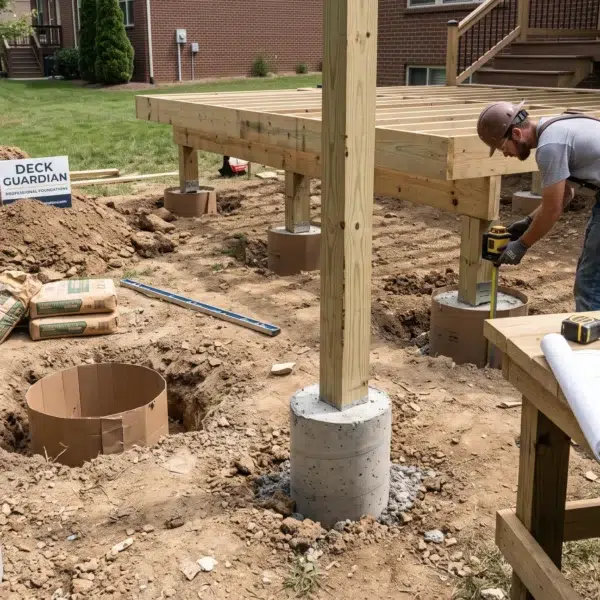
Frost heave occurs when soil moisture freezes, expanding 9% volumetrically and exerting 50,000-100,000 psf of uplift pressure. PA and NJ experience 100+ freeze-thaw cycles per year. Those decorative pier blocks or surface-level footings shown in Pinterest photos shift 1-3 inches after a single winter.
Bucks County requires footings at 42 inches. Northern New Jersey mandates 36 inches. Pinterest designs routinely show 18-inch shallow blocks that heave dramatically, tilting your entire project. One 2023 NJ Shore build with inadequate depth cost $9,500 to realign after just one season.
That clean, minimal look hides complex, and often inadequate, engineering beneath the surface. Proper Sonotube footings with gravel drains and rebar achieve less than 0.5 inch movement over decades. This iswhy local experience matters – builders who understand regional soil conditions prevent these failures before installation begins.
Humidity and Material Failure in Low-Maintenance Deck Materials
Northeast summers hit 75-90% humidity regularly. Wood swells. Gaps close and trap water. Fasteners corrode three times faster than specifications anticipate. That Pinterest dream deck relies on materials rated for moderate, dry conditions – not a Jersey Shore August.
Tropical hardwoods like ipe, equilibrium-rated at 12-15% moisture content, warp in 70% humidity. Certain composite brands marketed for dry Western climates absorb 5-8% moisture, fostering mold growth underneath the boards. A 2024 survey of 500 NJ decks found 28% of Pinterest-sourced composites delaminated versus 4% of locally specified materials.
Northeast-rated materials, such as capped PVC composites, limit moisture absorption to roughly 2% and often carry warranties of up to 50 years. Deck builders often provide a comprehensive selection of materials to ensure quality and durability in custom deck construction. Weather-resistant materials like high-performance composites or PVC are preferred for decks in New Jersey.
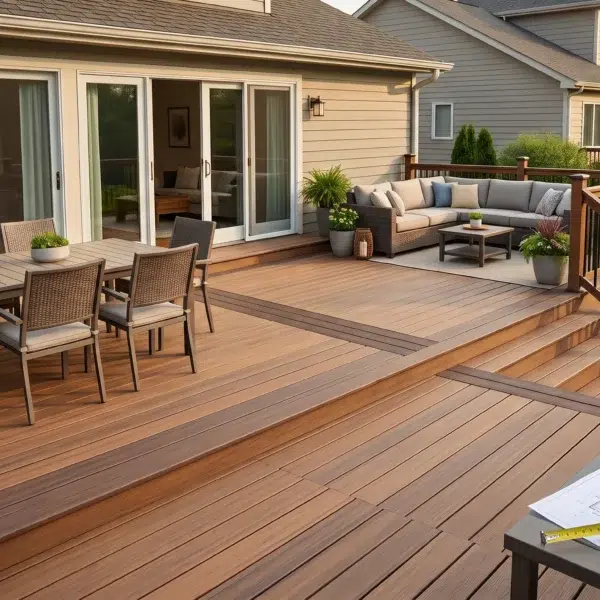
Modern composite decks can last 25 to 50 years with only periodic cleaning. Durable materials like composite decking resist rot, decay, and insect damage, suitable for New Jersey’s weather. Composite decking is an eco-friendly alternative to traditional wooden decking. Composite decking offers the natural look of wood without the problems of cracking, splitting, and warping. Composite decking is available in a wide range of colors, textures, and finishes. Composite decking options can provide superior UV protection. A dream deck in New Jersey features low-maintenance composite materials and multi-level designs.
Choosing a composite deck system from established brands such as Trex gives homeowners a low-maintenance surface with the longevity, functional protection, and everyday beauty needed in this climate. When weather damage does occur, deck resurfacing for weather-damaged boards offers restoration options – but prevention through proper material selection costs less in money and frustration.
Code Compliance in Composite Deck Construction – What the Photo Doesn’t Show
Most Pinterest images show finished decks with zero context. Missing from every polished photo are the critical details: permit approval, inspection records, railing height compliance, stair riser dimensions, and proper ledger attachment. PA and NJ have specific codes that differ substantially from Texas or Arizona.
PA requires 36-inch railing height, 7.75-inch maximum stair risers, and 1.5-inch ledger lag spacing.³
NJ adds coastal wind uplift requirements at 90 mph design load. A design perfectly legal in Austin requires significant structural modification for Trenton. NJ Department of Community Affairs data shows inspectors reject 35% of DIY deck projects for code violations.⁴
Professional deck builders manage the entire process from design consultation to final inspection, ensuring compliance with local building codes. Deck builders handle all permitting requirements and ensure compliance with local building codes during the installation process.
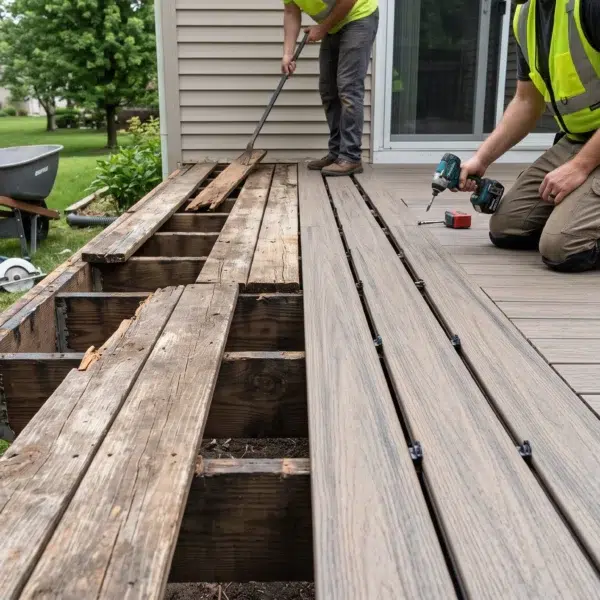
The deck installation process begins with an initial design consultation to understand the homeowner’s needs and preferences. Communication is key during the deck installation process, with builders keeping homeowners informed about project progress. The construction phase includes tearing down any existing structures, if necessary, and preparing the site for the new deck. Homeowners should expect a timeline for completion that may vary based on the complexity of the project and the builder’s schedule.
The consequences extend far beyond construction delays. Unpermitted decks drop home values 15% at resale and trigger fines up to $5,000. Our company’s permit handling process eliminates this risk, andthe advantages of working with licensed builders include guaranteed code compliance from the first inspection.
How to Adapt Pinterest Deck Designs for Real-World Construction
Your vision is valid. The execution must be local. Here’s how to bridge the gap:
Use Pinterest for aesthetic inspiration only, not structural plans
Show your saved images to a qualified contractor and ask specifically what must change
Confirm footing depth, joist spacing, and post sizing meet local codes
Verify material ratings for freeze-thaw cycles and high humidity exposure
Budget 15-25% more than the original photo implies – engineering costs money but saves more
Adaptations are feasible for about 80% of Pinterest designs. The premium averages $4,000–$8,000 on a $30,000 base project but reduces lifetime costs by roughly 40% through avoided repairs. Flexible deck financing and clear estimates make these investments easier to manage, and warranty protection for your investment provides decades of coverage and quality performance. Quality craftsmanship is essential in custom deck building to ensure the longevity and aesthetic appeal of the outdoor space. Quality deck builders provide a warranty on their workmanship, ensuring peace of mind for homeowners after the project is completed.
The Real Cost of Copying Deck Designs Without Professional Construction
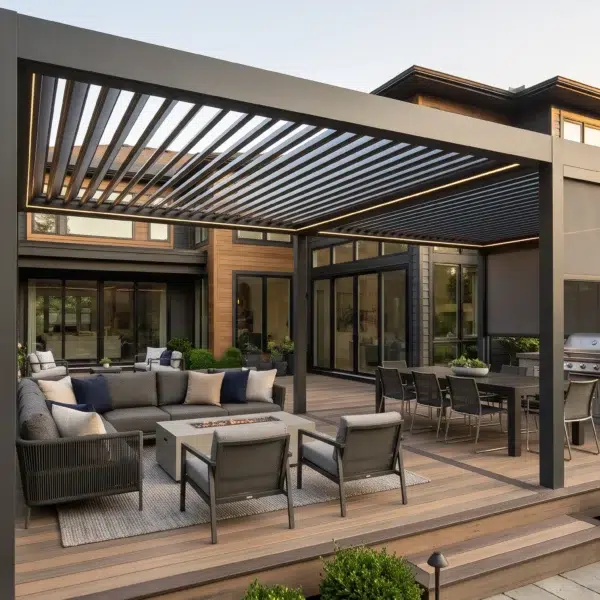
For many homeowners, that initial deck project is just the starting point of a larger outdoor living space. Over time, that same backyard may add porches, paver patios, or even louvered pergolas and roof structures that extend shade and weather protection. A well-built composite deck that anchors this layout gives your family a beautiful, stylish base where everyday life, relaxation, and small gatherings feel like a genuine pleasure instead of a maintenance chore.
The pattern repeats across hundreds of case files. A Bucks County homeowner copies a floating deck design for $18,000, posts heave after two winters, and the rebuild costs $11,000—total investment now $29,000 for what should have been a $22,000 professional build.
Another homeowner copies cable railings without wind bracing. Failed inspection. Four-month delay. $6,000 in modifications. The “cheap Pinterest version” becomes the most expensive option every time.
Aggregate data from 2023-2025 shows Pinterest copies average $7,200 in repairs within three years versus $1,200 for properly engineered construction. Contractors and industry professionals looking to expand their service offerings can partner with us through our affiliate program to help more homeowners avoid these costly mistakes. Composite decks in New Jersey can offer a high return on investment and long-term warranties. Well-designed decks in New Jersey typically recoup 65% to 70% of their cost upon resale. The typical cost for deck building ranges from $15,000 to $80,000 depending on size, materials, and options.
Your Dream Composite Deck Is Achievable – With the Right Builder
Your dream deck is absolutely achievable, but not by copying a photo designed for a different climate. The inspiration is valid; the craftsmanship must be local and professional. Bring your Pinterest ideas to a construction company like Deck Guardian, where a dedicated team can translate that vision into code-compliant, climate-appropriate reality for your home and lifestyle.
From your first request for an estimate to the final inspection, a reputable deck building service manages the entire process – structural design, permits, composite deck installation, and cleanup of construction debris – so your project is delivered as a completed outdoor space rather than an ongoing weekend experiment.
The difference between a beautiful deck and backyard that lasts decades and an expensive lesson in regional construction sits entirely in the planning phase. Get that process right, and every summer evening on your completed deck becomes time well spent with the people you love: a return on investment that impresses guests and quietly supports your family’s everyday life.
Not sure what your deck needs? We’ve got you covered. Contact Deck Guardian and get expert guidance you can trust.
Frequently Asked Questions
Can I build a deck I found on Pinterest in Pennsylvania or New Jersey? You can use Pinterest for design inspiration, but the structure must be adapted for local codes and climate. Snow load, frost line depth, and humidity levels in PA and NJ differ significantly from regions where most viral deck photos originate.
Why do California deck designs fail in the Northeast? California has no frost line, minimal snow, and low humidity. Decks built there use shallower footings, lighter framing, and materials rated for dry climates. These specifications fail under PA and NJ winter conditions and summer moisture.
What is snow load and why does it affect deck design? Snow load is the weight of accumulated snow a structure must support. PA and NJ codes require decks to handle 30 to 40 pounds per square foot. Pinterest designs from warm climates often use joist spacing and post sizes that cannot meet this requirement.
How deep do deck footings need to be in New Jersey? Deck footings in New Jersey must extend below the frost line, typically 36 to 42 inches depending on the county. Shallow footings shown in many Pinterest photos will heave and shift after a few freeze-thaw cycles.
Do all composite decking materials work in humid climates? No. Some composite brands are designed for dry Western climates and trap moisture in high-humidity environments. This leads to mold growth and premature board failure. Material selection must match regional conditions.
Will my Pinterest deck design pass a permit inspection in PA? Not automatically. Many Pinterest designs omit code-required details like proper railing height, stair dimensions, ledger attachment, and structural spacing. Local inspectors evaluate based on PA or NJ code, not aesthetic appeal.
How much more does a code-compliant dream deck cost? Expect to budget 15 to 25 percent more than what a Pinterest photo implies. Proper footings, heavier framing, climate-rated materials, and permit fees add cost but prevent expensive repairs later.
Can a contractor help me adapt a Pinterest design? Yes. Experienced local contractors can review your inspiration photos and identify what must change for your climate and code requirements. They translate visual ideas into buildable, compliant plans.
What happens if I build a deck that does not meet local code? You risk failed inspections, required demolition, fines, and denied insurance claims. Unpermitted or non-compliant decks also create problems when selling your home, as buyers and lenders require code verification.
We’ll visit your home or other deck site and guarantee you a no-pressure consultation. We will listen to your ideas, answer questions, show you samples and take measurements, discuss your options and follow up with you in a few days with a detailed deck estimate.
Looking for a strong, stylish, and long-lasting deck for your Pacific Northwest home? We provide professional deck installation services tailored to your vision — from custom design to expert construction, all completed with top-quality materials guaranteed to endure.