How “value engineering” helps us design your perfect outdoor room.
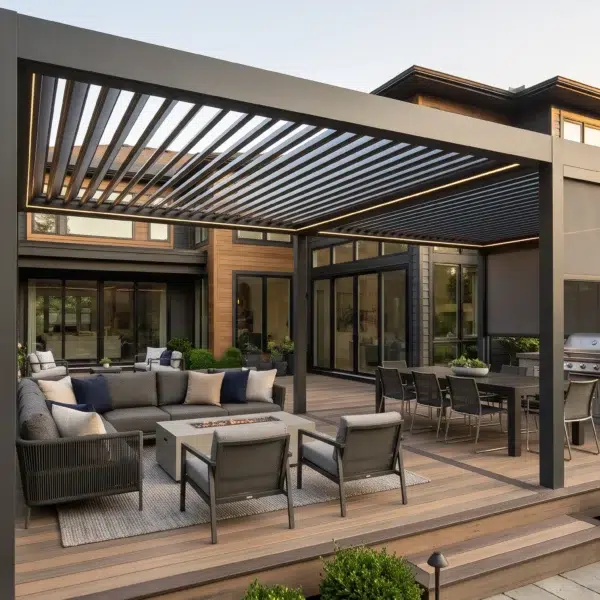
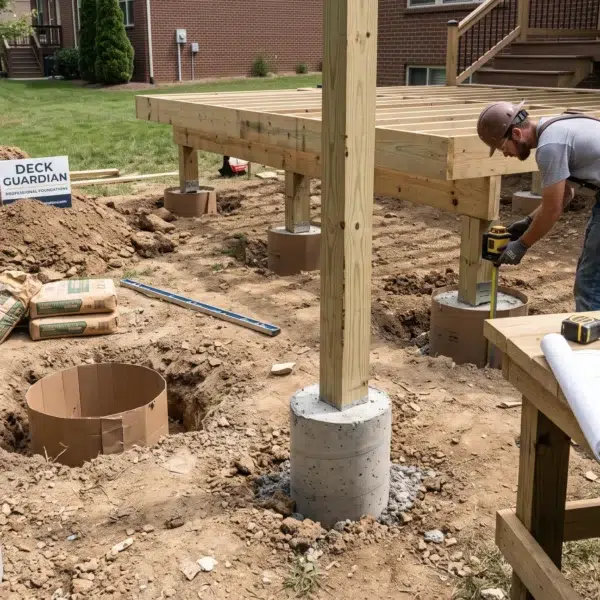
Adding a roof creates a true “outdoor room,” but it also introduces serious engineering challenges: heavy vertical loads, wind resistance, and roof tie-ins. Precise planning is non-negotiable. To navigate these structural challenges without overspending, we need to anchor the design to a clear financial target.
The honest truth about budgets
At Deck Guardian, we consider your budget a vital component of the structural equation. Adding a roof requires balancing the cost of the foundation (the engineering) with the cost of the finish (the aesthetics).
Your financial limit acts as a technical compass. It guides us away from over-engineered spans and points us toward efficient architectural solutions that deliver protection and style without unnecessary structural costs.
Here is how sharing your target number allows us to optimize your covered porch.
1. Navigating structural “sweet spots”
You are dealing with two sets of constraints: deck floor beams and roof beams.
- The cost driver: Deck boards maximize efficiency at 16′, but roof beams typically have a max span of 20′ between posts. Exceeding these dimensions triggers the need for expensive steel reinforcements or extra concrete footings.
- The fix: We design the footprint to hit the “sweet spot” of both lumber and beam limitations. By sticking to efficient dimensions (like a 16′ projection), we avoid custom trusses and heavy steel.
2. Roofline geometry
The shape of the roof is the single biggest cost driver.
- The cost driver: Complex shapes with multiple angles, hips, or curves look elegant but require significantly more labor and framing waste.
- The fix: A clean, straightforward roof design is the most cost-effective. If we know your budget, we design a roofline that complements your home perfectly, saving the “complexity budget” for high-impact interior finishes like a vaulted wood ceiling.

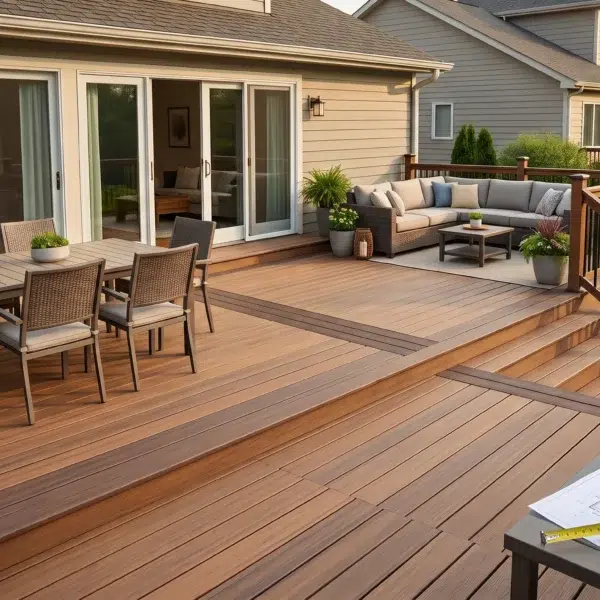
3. Design and shape that work for you
The footprint of the deck dictates the complexity of the roof above it.
- The cost Driver: Elaborate shapes create a domino effect. If you curve the deck floor, the roof framing above usually has to follow suit, compounding the labor.
- The fix: A rectangular deck paired with a clean porch roof is the efficiency gold standard. But efficient doesn’t mean boring. We can add style through architectural details on the posts or subtle decking curves, keeping the expensive roof structure simple.
4. Material balancing act
With a porch, you have double the materials: flooring and roofing.
- The cost driver: You need to budget for both the surface you walk on and the ceiling above you.
- The fix: Value engineering is about trade-offs. We might suggest using standard asphalt shingles to match your home (saving money) so you can allocate those funds toward premium composite decking and a statement ceiling fan.
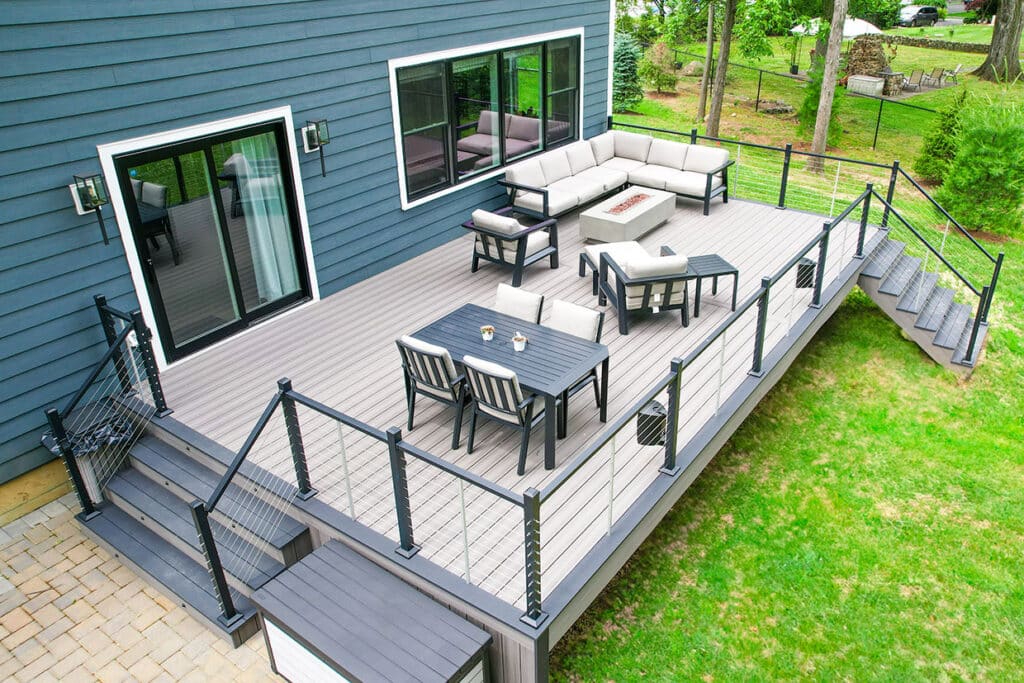
5. Smart stair & railing placement
Covered porches rely on the same standard railing kits as open decks.
- The cost driver: Poorly placed stairs result in “dead zones,” forcing us to cut a full 6-foot or 8-foot railing kit down to a small sliver.
- The fix: We align your stairs with standard kit sizes. This ensures every inch of railing you pay for is actually used, minimizing scrap.
6. Efficient flooring layouts
Because the roof consumes a large portion of the budget, saving money on the floor framing is essential.
- The cost driver: Diagonal floorboards require joists to be spaced closer together (12″ on center), increasing lumber costs.
- The fix: A perpendicular layout is the most efficient method. It uses less framing lumber and generates less waste, freeing up funds for porch amenities like screens or lighting.

7. Phasing the “room” features
A porch needs amenities like fans and lights to feel like a room.
- The fix: If the budget is tight, we prioritize the infrastructure. We rough-in the wiring for fans and lights during the build (cheap to do while walls are open) and let you install the actual expensive fixtures later. We ensure functionality is there from Day One.
8. Creative financing
A covered porch is a significant asset that adds real value, but it is a larger investment.
- The fix: We offer flexible payment options, including financing and split-payment structures. This allows you to build the robust structure you need now — without compromising on safety or size — while managing cash flow comfortably.

The bottom line
Adding a roof requires a mastery of logistics, not just carpentry. By clearly defining your investment limit, you enable us to solve the structural puzzle efficiently, ensuring you get a robust, beautiful outdoor room without paying for unnecessary engineering.
Ready to build your outdoor sanctuary? Reply to this email to start the conversation, or contact us to discuss how we can maximize your budget.