Table of Contents
ToggleA composite deck railing sounds like the safe choice at first. It looks clean, it does not need the same sanding or staining as wood, and it usually fits the kind of deck homeowners want now: durable, finished, and not too fussy.
But railing is one of those details that can quietly make or ruin a deck. At Deck Guardian, railing is treated as part of the deck design, not as something picked after the boards are chosen. It affects safety, the view from the house, how open the deck feels, how much maintenance the homeowner takes on, and whether the finished outdoor living space feels right with the home.
Composite railings are a strong option. They are not the only good option. Sometimes metal deck railings make more sense. Sometimes a glass railing is worth the extra cleaning. Sometimes, cable railing gives the view enough room to breathe. And yes, there are still homes where wood railing or vinyl railing fits better than a more modern system. The trick is not choosing the “best” railing in general. It is choosing the right railing for this deck, this house, and this climate.
Composite Deck Railing Works When You Want a Classic Look Without Constant Upkeep
Composite railings are often chosen because they solve a very real homeowner problem: getting the look of a clean painted railing without signing up for the wood-maintenance routine.
Most composite railing systems are made with wood fibers and synthetic plastics. The result is a railing that can still look fairly traditional while resisting some of the usual wood problems, including splintering, rot, and repeated staining. On a New Jersey or Pennsylvania deck, that matters because the weather is hard on outdoor materials.
A deck railing is exposed all year: winter moisture, humid summer air, freeze-thaw cycles, heavy snow, sun, pollen, and daily use. New Jersey’s climate, with humid summers and freezing winters, demands resilient materials for outdoor construction.1 Composite railings are often chosen because they resist freeze-thaw cycles, heavy winter snow, and high coastal humidity better than many traditional railing materials. A system that looks sharp for a few weeks and then starts moving, fading, cracking, or trapping water is not a real win.
Composite railings make the most sense for homeowners who want a classic look with less upkeep, steady curb appeal, and a railing system that does not need constant attention. Composite materials can stay strong and look good for decades, even through changing weather conditions, when the right product is selected and installed correctly. They also pair naturally with composite decking that works with modern railing choices, especially when the goal is a finished deck that feels coordinated without looking too trendy.
Still, composite is not weightless visually. The posts, post sleeves, post caps, top rail, bottom rail, brackets, and balusters can look more substantial than aluminum railings. On a large backyard deck, that can feel solid and appropriate. On a small elevated deck with a good view, it can feel a little heavy. That is where the real decision starts.
Different Types of Composite Railings, Wood Railing, Vinyl Railing, and PVC
Wood railing is still useful. It can be shaped, painted, repaired, and customized in ways many manufactured rail kits cannot, which gives homeowners more customization options when the deck needs to match older trim or a specific architectural style. On older homes, especially houses with traditional trim, wood posts, and wood railing can keep the deck from looking like an unrelated add-on.
The tradeoff is higher maintenance. Wood needs staining, sealing, painting, and regular inspection. If water sits near posts or rail connections, problems can build quietly. That does not make wood wrong. It just means the homeowner has to be honest about the upkeep.
Vinyl railing sits on the other side of the conversation. It is easy to clean, low maintenance, and often used on traditional residential decks. The problem is that not all vinyl looks the same. Some vinyl railing can feel too bright or too plastic next to natural siding, brick, stone, or darker composite materials. Premium vinyl can work well when the right product is chosen. That part matters.
PVC railing can be a strong fit for wet conditions because it offers clean lines, low maintenance, and a modern look that still feels controlled on many residential decks. Some products may also come with a limited lifetime warranty, but the specific railing system, hardware, post details, and installation quality matter more than the label alone.2
Material choices should be viewed across the entire deck. A deck built close to grade has different risks than an elevated backyard platform. Moisture collects differently. Air moves differently. Boards move over time. Those details should shape the plan from the start. That is also where bamboo decking may make sense near the ground only under the right conditions, not as a one-size-fits-all choice for every backyard.
| Railing type | Common guard height used in planning | Opening rule usually checked | Maintenance level | Where it often works best |
| Composite railing | 36 in. residential | 4 in. sphere rule | Low | Classic decks with easier upkeep |
| Wood railing | 36 in. residential | 4 in. sphere rule | Higher | Historic homes or custom trim details |
| Commercial railing | 42 in. commercial | 4 in. sphere rule | Varies | Business and multifamily spaces |
| Cable railing | 36 or 42 in. by use | Spacing must meet code | Low to moderate | View-focused decks |
| Glass railing | 36 or 42 in. by use | System must meet code | Moderate | Open views and protected layouts |
Local code still matters. Railing height, infill spacing, structural posts, mounting type, brackets, and stair details should be checked before installation, not guessed after materials arrive.
Metal Deck Railings Make Sense When the View Matters
Metal deck railings can look better than composite when the deck needs a lighter visual line. That is especially important on elevated decks, wooded lots, homes facing the water, and smaller outdoor spaces where thick railing components can interrupt the view.
Aluminum railings are popular for practical reasons. Aluminum is lightweight, durable, and rust-resistant. A powder-coated finish adds a polished look without the need for regular painting. Black aluminum is often chosen because it recedes visually from a distance. White or bronze can create a different look, depending on the house and deck design.
Metal railing can also bring a more modern look to the deck. It feels cleaner and less bulky than many composite railings. That does not mean it is automatically better. A sharp metal deck railing on a soft traditional home can look out of place if the rest of the design does not support it.
Impression Rail Express is a good example of why aluminum railings keep showing up in modern deck projects. Impression Rail Express uses powder-coated aluminum and slim balusters, and its panelized design can make installation more efficient than assembling every small part on site. For homeowners who want a low-maintenance railing system with a cleaner profile, Impression Rail Express can be a strong fit.
It also works well with a drink rail. A drink rail adds a flat top surface, often using a deck board as the cap, so the railing feels more useful in real life. It is one of those details that sounds small until people start setting down a coffee, a phone, or a plate during a cookout.
Glass Railing, Cable Railing, and Other Infill Options Are About Views, Not Just Style
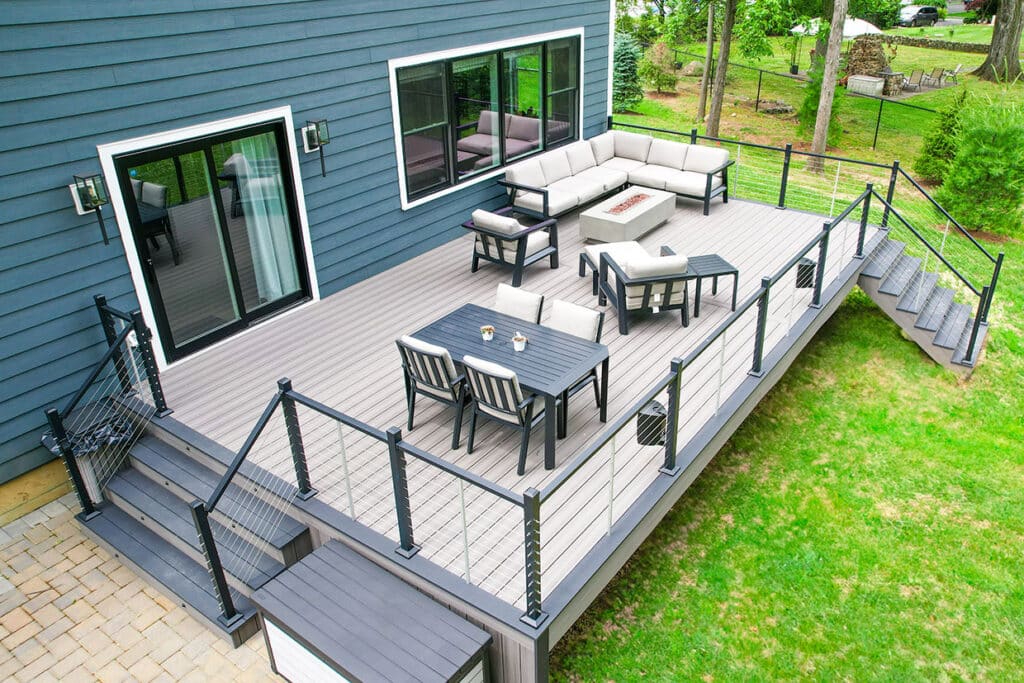
Glass railing and cable railing are often chosen because the homeowner does not want the railing to dominate the view. That makes sense. If the deck overlooks trees, water, open yard, or a slope, thick balusters can feel frustrating.
Cable railing uses thin metal cables between posts. It creates a modern line and keeps the view open. The catch is precision. Cable infill needs proper tension, correct spacing, strong metal posts or structural posts, and careful installation. If the cable is loose or the spacing is wrong, the problem is not just visual. It can become a safety and code issue.
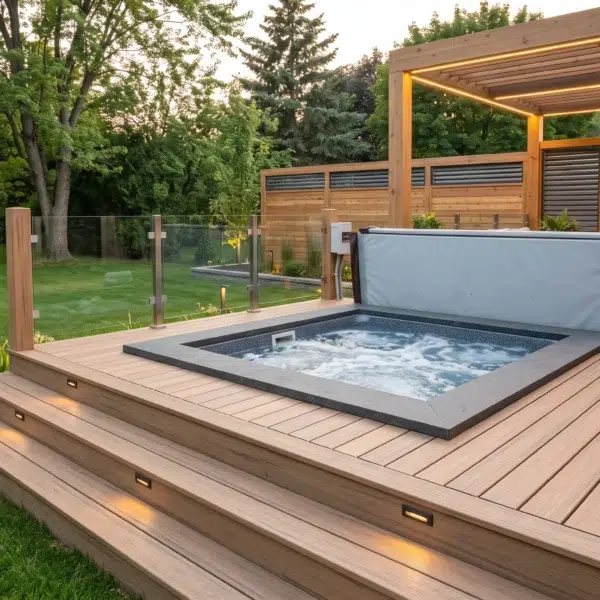
Glass railing feels more polished and can create a high-end outdoor space. It also needs realistic expectations. Glass shows fingerprints, rain marks, pollen, and winter grime faster than aluminum railings or composite railings. It can be beautiful, but it is not the lowest maintenance option.
Various infill options exist because decks are used differently, and these elements can change both the view and the feel of the finished space. Traditional balusters give a classic rhythm. Cable infill keeps the space open. Glass panels protect the view. Composite or vinyl balusters can give the deck a softer, more classic look. Wrought iron-inspired metal can also work well when the goal is a timeless look. The catch is true wrought iron, which often brings more rust and corrosion concerns than powder-coated aluminum.
That is why homeowners should not choose railing from one photo alone. A design that looks clean in a staged image may feel too bulky or too formal on a real deck with stairs, furniture, foot traffic, and constant weather exposure.
Metal Posts, Rail Kits, and Small Parts Matter More Than Most Homeowners Expect
Railing is not just the visible line around the deck. It is a system. Posts, post sleeves, post caps, brackets, rail kits, bottom rail connections, top rail profiles, infill, balusters, fasteners, stair mounts, and transitions all affect how the finished deck performs. A good railing system should feel stable, not patched together.
Metal posts may be the right choice when the deck needs strength without visual bulk. Wood posts can work, but they need proper protection. Composite post sleeves can cover structural wood posts and create a finished line that matches the rest of the railing products.
Drink rail details should also be decided early. A drink rail can create a unique contrast when a composite cap sits over black aluminum. It can also help connect the railing to the deck boards so the project feels designed, not assembled from whatever was available.
Impression Rail Express rail kits can help keep the look consistent, especially when the project needs a wide selection of compatible parts instead of mismatched railing pieces. But even with manufactured components, the layout still matters. Post spacing, stair runs, corner conditions, gates, and transitions all need planning before installation starts. Easy installation is useful. Correct installation matters more.
How to Choose the Right Railing Without Regretting It Later
The right railing usually comes from a few practical questions. What does the house look like? How much does the view matter? Before choosing the railing, slow down and look at the deck itself. How much maintenance will actually happen? Does the space need a heavier classic railing, or would that make it feel too crowded? Will the railing sit in shade, sun, coastal air, or moisture? Is the homeowner aiming for traditional, modern, polished, or relaxed?
Composite railings make sense for low maintenance and a classic look with some visual weight. Aluminum railings are better when the deck needs slimmer lines and corrosion resistance. Vinyl can work on traditional homes if the product is high-quality. Wood is useful when customization is the priority, but the maintenance is higher. Glass and cable railings should be used where the view is strong enough to make the extra planning worthwhile.
The mistake is choosing from a product list first. A railing should fit the deck, support the design, improve safety, and keep the space comfortable without closing it in. It should match the home, handle the weather, and still look good after the first season of real use. That is the difference between choosing a railing from a catalog and choosing one that belongs on the deck.
FAQ
Is composite railing better than wood railing?
Composite railing is usually better for homeowners who want low maintenance and less staining or painting. Wood railing can still be better for historic homes, custom trim work, or projects where a very traditional detail matters.
Are aluminum railings good for decks?
Yes, aluminum railings are a strong choice for many decks. They are lightweight, resistant to rust, and available in several color options, including black aluminum and other powder-coated finishes.
Is glass railing hard to maintain?
Glass railing usually needs more cleaning than composite, vinyl, or aluminum. It can show fingerprints, water spots, pollen, and streaks more easily.
What is the most low-maintenance deck railing?
Composite railings, vinyl railing, and aluminum railings are all low-maintenance options. The right choice depends on style, weather exposure, budget, and how open the homeowner wants the deck to feel.
Does cable railing work for residential decks?
Cable railing can work well for residential decks, especially when the view matters. It needs correct spacing, strong posts, proper tension, and careful installation.
What railing height is common for residential decks?
Many residential deck guards are planned around a 36-inch minimum height. Commercial applications often use 42 inches. Local code should always be checked before installation.
What is a drink rail?
A drink rail is a flat top rail surface, often made with a deck board or cap. It gives the railing a more finished look and adds a practical surface for everyday use.
When does metal railing make more sense than composite?
Metal railing makes more sense when the homeowner wants slimmer lines, better sightlines, a more modern style, and strong resistance to rust and corrosion.